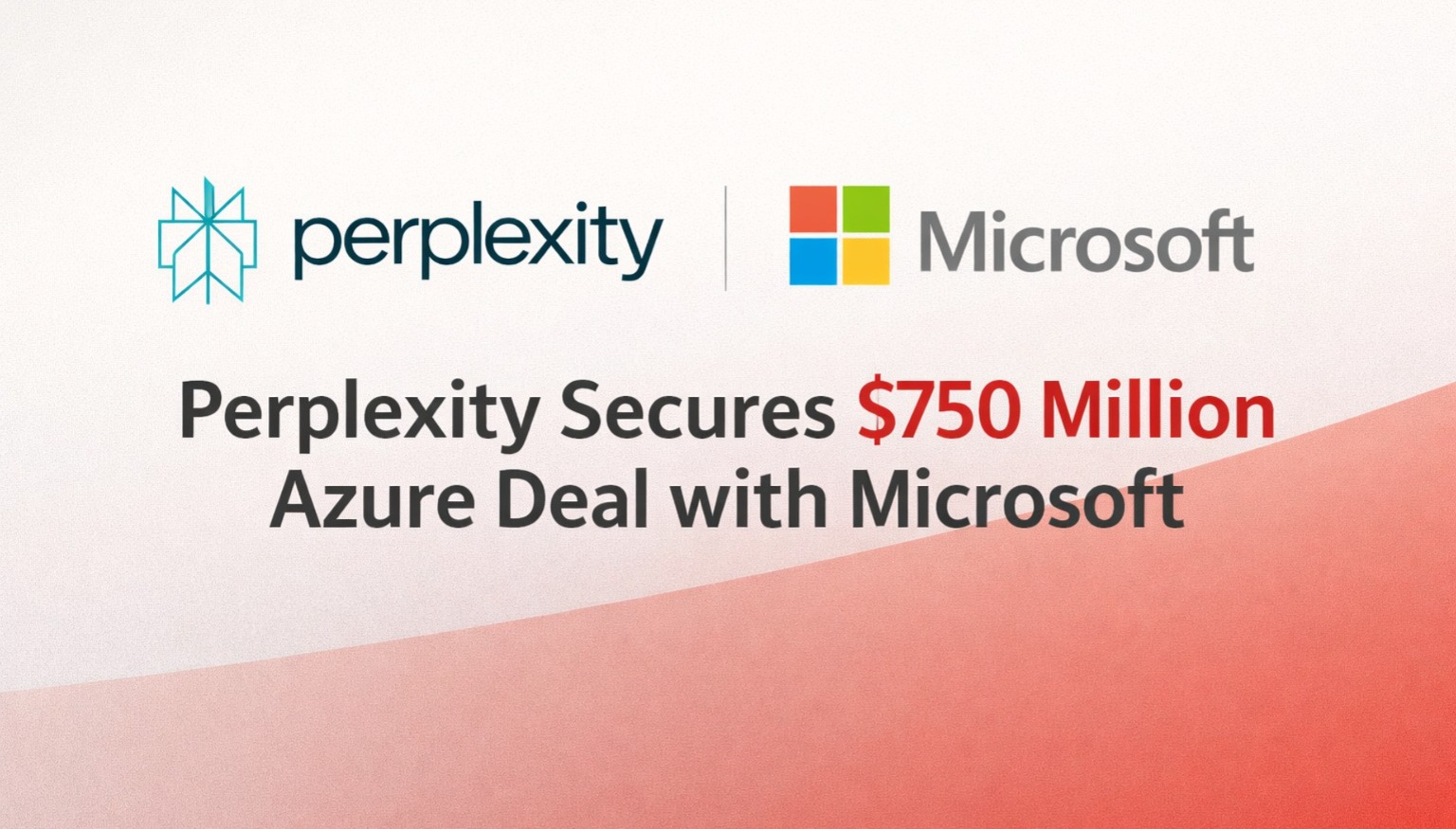
Perplexity, the AI search startup, has signed a $750 million agreement with Microsoft to use the company’s Azure cloud platform, marking a notable expansion beyond its longtime reliance on Amazon Web Services (AWS).
What the deal covers?
The agreement is described as a three-year commitment under which Perplexity will deploy its AI models via Microsoft’s Foundry service, including access to models from OpenAI, Anthropic, and xAI, according to people familiar with the arrangement, who spoke on condition of anonymity because the matter is private.
Perplexity, for its part, publicly framed the tie-up as a way to broaden access to top-tier model options. A spokesperson said the company is “excited to partner with Microsoft for access to frontier models from X, OpenAI, and Anthropic.”
AWS isn’t being replaced, Perplexity says
Even as the Microsoft deal signals a multi-cloud move, Perplexity’s spokesperson emphasized the Azure partnership does not reduce its spending on AWS, calling AWS the startup’s preferred cloud infrastructure provider and adding that Perplexity expects to announce expansions of that partnership “in the coming weeks.”
Microsoft and Amazon declined to comment.
Why this matters: multi-cloud is becoming the default in the AI era
The backdrop here is a fast-hardening reality of the AI boom: companies increasingly mix and match cloud providers to access specialized services and reduce dependence on any single vendor.
The multi-cloud trend has accelerated as enterprises experiment with new tools and sign agreements across both model developers and the cloud platforms that run them.
Perplexity itself was built heavily on AWS, using Amazon’s Bedrock service to access Anthropic models for its AI-powered search engine, and CEO Aravind Srinivas has publicly discussed going “all-in” on Amazon’s cloud.
A relationship with Amazon that has recently turned tense
In recent months, the Perplexity-Amazon relationship has become more contentious. The report notes that Amazon sued Perplexity in November, seeking to prevent the startup from enabling consumers to use its AI tools to shop and purchase products from Amazon’s marketplace.
Perplexity, in response, described Amazon as a bully and called the lawsuit “a threat to user choice.” Srinivas also said in November that Perplexity has made “hundreds of millions” of dollars in commitments to AWS.
Also Read: Inside the Meteoric Rise of Perplexity AI: Search Reinvented
Microsoft’s bigger play: make Azure the place where “multiple models” live
For Microsoft, the Perplexity agreement reinforces its pitch that Azure can be a primary destination for building AI apps while giving customers a menu of models from different vendors.
Microsoft CEO Satya Nadella recently underscored that strategy, saying, “Our customers expect to use multiple models as part of any workload,” and adding, “And we offer the broadest selection of models of any hyperscaler.”
Nadella also said more than 1,500 Microsoft Foundry customers have used both OpenAI and Anthropic models, and that the number of customers spending over $1 million per quarter on Foundry rose nearly 80% in the quarter that ended in December.
The competitive pressure on Perplexity
Perplexity remains one of the more richly valued AI startups, but it faces intense competition from Google and OpenAI in the broader fight to reshape how people search for information online.
What is most notable in this regard is less the “either-or” nature of cloud decision and more the indication that Perplexity is adding flexibility to its infrastructure stack, particularly as the business of AI search is becoming more expensive, more crowded, and more strategic.
Also Read: Cairn Identifies Deeper Gas Reserves Beneath Ambe Field in Western Offshore India