Brand Content Strategy: Scroll through any brand’s Instagram, LinkedIn, or YouTube channel for sixty seconds, and something becomes very clear, very fast. The content is fine. The production is polished. The captions are grammatically correct. The posting frequency is consistent. And yet, nothing seems to stick. Nothing makes you stop scrolling. Nothing makes you feel like this brand has something to say that nobody else is saying.
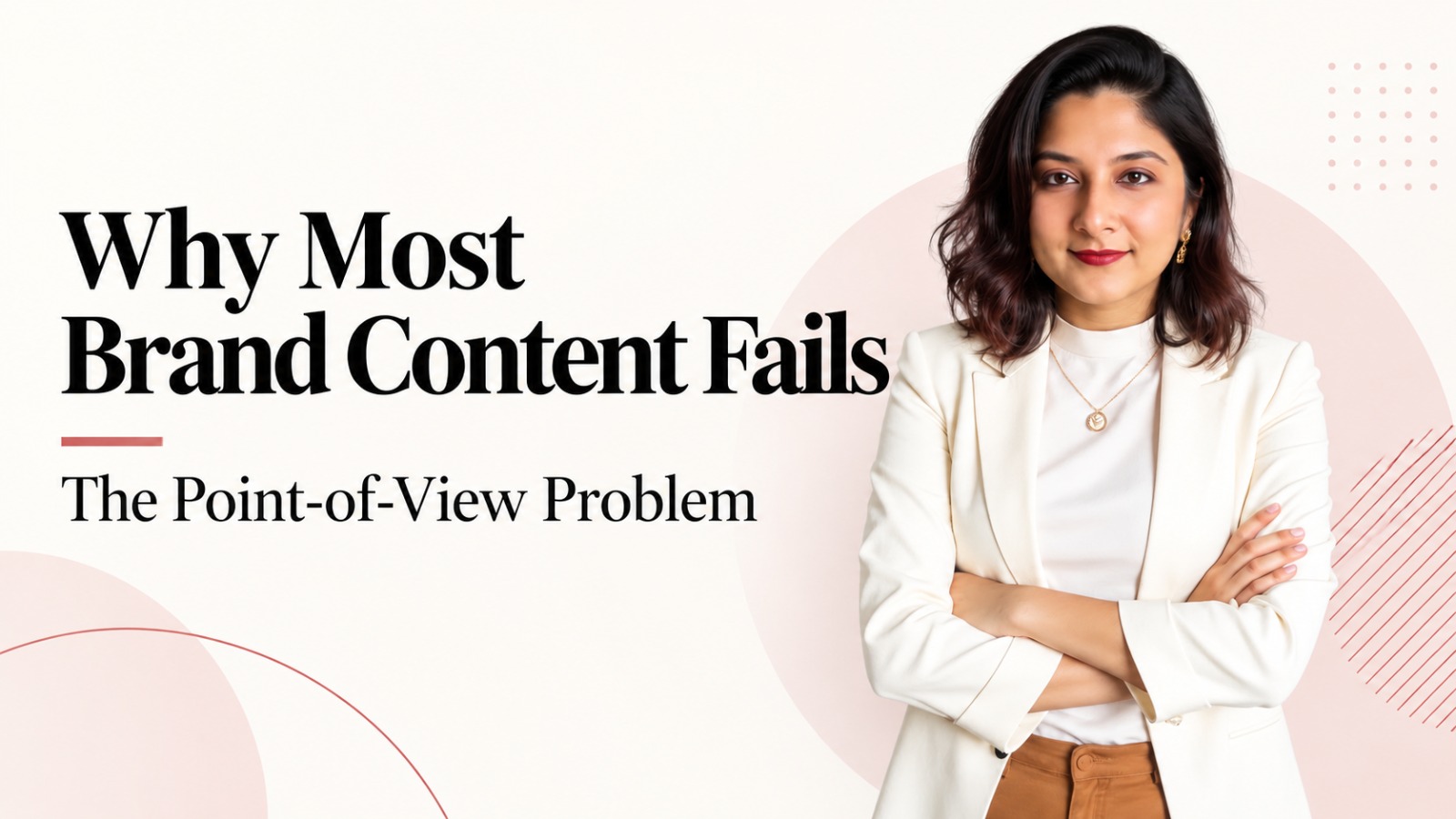
That’s not a content problem. That’s a point-of-view problem. And it’s the most underdiagnosed issue in marketing right now.
The content machine is running. Nobody knows why.
Most brands today are producing more content than ever. More posts. More reels. More carousels. More newsletters. More everything. And yet none of it seems to be breaking through. Audiences are scrolling past it. Engagement is flat. The brand feels present but not memorable, which is arguably worse than being absent, because at least absence has an excuse.
The problem isn’t the format, the frequency, or the algorithm. It’s that most brands are producing content without a clear perspective on anything. They’re filling the calendar without filling a position.
A content calendar is a production tool. A point of view is a strategic one. The industry has invested heavily in the former and consistently underinvested in the latter, and audiences feel the difference even when they can’t articulate it.
What a point of view actually is and isn’t
A point of view isn’t a mission statement. It isn’t a tagline. It isn’t a set of brand values listed on an About page that nobody reads. Those things describe what a brand wants people to think about it. A point of view is what the brand actually thinks, about its category, its customer, the industry it sits inside, the world it operates in.
It’s the thing the brand would say if it weren’t scared of being wrong. The opinion that might make some people uncomfortable and make others feel genuinely understood. The perspective that’s specific enough to be disagreed with.
That last part is the test. If a brand’s content can’t be disagreed with, it doesn’t have a point of view. It has wallpaper.
Think about the brands that have cut through in recent years, not by spending more, not by posting more, but by standing for something with enough clarity that people either leaned in or opted out. That polarity isn’t a side effect of a strong point of view. It’s the proof of one.
Why most brands avoid it
The honest reason most brands don’t have a genuine point of view is that developing one requires making choices, and making choices means accepting that some people won’t agree. That’s uncomfortable for marketing teams, for approval chains, and for stakeholders who see any opinion as a risk to be managed.
So the content gets made by a committee. The interesting edge gets sanded off. The specific observation becomes a general statement. The perspective that would have made someone feel something becomes the perspective that offends nobody and moves nobody.
The audience is ready for brands to say something real. The brands aren’t ready to say it. That gap between what consumers are actually looking for and what brands are willing to deliver is where most content strategies quietly fall apart.
Point of view isn’t about being controversial
This is the misunderstanding that makes brand teams nervous. Having a point of view doesn’t mean picking fights or manufacturing outrage for attention. It means having a genuine, considered perspective on the things that matter inside a specific category, and being consistent enough about it that an audience eventually knows what to expect.
A skincare brand with a point of view doesn’t just post skincare tips. It has a specific take on what the industry gets wrong, what the customer actually needs, what good looks like versus what gets marketed as good. A fintech brand with a point of view doesn’t just explain products. It has something to say about financial behaviour, about how people relate to money, about what the category consistently fails to address.
The content follows from the perspective and not the other way around. When a brand knows what it thinks, what to create becomes obvious. When it doesn’t, the content calendar becomes an anxiety-driven guessing game of trending formats and seasonal hooks.
What happens when a brand actually commits
In a world where AI makes generic content faster and cheaper to produce than ever before, the floor for average content has dropped to near zero. Any brand can produce passable content instantly. What that means is that the only content worth producing is content that carries a specific perspective that a machine couldn’t have originated, something that reflects a human point of view that’s been developed, defended, and consistently expressed over time.
That’s both the pressure and the opportunity. The brands standing out right now aren’t the ones with the biggest production budgets or the most sophisticated content strategies. They’re the ones that have decided what they think, about their category, their customer, their craft, and say it with enough clarity and consistency that people feel something about it.
Content is abundant. Conviction is rare.
That gap is where brand differentiation actually lives, and it’s been there the whole time, waiting for brands to be brave enough to fill it.
(Khushboo Mulani is Founder of Slay Media)