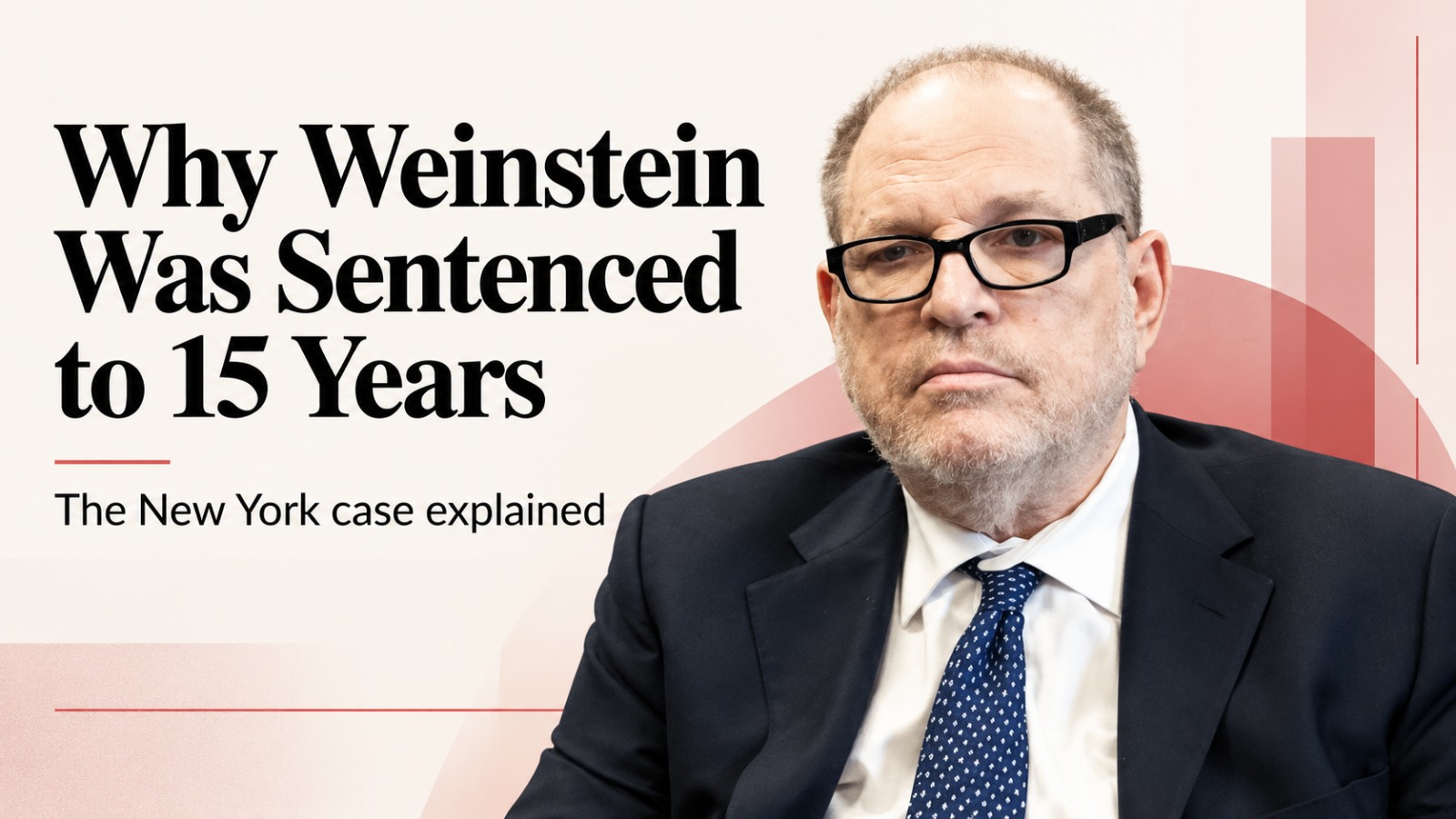
NEW YORK: Harvey Weinstein has been sentenced to 15 years in prison in New York for sexually assaulting former television production assistant Miriam Haley, bringing another major judgment in a criminal case that has moved through convictions, appeals, retrials and deadlocked juries for years.
The sentence was handed down Wednesday by Judge Curtis Farber in Manhattan. Weinstein, 74, appeared in court in a wheelchair, with his hands cuffed to his seat. The conviction stems from the sexual assault of Haley at Weinstein’s Manhattan apartment in 2006.
The 15-year prison term will be followed by five years of supervised release, and Weinstein will also be required to register as a sex offender, according to the sentencing details reported from the courtroom.
But much of Wednesday’s hearing centered not on Weinstein’s once-powerful Hollywood career or the long procedural history of the case, but on Haley.
She appeared in court and delivered a victim impact statement, describing the years that followed the assault and the personal toll of repeatedly returning to the case through trials and public scrutiny. Haley said Weinstein had “abused his position and power” and that the experience had caused a “devastating effect” on her life and sense of security.
“It is a life sentence for me,” she told the court.
The Guardian reported that Haley also spoke about harassment and humiliation she said she had endured over the past seven years, including what she described as efforts to publicly smear her. She asked the judge to consider what she had lived through since the assault when determining Weinstein’s punishment.
Prosecution sought 20 years, defense asked for nine
New York assistant district attorney Nicole Blumberg asked the court to impose a 20-year sentence followed by five years of post-release supervision. Prosecutors argued that Weinstein had failed to show genuine remorse.
His defense sought a significantly shorter term of nine years, pointing to his health and arguing that a lengthy prison sentence would be particularly difficult for him to serve.
Weinstein also addressed the court.
He expressed regret and apologized for his actions, while continuing to deny allegations of nonconsensual sex. In remarks reported from the hearing, Weinstein said he was “not a perfect person” and had made mistakes, adding that he did not consider himself a violent man.
Judge Farber rejected the broader effort to distance Weinstein from responsibility for the crime for which he had been convicted.
“You took what you wanted by force, and you have never accepted responsibility,” the judge told him before imposing the sentence.
Farber also spoke directly about the contrast between Weinstein’s extraordinary influence in the film industry and the conduct that brought him back before the court.
“You had it all,” the judge said. “Your legacy could have been cemented with greatness. But you threw it all away by assaulting Miriam Haley.”
A conviction overturned, followed by another trial
Wednesday’s sentencing is the latest turn in a New York case that has repeatedly returned to court.
Weinstein was first convicted in 2020 of a criminal sexual act involving Haley and third-degree rape involving aspiring actor Jessica Mann. He received a 23-year prison sentence.
That conviction was overturned in 2024 by New York’s highest court, which found that testimony permitted during the original trial had unfairly prejudiced the proceedings. A new trial followed.
In June 2025, a jury again found Weinstein guilty of a first-degree criminal sexual act involving Haley. The same jury acquitted him on a separate charge involving former model Kaja Sokola. Jurors were unable to reach a verdict on the charge connected to Mann.
Prosecutors later retried the Mann charge, but that jury also deadlocked. The charge was eventually dropped after Mann said she could not endure another trial.
That sequence left the Haley conviction as the basis for Wednesday’s 15-year New York sentence.
California case still affects what happens next
Weinstein also faces a separate sentencing issue in California.
He was convicted in Los Angeles in 2022 of rape and sexual assault involving an Italian actor and model and was sentenced to 16 years in prison in 2023. An appeals court later left the conviction standing while his sentence became subject to resentencing proceedings.
The order in which the California and New York sentences will ultimately be served has not yet been settled. Farber said California authorities will have the final say on whether the sentences run consecutively or concurrently.
A case inseparable from the #MeToo era
Weinstein’s legal cases became closely linked with the rise of the #MeToo movement after a wave of accusations against him emerged publicly in 2017. More than 80 women have accused him of sexual assault, harassment or misconduct. Weinstein has denied allegations of nonconsensual sexual activity.
For Haley, however, Wednesday’s proceeding was less about the wider cultural history surrounding Weinstein and more about the consequences of one case she has continued to return to through years of legal proceedings.
After an original conviction, its reversal, another trial and a new guilty verdict, the New York court has now imposed a 15-year sentence for the assault she first testified about years ago.
Also Read: Ema Raises $77 Million Series B to Scale ‘AI Employees’ Across HR, IT and Finance