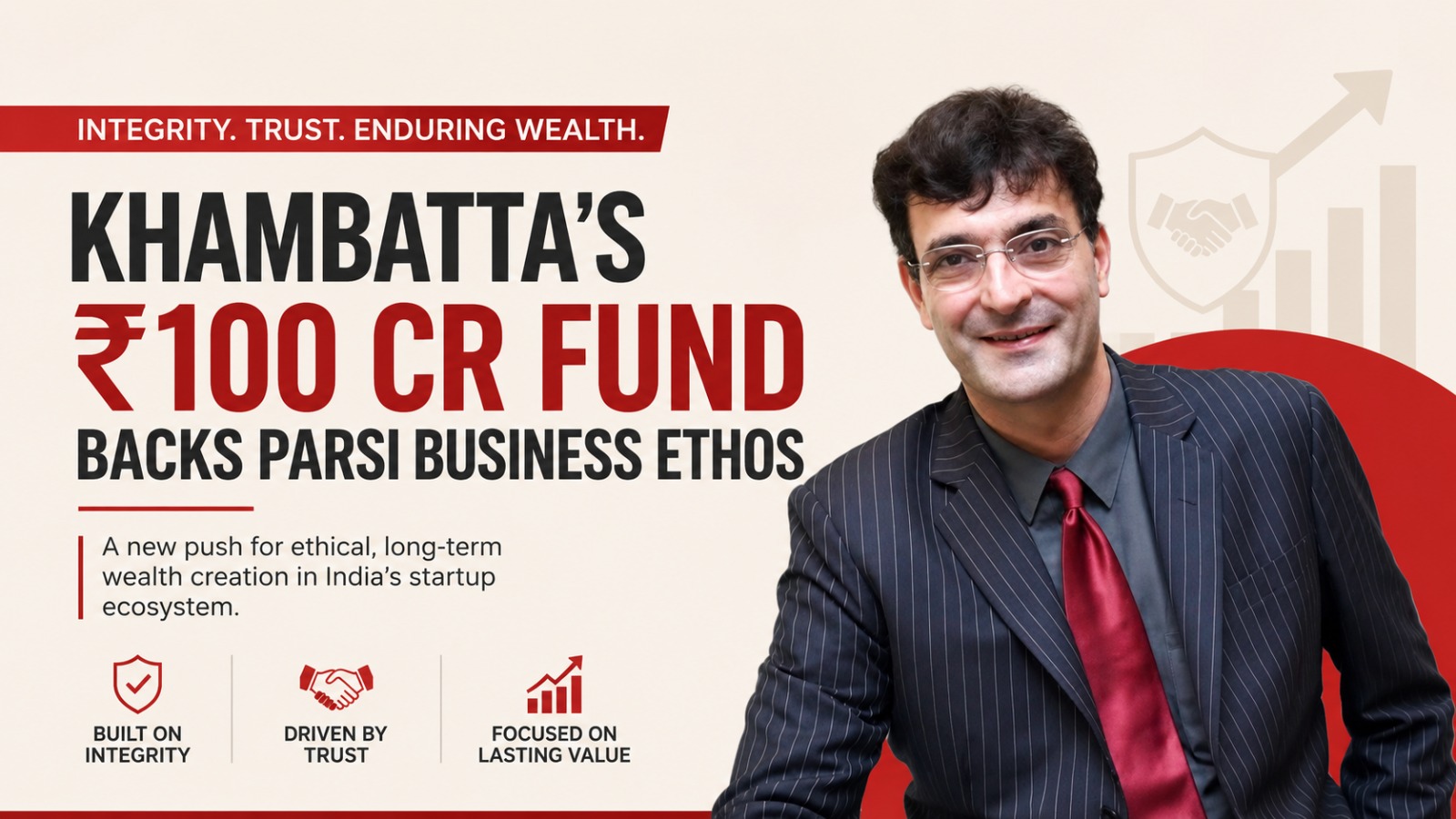
Piruz Khambatta is asking Indian entrepreneurs to look beyond valuation charts, funding rounds and quick exits. His new book, Ashoi, places an old idea at the centre of a modern business debate: wealth that lasts is built on integrity, not hype.
Khambatta, Chairman and CEO of Rasna, argues that Zoroastrian values such as integrity, purity and righteousness are not just moral ideals. In business, he sees them as economic assets. The idea is simple but powerful. Trust reduces friction. Honest dealing lowers the cost of relationships. Reputation keeps customers, employees and partners close for longer.
This argument comes at a time when India’s startup ecosystem is still learning the difference between valuation and value. Many young companies have raised capital on ambition, projections and market excitement. Khambatta’s message moves in the opposite direction. Build slowly if needed, but build in a way that survives.
The Parsi business legacy gives his argument weight. Tata, Godrej, Wadia, Shapoorji Pallonji and Poonawalla are not just corporate names. They represent a tradition where enterprise, philanthropy and public trust often moved together. Their influence has stretched across sectors such as aviation, manufacturing, real estate, consumer goods and healthcare.
Khambatta now wants to carry that belief into startup funding. A ₹100 crore startup fund is being planned with an upcoming Zoroastrian Chamber of Commerce. The fund is expected to provide equity capital and mentorship to entrepreneurs across communities, with a focus on ethical and sustainable business-building.
The idea also draws from models such as the World Zarathushti Chamber of Commerce, which has supported entrepreneurs through finance and mentorship. But Khambatta’s fund appears to be making a larger statement. It is not only about backing startups. It is about backing a certain kind of founder.
That makes the timing important. India has no shortage of startup energy. What it often lacks is patience. In the race to become the next unicorn, governance, profitability and discipline can get pushed aside. Khambatta’s pitch is that integrity is not a decorative value. It is infrastructure.
Still, the idea is not free from hard questions. Ethical foundations do not protect a company from weak execution, debt stress, competition or changing consumer habits. Even respected legacy businesses must keep proving themselves in the market. Principles can guide a company, but they cannot replace financial discipline.
That is where the story becomes more interesting. Khambatta is not merely romanticising the past. His message tests whether old-world business trust can be converted into a modern investment thesis. Can founders be assessed not only by market size and growth rate, but also by character, governance and long-term seriousness?
For Indian startups, that question may matter more than ever. The next phase of entrepreneurship will not be judged only by how much money companies raise. It will be judged by how responsibly they grow, how honestly they report, how fairly they treat stakeholders and how long they remain useful.
Piruz Khambatta’s ₹100 crore plan is therefore more than a fund announcement. It is a challenge to the startup culture itself. In a market obsessed with speed, he is making a case for trust. In a funding world addicted to valuation, he is asking founders to build value.
Whether this fund creates the next great ethical enterprise will depend on execution. But the argument behind it is difficult to ignore: in business, integrity may not look flashy on a pitch deck, but over time, it can become the strongest form of capital.
Also Read: Vaibhav Suryavanshi’s Rise Is Bigger Than a Net-Worth Number