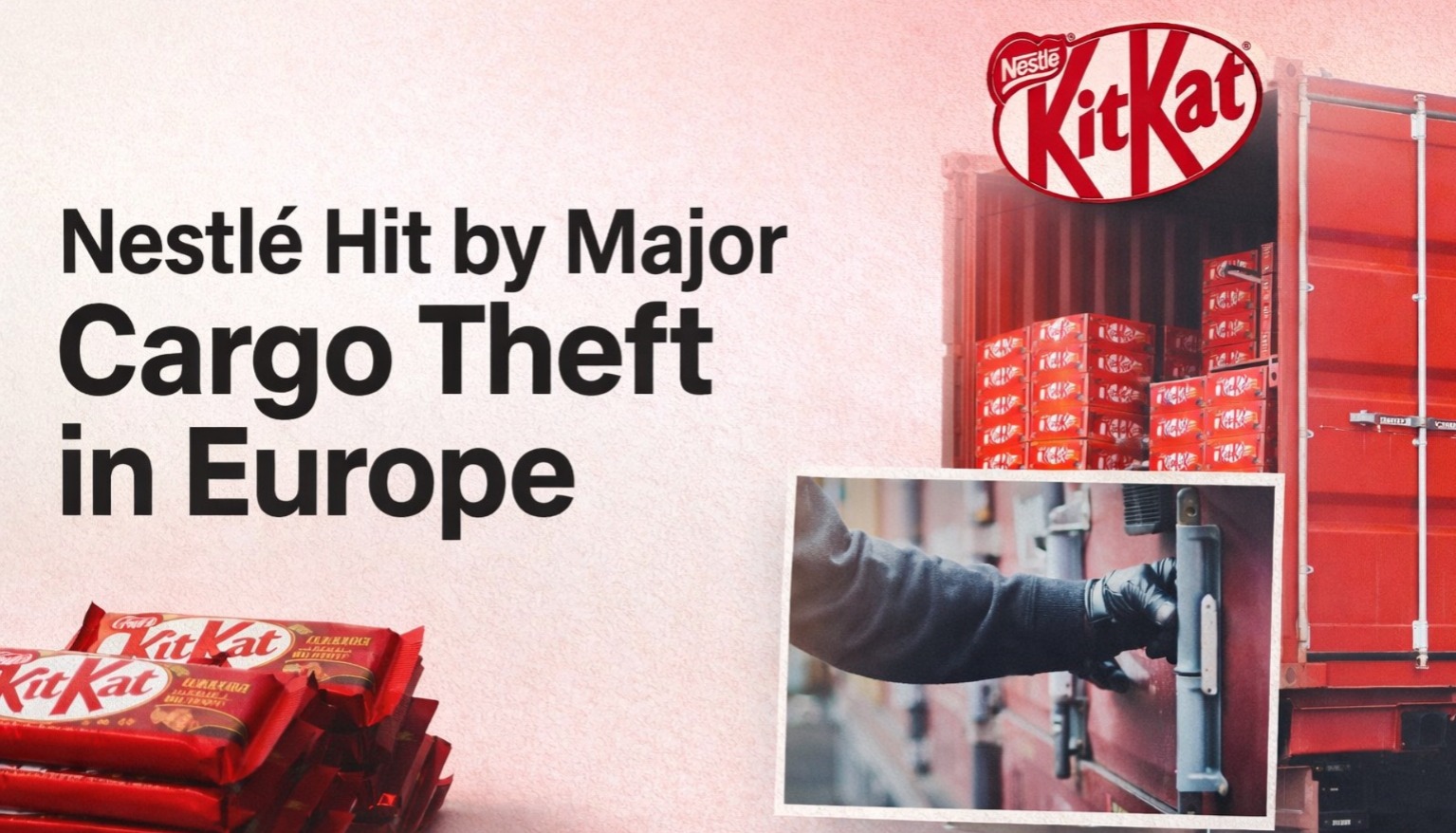
Nestlé has confirmed that 12 tonnes of KitKat products were stolen in a major cargo theft while in transit between its factory in central Italy and their destination in Poland, in an incident that has once again drawn attention to the scale of cargo theft across Europe.
The missing load has been described as roughly 413,793 KitKat bars, with an estimated value of around $1 million, figures highlighted by Anish Moonka in a detailed post analysing the incident. Those numbers immediately made the case stand out, not only because of the brand involved, but because they illustrate how high-value, fast-moving consumer goods remain vulnerable once they leave the factory floor and enter long-distance transport networks.
In an official statement, Nestlé said it is working closely with local authorities and supply chain partners to investigate the theft. It also clarified that there are no concerns for consumer safety and that supply has not been affected.
The route itself adds to the scale of the episode. The shipment was headed from central Italy to Poland, a journey of about 1,300 kilometres. Somewhere along that corridor, the truck and its load disappeared.
The case lands at a time when cargo theft is already a major issue across the continent. A European Parliament study has put the annual cost of cargo theft in Europe at €8.2 billion. Broken down, that suggests goods worth around €2.5 million disappear from trucks and warehouses every 24 hours.
Industry tracking shows the problem is widespread and likely undercounted. TAPA, the Transported Asset Protection Association, tracked 157,421 cargo thefts across 129 countries between 2022 and 2024. Only 6% of those cases included the value of the stolen goods, yet that small share alone accounted for €2.7 billion in losses. The implication is clear: the real financial damage is likely much higher.
Germany remains one of the hardest-hit markets. DHL data has shown that a truckload is stolen there every 20 minutes, causing losses of roughly €2.2 billion a year. One of the fastest-growing methods involves what the industry calls “phantom carriers”, fake transport companies using forged documents and convincing paperwork to collect legitimate cargo and then vanish.
The German Insurance Association recorded 88 phantom carrier cases in the first seven months of 2025, matching the total for the whole previous year. That statistic alone suggests how quickly these tactics are spreading.
Food is among the most frequently targeted categories in European cargo theft, accounting for an estimated 10% to 20% of all such crimes. Chocolate, in particular, is an attractive target. It does not spoil quickly, is easy to transport, widely recognisable, and can be resold quickly in unofficial markets.
That pattern has shown up before. In 2017, 20 tonnes of Nutella and Kinder Eggs were stolen in Germany. In 2014, a crime ring moved 287 tonnes of Swiss chocolate worth $8 million. In 2019, 20 tonnes of Milka were taken from an Austrian factory using forged pickup papers. The Nestlé case fits into that broader pattern, though its timing may make it more significant.
Chocolate has also become a more valuable commodity in recent years. Cocoa prices surged from around $2,400 per tonne three years ago to more than $12,600 in late 2024. While prices eased to about $5,000 to $6,000 in early 2026, that still leaves cocoa trading at roughly double its historical average.
In Poland, where the stolen shipment was headed, chocolate retail prices jumped 32.6% last year, according to EU data.
Nestlé has said each bar carries a scannable code that can be traced back to the company, indicating tracking systems are in place. However, the incident underlines a broader issue for global supply chains: visibility does not always prevent loss.
For consumers, the company’s message remains clear, there is no safety risk and no disruption to supply. For the logistics industry, however, the theft is another reminder that cargo crime in Europe is not an isolated problem, but a persistent and evolving risk embedded within modern supply networks.
Also Read: Have You Bought Noice Without Knowing It’s Swiggy’s?