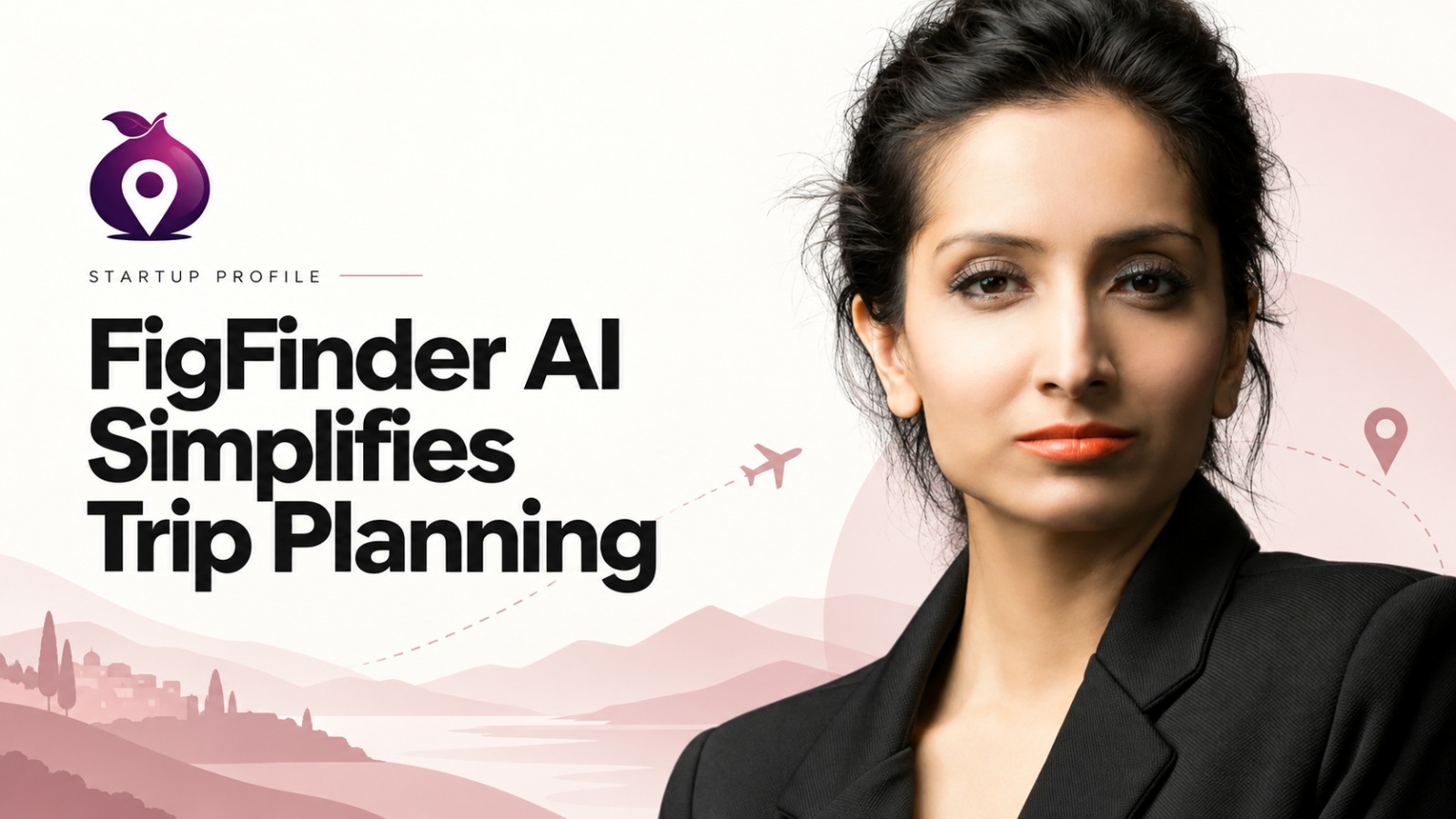
Founded by Ankita Sharma, the London and Sydney-based travel-tech startup FigFinder AI is building a consumer travel platform alongside a SaaS product for agencies, DMCs and tour operators. Its bet is that travelers need structured, personalized guidance not just while planning a trip, but before departure and while they are already on the road.
For most travelers, planning a trip rarely happens in one place.
A destination might first appear on social media. Flights and hotels are booked elsewhere. Restaurants are saved on maps. Packing advice lives in another tab. Local transport, safety information and things to do may be scattered across blogs, search results and conversations with AI tools.
FigFinder AI is trying to pull that fragmented process into a single travel experience.
The startup, based in London and Sydney, has built a personalized travel platform that follows a traveler through different stages of a journey. Instead of positioning itself only as a trip-planning tool, FigFinder is designed to remain relevant while someone is planning, after bookings have been made and once the traveler has reached the destination.
At the centre of the company is a simple idea: the information a traveler needs changes as the trip gets closer.
Someone researching where to go may want inspiration and planning help. A traveler with flights and accommodation already confirmed may instead need packing information, connectivity guidance or local transport details. Once at the destination, the priorities can shift again towards safety, activities and practical information on getting around.
FigFinder uses guided prompts to understand the traveler and the trip before creating a personalized guide containing day-by-day plans, destination information, packing guidance, transport, safety, connectivity and experiences. The company says the guided approach is intended to reduce the need for users to construct complex prompts or repeatedly search across separate platforms.
A product shaped by the journey, not just the booking
FigFinder’s approach developed from founder Ankita Sharma’s experience with international travel and the recurring problem of researching destinations through disconnected sources.
The initial product was not ultimately confined to the planning phase. According to the company, testing of its MVP showed that people who had already booked flights and accommodation still found value in personalized destination information.
That feedback pushed FigFinder towards three distinct stages of travel: planning, pre-departure and in-destination use.
It is an important distinction for how the startup sees its place in travel technology.
Rather than attempting to disappear once a transaction is completed, FigFinder wants to remain part of the trip after the major bookings are finished. Its long-term ambition is to become a travel layer that people can return to throughout a journey.
That consumer product is only one half of the business.
FigFinder Pro takes the same idea into travel agencies
Alongside its traveler-facing platform, the startup has created FigFinder Pro, a product for travel professionals dealing with incoming customer inquiries.
Travel agencies, destination management companies and tour operators often receive requests through channels such as email and WhatsApp. Those inquiries may contain some of the information required to prepare a quote while leaving other details unclear.
FigFinder Pro allows a travel professional to paste an existing customer inquiry into the system. The software extracts the requirements already provided, identifies information that is missing, suggests follow-up questions and turns the enquiry into a structured client brief.
The idea is not to replace the travel professional. It is to reduce some of the repetitive work that sits between receiving an inquiry and reaching the point where a useful quote can be prepared.
For FigFinder, the two products address different sides of the same travel process. The consumer platform organizes information for the traveler, while the professional product organizes information for the businesses serving that traveler.
Building two revenue streams from the start
FigFinder is pursuing both consumer and B2B monetization.
On the consumer side, travelers can go through the guided experience and preview their trip before paying for a complete personalized guide.
The company says it has already begun generating consumer revenue.
FigFinder Pro follows a SaaS model, with paid plans for travel professionals using the product to analyse inquiries and generate structured, quote-ready briefs.
The startup also sees the possibility of travel partnerships and commercial integrations becoming another source of revenue over time, provided those integrations add value to the travel experience.
That gives the business three potential commercial layers: individual consumer purchases, recurring B2B subscriptions and future industry partnerships.
For an early-stage company, however, FigFinder appears to be spending as much time thinking about distribution as monetization.
The difficult part is getting people to use it
Sharma identifies distribution as the biggest challenge the company has faced so far.
FigFinder is testing a mix of SEO and GEO-focused content, short-form social content, user-generated content, creator partnerships, referrals and travel-industry collaborations for the consumer product.
It also has Creator and Refer & Earn programmes intended to bring creators and existing users into its distribution efforts.
For FigFinder Pro, the approach is more direct. The startup is targeting travel agencies, DMCs and tour operators through outreach, product trials and industry partnerships.
The company is not treating traffic alone as the goal. Sharma’s focus is on finding acquisition channels that bring in customers who actually use the product, make purchases, return and recommend it.
That distinction matters in a crowded AI market where generating attention can be much easier than building repeat usage.
FigFinder itself lists established travel platforms, general-purpose AI products, high customer acquisition costs and changing consumer behaviour among the threats it faces. It also acknowledges that it remains an early-stage brand with limited resources and acquisition channels still being tested.
Ankita Sharma brings a product and technology background to travel
FigFinder was founded by Ankita Sharma, whose background spans technology, business and product analysis.
She has worked on digital, data and technology initiatives across New Zealand, the United Kingdom and Australia, with experience across banking, financial services, utilities and global sport. Her professional background includes work involving Formula 1, Lotto New Zealand and Vector Energy.
Her experience includes digital products, data platforms, stakeholder management and translating complex business requirements into technology solutions. She has also served in elected public office in the UK.
Alongside that professional experience is the travel background that eventually informed FigFinder itself. Sharma has travelled extensively internationally, giving her firsthand exposure to the way travelers research, organise and navigate trips across multiple countries and platforms.
That combination appears to shape the way FigFinder is being built. It is not simply an open-ended AI conversation wrapped around travel. The company is trying to impose structure on an experience that is usually messy.
Personalisation without expecting travelers to become prompt engineers
One of FigFinder’s central product choices is its reliance on guided interactions.
The platform is designed to take into account differences in budgets, age groups, travel styles, group composition and relevant dietary or accessibility requirements. It also changes the information it surfaces depending on where someone is in the journey.
That means the product’s differentiation rests less on the fact that it uses AI and more on how the AI is presented to the user.
Travelers are not expected to know exactly what to ask.
FigFinder instead attempts to gather the right context before producing information around a real trip. That guided structure is the company’s answer to a broader problem with general-purpose AI tools: users can get very different results depending on how effectively they frame their prompts.
Whether that approach translates into sustained consumer adoption will depend on the usage and commercial data FigFinder is still working to build.
From early validation to repeat usage
Over the next year, Sharma wants FigFinder to move beyond early validation and become a growing travel-tech platform with an active customer base, measurable repeat usage and acquisition channels that have proved they can work consistently.
For the consumer business, that means demonstrating that travelers keep returning to FigFinder before and during their trips.
For FigFinder Pro, it means agencies, DMCs and tour operators using the software regularly to convert incoming inquiries into structured briefs.
The company is looking for data around acquisition, retention, referrals and revenue that can show whether the business has the foundations for sustainable growth.
There is no predetermined exit strategy attached to that ambition.
FigFinder’s stated priority is to build a globally recognised travel technology platform and consumer brand with sustainable consumer and B2B revenue. The company says different paths could become possible at scale, including remaining independent, integrating more deeply with larger travel ecosystems, a strategic acquisition or potentially accessing public markets.
Whether travelers see enough value in having one personalized guide follow them from the first stages of planning to the days they are actually exploring a destination, and whether travel businesses find FigFinder Pro useful enough to make it part of their daily workflow.
Also Read: Humanos Raises $3.2M to Build Live Risk Scores for AI Agents