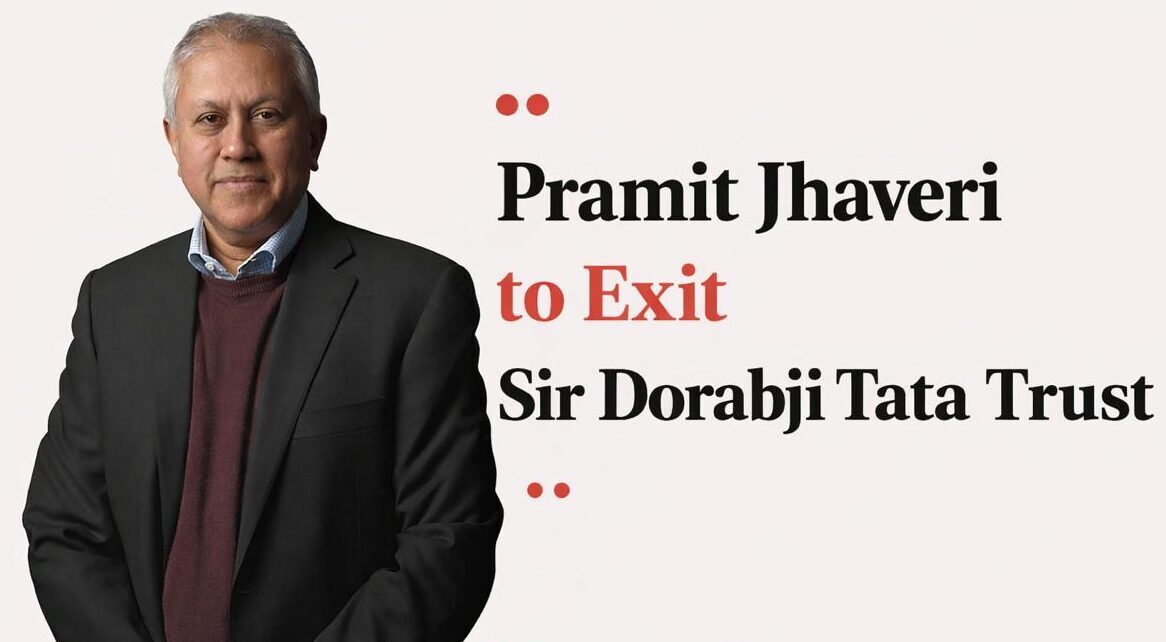
Pramit Jhaveri, who was CEO and Managing Director of Citibank India, will step down as a trustee of the Sir Dorabji Tata Trust when his term ends in February 2026. By choosing not to seek reappointment, he marks a key point in the ongoing changes in how the Tata Trusts are governed. These trusts together hold most of the shares in Tata Sons, the main holding company of the Tata Group.
Jhaveri is leaving at a time when the Trusts are rethinking their approach to leadership, accountability, and long-term management. Because the Trusts sit between philanthropy and corporate ownership, even regular board changes can have a bigger impact on the Tata Group and on corporate governance in India.
A Trustee Appointed by Ratan Tata
Pramit Jhaveri joined the Sir Dorabji Tata Trust board in February 2020 after being invited by the late Ratan N. Tata. Many saw his appointment as a move to improve governance by adding leaders with strong backgrounds in global finance and regulated industries.
When he joined, the Trusts were going through leadership changes and facing more public attention. Jhaveri’s experience running large organizations helped provide stability, especially as the Trusts balanced their charity work with their role as main shareholders of Tata Sons.
During his tenure, he participated in discussions that extended beyond grant-making into broader questions of institutional accountability, governance norms, and long-term impact. His role was not limited to oversight but also involved helping the Trusts adapt to changing expectations around transparency and professionalism.
Formal Decision Not to Seek Reappointment
Jhaveri told Noel Tata, chairman of Tata Trusts, about his decision to step down in a formal letter. He made it clear he would not seek another term after his current one ends on February 11, 2026. He thanked the Trusts for the chance to serve and called his time there a valuable professional experience.
The voluntary nature of this decision is notable. There has been no indication of disagreement, governance conflict, or performance-related concern linked to his exit. Instead, the move aligns with the completion of his term and reflects a structured and orderly transition, which is often considered a hallmark of sound institutional governance. Such transitions also allow organizations like the Tata Trusts to periodically reassess board composition and skill sets in line with evolving priorities.
The Role of the Sir Dorabji Tata Trust
The Sir Dorabji Tata Trust is one of the two main Tata Trusts, along with the Sir Ratan Tata Trust. Together, they own most of Tata Sons, which lets them guide the Tata Group’s strategy and governance. This setup helps keep the group’s values and ethics strong.Besides overseeing the company, the Trusts are major players in India’s philanthropy. They support projects in education, healthcare, research, social equity, and rural development, often on a scale few other private groups can match.
Trustees, therefore, carry a dual responsibility. They must ensure that philanthropic resources are deployed effectively while safeguarding Tata Sons’ long-term interests. This combination makes trustee appointments and exits particularly consequential.
Also Read: Silver’s Big Fall Shocks Markets, Even Long-Time Critics See a Short Bounce
A Period of Board-Level Transitions
Jhaveri’s departure is part of a broader pattern. Jhaveri’s exit is part of a larger trend of board changes at the Tata Trusts in recent years. Several trustees have finished their terms or stepped down, showing a slow renewal instead of a sudden shift. The continuity with fresh perspectives. In institutions as influential as the Tata Trusts, leadership refreshment is often seen as necessary to keep governance aligned with modern standards while respecting legacy principles.
Observers say these changes are happening gradually, which shows stability instead of disruption. The Trusts seem committed to making sure board changes do not affect their long-term goals or how well they operate.
Jhaveri’s Professional Legacy
Before joining the Tata Trusts, Pramit Jhaveri built a distinguished career spanning more Before joining the Tata Trusts, Pramit Jhaveri had a long career of over thirty years at Citibank. He was CEO and managing director of Citibank India during a time of stricter regulations, fast digital changes, and shifts in how people used banking services. ement, and institutional discipline. These attributes earned him credibility within both corporate and regulatory circles and made him a natural fit for trustee responsibilities at the Tata Trusts. His experience dealing with complex regulations also shaped his work as a trustee, especially in talks about governance and long-term risk management.
Implications for the Tata Group
Trustees do not run the daily business of Tata Group companies, but their control of Tata Sons puts them at the centre of big decisions. The trusts help choose leaders, appoint board members, and keep the group’s ethical standards strong.
Jhaveri’s departure does not signal any quick change in strategy. Still, it is part of the ongoing changes in the Trusts’ leadership. Now, people will watch to see who replaces him and what experience the new trustee brings. Investors and governance experts pay close attention to these changes because they can show how the Tata Group is getting ready for future leadership and governance issues.
Continuum of Change
As Pramit Jhaveri prepares to conclude his tenure, the Tata Trusts continue to As Pramit Jhaveri gets ready to finish his term, the Tata Trusts are still working through a wider renewal process. His leaving shows a governance style that prefers planned transitions and set terms instead of open-ended roles with modern expectations.
The Tata Trusts are not only custodians of significant philanthropic capital but also stewards of a corporate group that touches the lives of millions. Jhaveri’s decision to step down is part of a larger pattern of change. It shows how the Trusts are slowly updating their governance to stay relevant, strong, and true to both their roots and future needs.
Also Read: Google Moves to Redefine Its Workplace With Internal AI Push