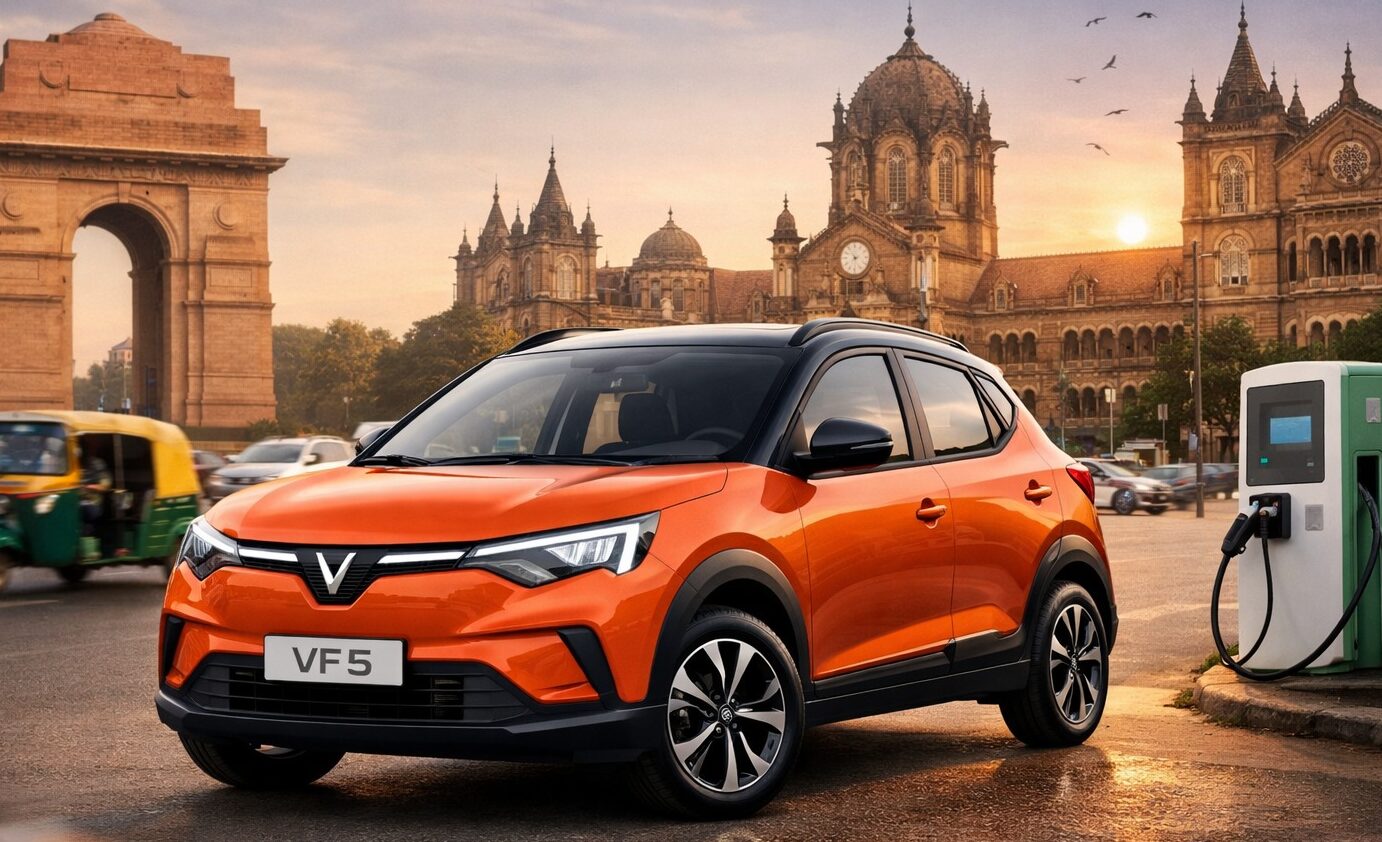
VinFast has confirmed that its electric hatchback, the VF5, will be launched in India in 2026, marking an important step in the Vietnamese automaker’s plans for the country. The model is aimed at India’s fast-growing and highly competitive electric vehicle segment, where demand for compact, city-friendly EVs is steadily rising. With this move, VinFast is positioning itself alongside both established domestic players and international brands preparing for the same market window.
VF5 Brings Global Experience to Indian Roads
The VF5 is not an untested product. It is already on sale in markets such as Vietnam, the Philippines, and Indonesia, giving VinFast operational experience across diverse driving and regulatory conditions. The electric hatchback carries the company’s signature design language, highlighted by V-shaped LED daytime running lights that give it a distinctive front profile.
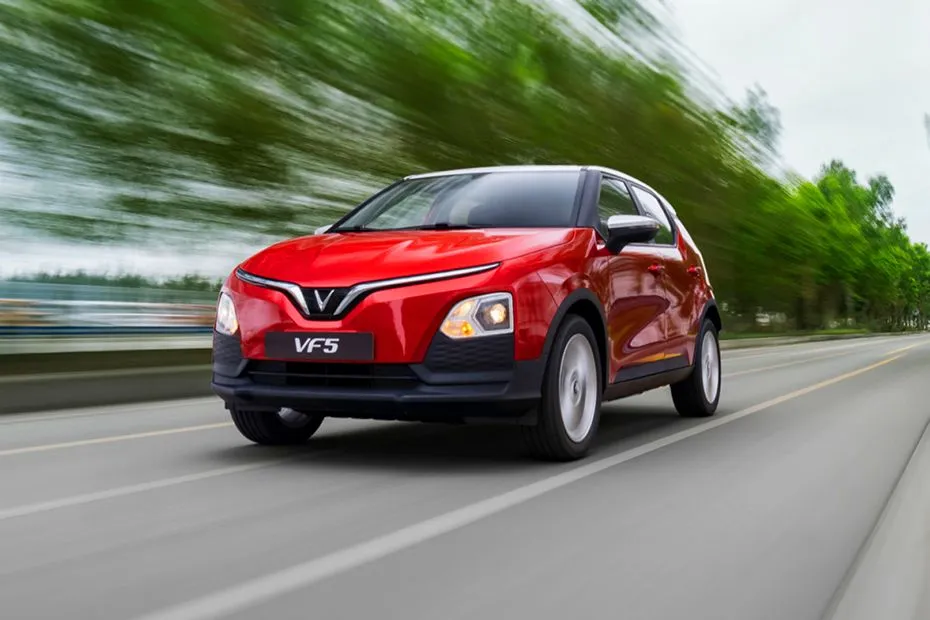
Inside, the VF5 focuses on practicality and comfort. It features an 8-inch infotainment touchscreen, a PM 2.5 air filtration system designed to improve cabin air quality, and leatherette upholstery. These features reflect VinFast’s attempt to balance affordability with a level of equipment that appeals to urban buyers who spend significant time in traffic-heavy environments.
Also Read: From Chapra to Shark Tank: How RCX Lighting Won Rs 50 Lakh Investment
Battery Options and Claimed Driving Range
In international markets, the VF5 is offered with two battery configurations. The smaller 29.6 kWh battery delivers a claimed range of 268 km, while the larger 37.23 kWh battery offers a range of up to 326 km. Both figures are based on the NEDC testing cycle. While India-specific specifications have not yet been announced, these global figures provide an early indication of the vehicle’s positioning in terms of range and daily usability.
For Indian consumers, range remains one of the most important considerations when choosing an EV, especially in the hatchback category where vehicles are often used for daily commuting. The VF5’s international range figures suggest it is designed primarily for urban and short intercity travel rather than long-distance touring.
Recognition Highlights VinFast’s Broader India Plans
VinFast’s growing presence in India has already attracted attention. The company recently received two awards from the Vikatan Group. Its upcoming electric vehicle manufacturing facility in Tamil Nadu was named ‘Investor of the Year’, recognising the scale and significance of the investment. Separately, VinFast’s VF 7 SUV was awarded ‘Urban Electric Vehicle of the Year’, reflecting its suitability for city use with a focus on design, performance, safety, and comfort.
The Tamil Nadu manufacturing project is expected to play a key role in VinFast’s India strategy. Beyond vehicle production, the facility is anticipated to generate employment, support local suppliers, and contribute to the government’s Make in India initiative by strengthening domestic manufacturing capabilities.
A Crowded Launch Calendar in 2026
The VF5 will enter India at a time when the EV market is set to become even more crowded. Several electric models across different body styles are expected to arrive in 2026, intensifying competition. Upcoming launches include the Tata Sierra EV, Maruti Suzuki E Vitara, and Toyota Urban Cruiser Ebella. These vehicles are expected to offer a mix of advanced features, improved safety technologies, and competitive pricing strategies.
This expanding lineup indicates that manufacturers see 2026 as a pivotal year for electric mobility in India. For VinFast, standing out in such a crowded field will depend on product differentiation, pricing, and how effectively it adapts its global offerings to Indian consumer expectations.
Policy Environment Shapes EV Affordability
India’s policy framework continues to play a crucial role in shaping the EV market. The government’s decision to maintain a 5 percent GST rate on electric vehicles has helped keep prices relatively accessible. In addition, GST on several key EV components has been reduced from 28 percent to 18 percent, easing some cost pressures for manufacturers.
However, challenges remain. The inverted duty structure, where taxes on inputs are higher than those on finished vehicles, continues to impact manufacturers’ cash flows and overall cost structures. Industry stakeholders have been urging policymakers to address this issue in Budget 2026, along with expanding charging infrastructure and strengthening localisation incentives.
Setting the Stage for VinFast’s India Journey
As VinFast prepares for the VF5’s India debut in 2026, the company faces both significant opportunities and clear challenges. A growing market, supportive policy measures, and increasing consumer acceptance of EVs create a favourable backdrop. At the same time, intense competition and structural cost issues will test how effectively VinFast can establish itself. The VF5’s launch will be an early indicator of how the brand plans to navigate India’s evolving electric mobility landscape.
Also Read: Google Moves to Redefine Its Workplace With Internal AI Push