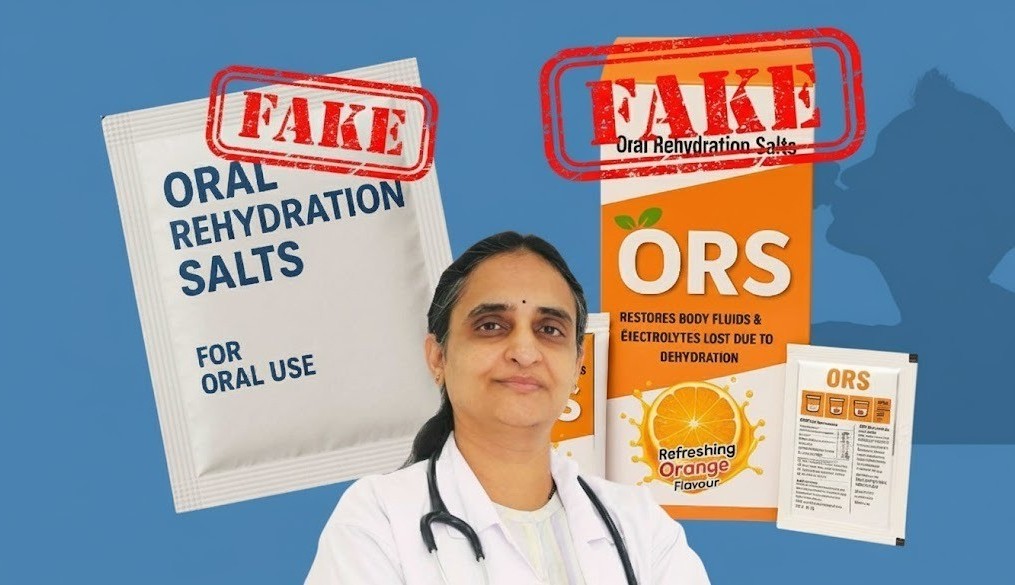
In a landmark decision that underscores the intersection of science, safety, and marketing ethics, the Food Safety and Standards Authority of India (FSSAI) has prohibited the use of the term “ORS” (Oral Rehydration Solution), and its variants such as “ORSL” or “Rehydrate-ORS”, on any food or beverage product that does not meet medically approved formulation standards.
Issued on October 14, 2025, the directive follows years of concern over the misuse of the “ORS” label by several beverage brands selling sugar-rich drinks under the guise of rehydration solutions. These products, often lacking the correct balance of electrolytes, misled consumers, particularly parents, into believing they were purchasing therapeutic formulations suitable for treating dehydration.
This decision marks a pivotal moment in India’s food safety regulation, closing a loophole that allowed marketing creativity to overstep medical science.
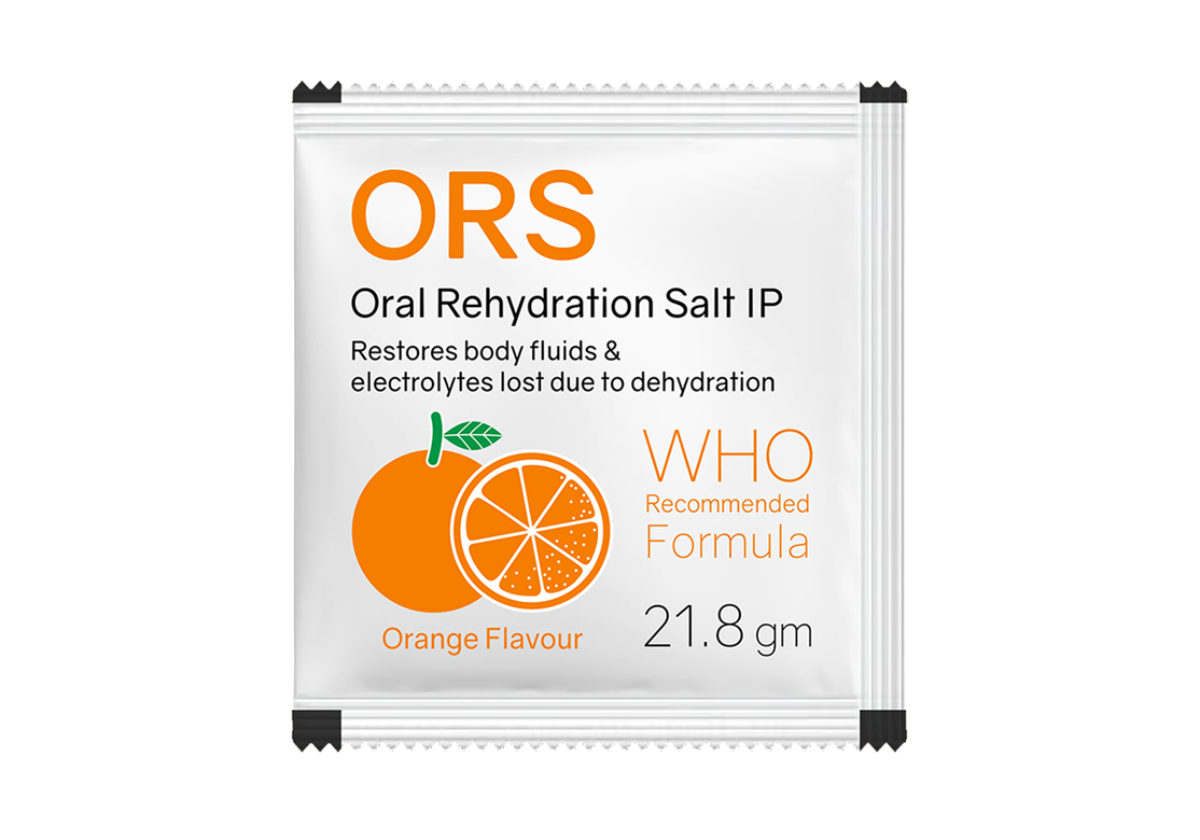
Why the Ban Was Necessary
Oral Rehydration Solution is not a casual beverage, it is a clinically validated medical formulation that has saved millions of lives worldwide, particularly among children suffering from diarrhoea or heat-induced dehydration.
The World Health Organization (WHO) prescribes the following precise composition for true ORS:
- Sodium: approximately 75 mmol/L
- Glucose: approximately 75 mmol/L (around 13.5 g per litre)
- Total osmolarity: about 245 mOsm/L
Using this composition, water and salts become a quick and effective absorption into the body. Whereas, a glucose-rich and electrolyte-poor commercial drink may slow down fluid absorption and, therefore, in extreme cases, the situation of dehydration may be aggravated, i.e., infants and elderly people may be particularly affected.
Health experts have repeatedly warned that such misleading products blur the crucial distinction between therapeutic ORS used in hospitals and flavoured hydration drinks designed for casual consumption.
The Misleading Landscape
For over a decade, Indian consumers have seen an array of products bearing ORS-like names, “ORSL Plus,” “Hydra-ORS,” “Electro-ORS,” among others, none of which fully comply with WHO’s medical composition standards.
Pediatrician Dr. Sivaranjani Santosh was among the first to publicly raise alarms, explaining how these drinks could create confusion during medical emergencies. “When parents reach for the wrong product thinking it’s ORS, they are unknowingly risking their child’s life,” she said in an earlier public statement.
The growing chorus of medical professionals and public health advocates finally led the FSSAI to step in, ensuring that medical terminology is no longer a marketing tool.
Inside the FSSAI Order
The FSSAI directive introduces three critical mandates for all manufacturers and distributors:
- No product may use the term “ORS” or any derivative thereof unless it adheres strictly to WHO-prescribed standards.
- Violators will face action under the Food Safety and Standards Act, 2006, which may include product recalls, relabeling orders, monetary penalties, or legal proceedings.
- State food safety departments have been instructed to conduct inspection drives to ensure full compliance across markets.
This move aims to reinforce truthful communication in health-related marketing and rebuild consumer trust in medically endorsed products.
Impact Across the Ecosystem
Such orders require manufacturers to closely examine the compositions of their products, branding, and marketing claims. Firms will have to either reformulate their drinks to comply with WHO standards or simply drop the use of the term “ORS” from their products.
Local merchants and druggists are accountable for the condition of their stores where only FSSAI-licensed ORS products should be available. Regional officials are already notifying wholesalers about the timeframes for meeting requirements and the potential removal of goods.
Healthcare professionals have welcomed the move, reaffirming that genuine ORS sachets, available through pharmacies and public health centres, remain the safest and most effective treatment for dehydration.
For consumers, the message is straightforward: read labels carefully. Authentic ORS must contain roughly 75 mmol/L of sodium and 13.5 g/L of glucose. Be cautious of overly sweet drinks or those marketed with exaggerated hydration claims.
A Step Forward, with Caution
The order is commonly seen as a win for public health and a loud warning to the beverage industry. However, the triumph of this change largely hinges on the way it is carried out and communicated.
There are still some knowledge gaps regarding the order in these kinds of areas, in particular, rural and semi-urban regions, where people consume more local and unregulated drinks. The uniformity of the police work in various states will be equally important, as well as the good will of the industry not to engage in court battles or take advantage of loopholes in rebranding.
Nonetheless, the FSSAI’s directive signals a clear national intent: medical labels must be protected from commercial distortion.
on: A Matter of Ethics
The judgement essentially upholds the idea that one of the key factors that health terminologies have is that they come with a moral responsibility. Terms such as “ORS” are by no means marketing slogans; they are indicative of the scientifically confirmed, lifesaving methods. To the extent that someone misappropriates such terms for monetary gains, it lessens the trust of the consumers in the products, and at the same time, it can be the cause of death of people.
By drawing this line, the FSSAI has reaffirmed that health claims must rest on science, not marketing imagination.
The Truth That Could Save Lives
The FSSAI’s move is more than a bureaucratic order, it is a reminder that truth in labeling can be a matter of life and death. When a drink claims to rehydrate, it must do so by scientific design, not branding rhetoric.
In reclaiming the integrity of “ORS,” India’s food regulator has placed public health above profit, setting a precedent that could reshape how functional beverages are marketed in the country.
Because in the world of food and medicine, accuracy isn’t optional, it’s ethical.