Facial recognition has quietly moved from science fiction sets and casino thrillers into the devices we unlock every day. What once looked like magic on TV, security teams zooming into grainy footage and finding a perfect match in seconds, is now a mature, if still imperfect, technology used in airports, banks and office lobbies around the world.
Facial Recognition: From Human Instinct to Machine Pattern
Humans are born with a remarkable ability to recognise faces effortlessly, even in bad light or from awkward angles. Teaching computers to do the same has taken decades.
Early experiments began in the mid-1960s, when researchers first tried to get computers to pick out and compare faces. Modern systems follow the same basic idea: detect a face in an image or video frame, measure its key features and turn those measurements into a numerical identity that software can store and compare.
One of the early commercial players, Identix, built software called FaceIt that could pick a face out of a crowd, crop it from the background and compare it against a database of stored images.
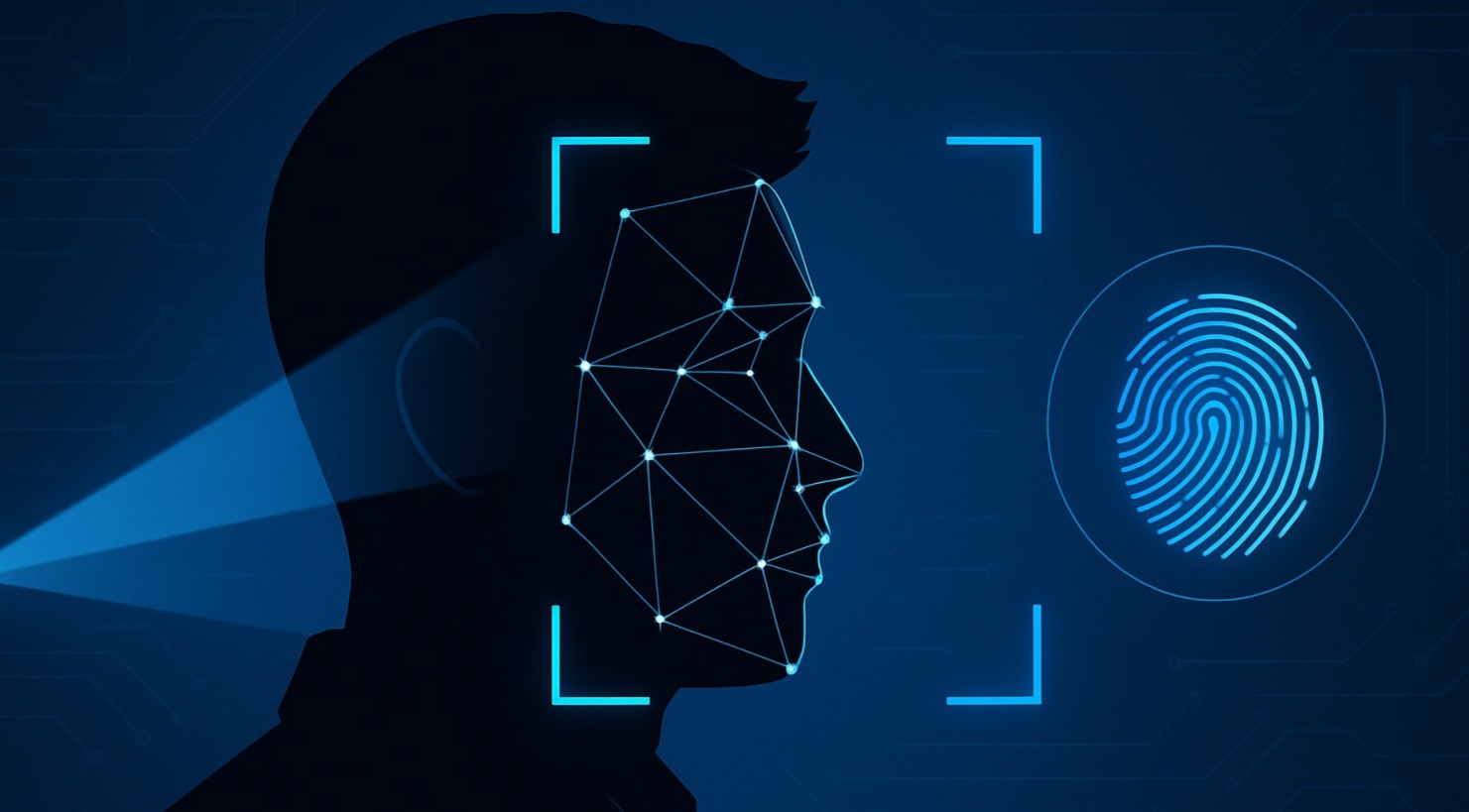
Mapping the “Nodal Points” of a Face
To a facial recognition system, a face is a landscape of peaks and valleys. Software doesn’t care about a person’s expression or hairstyle, it looks for measurable landmarks.
According to the explainer, a typical human face contains roughly 80 measurable “nodal points”. Among the features that can be tracked:
- Distance between the eyes
- Width of the nose
- Depth of the eye sockets
- Shape of the cheekbones
- Length and contour of the jawline
FaceIt and similar systems convert these measurements into a unique numerical code called a “faceprint”. That faceprint, not the original photo, becomes the primary reference in the database. When a new image comes in, the system creates another faceprint and looks for matches.
Why 2D Systems Struggled in the Real World?
Early generations relied on 2D images, essentially flat photographs. For the software to work reliably, the scanned face had to be:
- Looking almost directly at the camera
- Captured in lighting similar to the reference photo
- Wearing a similar expression
In the uncontrolled conditions of real life, security cameras in public spaces, moving crowds, changing light, these requirements were rarely met. Even small changes in angle or illumination could cause the system to fail to match a face at all, resulting in high error rates.
That mismatch between lab conditions and messy reality pushed the industry towards a more sophisticated solution.
The Shift to 3D Facial Recognition?
The next big leap has been 3D facial recognition, which uses depth instead of just flat images.
By capturing a real-time three-dimensional image of the face, these systems focus on rigid, relatively unchanging areas: the curves around the eye sockets, the nose and the chin. Because bone structure doesn’t shift much with age, hairstyle or expression, these measurements provide a more stable identity.
3D systems also have two major advantages:
- They can work in darkness, because they rely on depth measurements rather than visible light.
- They can recognise faces at far wider angles, up to around 90 degrees, meaning a side profile can be enough.
The recognition process follows several steps:
- Detection: The system captures an image, either from a photo (2D) or live video (3D).
- Alignment: It determines the position, size and orientation of the head. Unlike 2D systems that required the head to be nearly frontal, 3D can handle substantial tilt.
- Measurement: The curves of the face are measured at sub-millimetre scale.
- Representation: Those measurements are translated into a numerical template.
- Matching: The template is compared against a database. If the stored images are 2D, the 3D image can be mathematically converted into a compatible 2D version before matching.
When a match is attempted against a single claimed identity, such as confirming that you are the holder of a specific ID card, the process is known as verification (1:1). When the face is checked against an entire database to find out who the person is, it becomes identification (1:N).
When Skin Itself Becomes a Password?
Even with improved geometry, facial recognition alone can struggle in tricky conditions. To tighten accuracy further, developers turned to skin biometrics.
Identix introduced a method called Surface Texture Analysis (STA), which treats a small patch of skin, known as a “skinprint”, as an additional biometric. The patch is divided into smaller blocks, and algorithms analyse lines, pores and texture patterns. These details are distinctive enough to tell apart even identical twins, something earlier facial systems found difficult.
FaceIt combined three layers of templates:
- A compact vector template for rapid first-pass searching across the database
- A local feature analysis (LFA) template to refine the top matches
- The more detailed surface texture analysis (STA) template for the final decision
This layered approach made the system less sensitive to blinking, smiling, growing a beard or putting on glasses, and it was designed to work consistently across different races and genders.
Still, the technology has limits. Strong glare on glasses, sunglasses hiding the eyes, hair covering central facial features, poor lighting or low-resolution images can all undermine accuracy.
Where Facial Recognition Is Being Used
Once restricted largely to law-enforcement use, facial recognition has spread into multiple domains as costs have fallen and off-the-shelf cameras and computers have become powerful enough to run it.
Immigration and Border Control
In the early 2000s, the U.S. government launched US-VISIT (United States Visitor and Immigrant Status Indicator Technology), a programme for foreign travellers. Visa applicants provide fingerprints and have their photograph taken; these are checked against databases of known criminals and suspected terrorists. When the traveller arrives at a U.S. port of entry, their fingerprints and face image are used again to verify that the person carrying the visa is the same person who was vetted earlier.
Travel and Airport Security
As facial systems become compatible with standard cameras and computers already deployed in banks and airports, they can be integrated into existing security infrastructure.
Companies such as A4Vision have marketed systems that use facial recognition to log employees’ arrival and departure times. One selling point is the ability to stop “buddy punching”, where colleagues clock in or out on someone else’s behalf.
Banking and Finance
ATMs and cheque-cashing kiosks can use facial recognition to verify a customer’s identity after they consent to having their image captured. The system creates a faceprint and compares it to stored records, potentially reducing fraud and identity theft and, in theory, allowing transactions without cards or PINs. But this also raises a practical concern: what happens if the system fails to recognise a legitimate customer and locks them out of their own money?
The Privacy Question That Won’t Go Away
Not all deployments are as transparent as unlocking a phone or passing through an automated kiosk.
The report notes that while many uses involve clear consent, others do not. Faces can be captured and analysed in public spaces without people ever knowing. Critics argue that this erodes civil liberties and normalises constant monitoring.
There is also a paradox: the more widely faceprints are collected and stored, the greater the potential attack surface for identity theft and fraud. Even companies working in this field acknowledge that expanding usage inevitably creates new risks.
A Powerful Tool, Still Under Construction
The technology behind facial recognition has progressed from fragile 2D comparisons to sophisticated 3D mapping and skin-texture analysis. It now underpins everything from immigration checks to workplace entry systems and experimental banking services.
This is not an all-seeing, infallible machine. It is a tool shaped by lighting, angles, database quality and design choices and one that sits at the centre of an unresolved debate over security, convenience and the right to move through the world without every glance being logged.
Also Read: Apollo Pharmacy plans 10 crore customers in 5 years