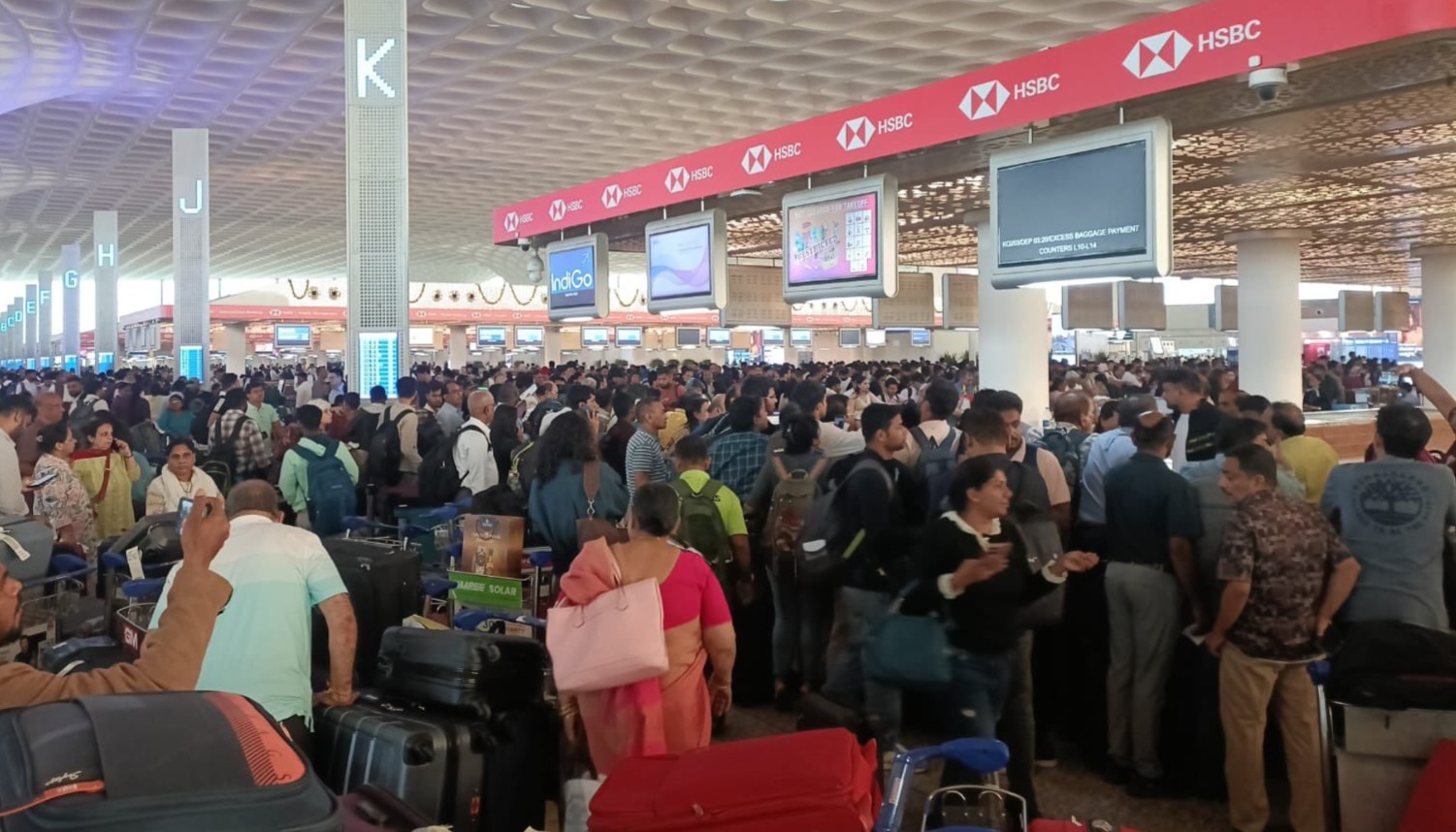
Indigo Stock at Radar: Shares of InterGlobe Aviation, the parent company of IndiGo, slipped in Thursday’s early trade after a wave of flight cancellations and delays rattled passengers and weighed on market sentiment.
On December 4, 2025, the stock fell 3.31% to ₹5,407.30 on the BSE, compared with the previous close of ₹5,592.50. Around 21,000 shares changed hands in the early session, translating into a turnover of ₹13.07 crore. The decline dragged the company’s market capitalisation down to about ₹2.14 lakh crore.
The stock is now trading below its 5-day, 10-day, 20-day, 50-day, 100-day and 200-day moving averages, signalling short-term technical weakness even after a strong run in recent months, during which it has gained 26% over the past year and 20.66% so far in 2025.
Indigo Stock: Market hits pause after dream run
IndiGo has been one of the standout aviation counters on Dalal Street this year, supported by robust demand for air travel and expectations of steady earnings. The sharp single-day fall, therefore, stands out more as a sentiment check than a structural verdict on the business.
For traders and short-term investors, the stock slipping below key moving averages is a clear signal of caution. Technically, such a move often prompts profit-booking after a strong rally, especially when it coincides with visible operational stress on the ground, in this case, hundreds of flights being cancelled or delayed over two days.
Longer-term investors, however, will be watching whether this episode remains a short-lived disruption or evolves into a more sustained operational issue that could affect costs, brand perception and future earnings.
250-300 flights cancelled across network
The immediate trigger for Thursday’s weakness was IndiGo’s acknowledgment that its network had been “significantly disrupted” over the previous 48 hours, leading to an estimated 250 to 300 flight cancellations.
The airline said its schedule came under pressure due to a combination of factors rather than a single point of failure. According to the company’s statement, the following issues compounded each other:
- Minor technology-related glitches
- Seasonal changes linked to the winter schedule
- Adverse weather conditions
- Heavy congestion in the aviation system
- Implementation of updated crew rostering rules
Taken together, these elements strained the airline’s operations in a way that IndiGo said it “could not have anticipated”, resulting in widespread cancellations and delays across its network.
IndiGo issues apology, tweaks schedule to stabilise operations
Facing mounting passenger frustration on social media and at airports, IndiGo issued a public apology, saying it “sincerely” regretted the inconvenience caused to travellers over the past two days. The airline acknowledged the scale of the disruption and said it was taking steps to restore stability and punctuality.
To calm the situation, IndiGo has:
- Adjusted its schedule for the next 48 hours to ease pressure on operations
- Offered alternative flights to affected passengers where possible
- Extended refunds in cases where re-accommodation is not feasible
The airline has said these changes are intended to “normalise operations and improve punctuality” over the short term. Passengers and investors alike are expected to closely track whether these measures translate into visibly smoother operations in the coming days.
Balancing growth and reliability
IndiGo’s explanation underscores a broader reality in aviation: rapid growth, tight schedules, seasonal weather, air-traffic congestion and regulatory requirements around crew rostering leave airlines with limited room for error. When several stress points emerge at once, even if each is manageable in isolation, the system can tip into disruption.
In this case, the airline has attributed its troubles to:
- Technology issues that, though described as minor, appear to have affected scheduling and operations;
- Weather-linked challenges typical of winter; and
- New crew rostering norms that have added operational complexity.
None of these factors is unusual for a large carrier, but IndiGo’s ability to absorb such shocks without large-scale disruption will be closely scrutinised from here on.
Why investors are worried?
For equity investors, the current concern goes beyond a single day’s cancellations. Two key questions will shape sentiment in the short to medium term:
- Is this an isolated event or a sign of operational strain: If the disruptions taper off quickly and punctuality data improves, the market may treat this as a one-off episode amid an otherwise strong year for the stock. A prolonged spell of cancellations and delays, however, could revive worries about rising costs, compensation claims and brand impact.
- How does IndiGo communicate and course-correct: The airline has already apologised publicly and shared a fairly detailed breakdown of the factors behind the disruption. Clear, consistent communication, backed by demonstrable improvements in on-time performance, will be key to rebuilding trust among passengers and calming investors.
IndiGo’s stock performance over the past year shows that investors broadly believe in the airline’s growth story and financial strength. But Thursday’s reaction is a reminder that, in aviation, execution risk, the ability to run a complex daily schedule reliably, remains central to valuation
Also Read: Goa Signs MoU with Sarla Aviation to Bring Air Taxis by 2029