For years, Uttar Pradesh figured in policy speeches as a state with “potential” for startups. The numbers now suggest something more concrete: a genuine shift from promise to performance.
According to state officials, 18,568 startups are currently active across Uttar Pradesh, a pace of growth they describe as “extraordinary”. Strikingly, nearly 8,000 of these ventures are led by women, signalling that the state’s push for entrepreneurship is not confined to big cities or a narrow slice of the population.
These enterprises are no longer clustered in a few districts. Startups, government data show, have taken root in all 75 districts of the state, spanning sectors as diverse as agri-tech, artificial intelligence, drones and fintech.
Uttar Pradesh: A startup in every district
Officials say the expansion of the incubation network has been crucial to this spread. Over the past few years, the government has encouraged universities and technical institutes to set up incubation centres and innovation cells. Many campuses that once functioned mainly as teaching institutions have gradually evolved into innovation hubs, where students and researchers are nudged to turn ideas into enterprises.
These centres offer early-stage mentoring and access to basic infrastructure. Under the state’s startup policy, entrepreneurs can tap into mentorship, financial assistance and technical support, which officials credit for helping first-time founders navigate regulation, compliances and early growth.
The result is visible in smaller towns, where local founders are beginning to build products and services tailored to regional needs. In the process, they are slowly chipping away at the long-standing perception that serious startups can only emerge from metros.
Women founders move to the front row
One of the most noteworthy data points in Uttar Pradesh’s startup story is the nearly 8,000 women-led ventures now operating in the state.
Officials link this surge to targeted outreach, easier access to schemes and the presence of incubators that actively encourage women entrepreneurs to pitch and experiment.
The state’s policy framework, they argue, has tried to lower entry barriers for women through structured guidance and exposure to networks that were once hard to access outside traditional business families.
The participation of women is also reshaping the geography of entrepreneurship. Many women-led startups are emerging from non-metro districts, often working on areas such as local food processing, sustainable products and service platforms that respond to everyday gaps in healthcare, education or logistics.
IT policy turns Noida-Lucknow-Kanpur belt into a tech corridor
If incubation centres have pushed ideas forward, information technology and electronics policies have given them a solid backbone.
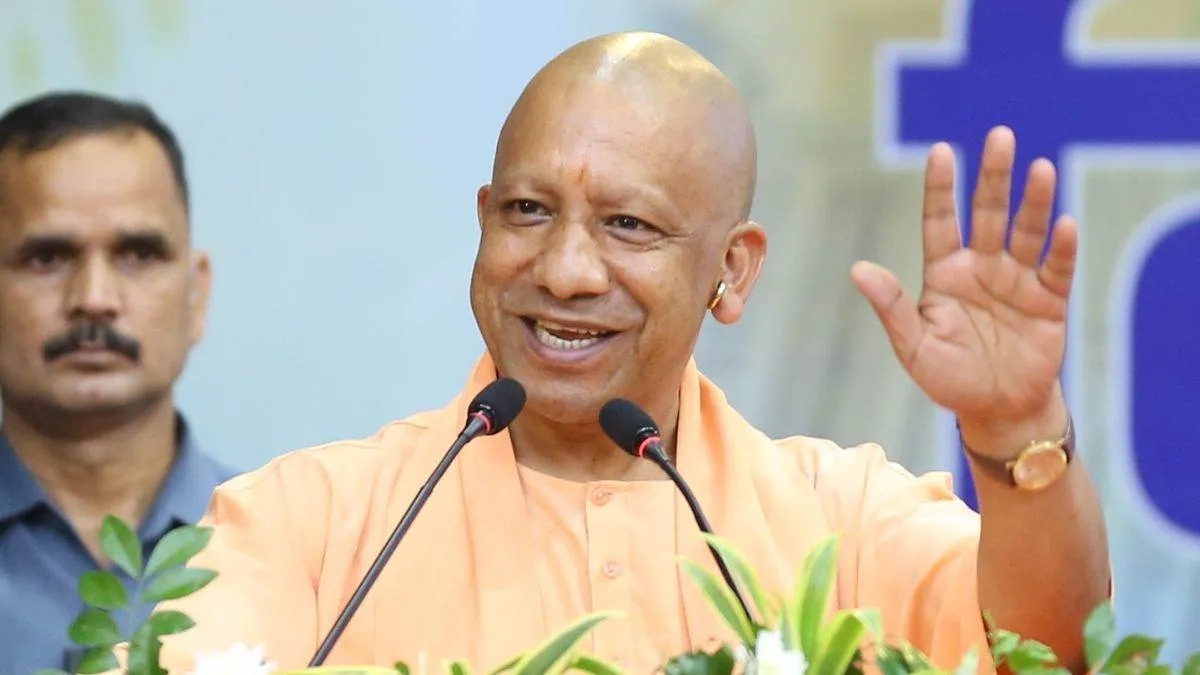
The Yogi Adityanath government’s focus on IT and electronics has accelerated the momentum of the Uttar Pradesh startup ecosystem. Officials point out that the IT sector is expanding swiftly, with Noida, Greater Noida, Lucknow, Kanpur and Gorakhpur emerging as important bases for technology-driven startups.
The state is rapidly developing IT parks, which are pitched as plug-and-play spaces for firms that do not want to sink capital into large office infrastructure in their early years. The availability of such infrastructure, coupled with comparatively lower operating costs than some established tech hubs, is being used as a key selling point to attract global investors and technology companies looking for new growth locations.
Policy backbone and a changing business climate
Beyond physical infrastructure, founders and experts point to a softer but equally important shift: governance and ease of doing business.
The state government projects its transparent governance, strong law and order, and business-friendly environment as pillars behind the recent surge in entrepreneurial activity.
Startup sector expert believes the robust and effective startup policy has been central in strengthening the ecosystem. In his assessment, the pace at which the support system has scaled up puts Uttar Pradesh on course to become one of India’s leading startup hubs in the coming years.
This confidence is significant in a state that historically battled headlines about crime, bureaucratic hurdles and out-migration of talent. The present narrative, built around youth entrepreneurship and job creation, marks a deliberate attempt to rebrand Uttar Pradesh as a place where investment and innovation can take root and expand.
Innovation reaches the countryside
Perhaps the most consequential change is that innovation is no longer confined to big cities.
Officials highlight that startup activity is penetrating rural areas, where new ventures are beginning to create local employment and open up economic opportunities closer to home.
In agriculture-linked districts, this is visible in the rise of agri-tech startups that work on supply chains, farm advisory services or value-added products. Drone-based services, AI-enabled tools and fintech platforms are also being adapted to local contexts, helping small entrepreneurs tap new markets and digital payments infrastructure.
The presence of a startup in every district, officials argue, ensures that the benefits of schemes and policies are not restricted to a handful of urban pockets. Instead, the Uttar Pradesh startup ecosystem is being positioned as a state-wide project, where young people in smaller towns can aspire to build companies without first migrating to Bengaluru, Hyderabad or Delhi.
A showcase story: honey from Barabanki
The state’s pitch for entrepreneurship is increasingly illustrated through individual success stories. One example highlighted by the government is “Madhumakkhiwala”, a honey producer firm from Barabanki district, which has gained recognition beyond India’s borders. The startup, run by Nimit Singh, is showcased as a model of how a local enterprise can ride the wave of branding, quality improvement and market access to reach international buyers.
For policymakers, such stories serve a dual purpose: they validate the ecosystem-building approach and offer relatable role models for aspiring founders in smaller districts.
With 18,568 active startups, nearly 8,000 of them led by women, and presence across all 75 districts, Uttar Pradesh has moved beyond pilot-stage experimentation and into what officials describe as a full-fledged startup ecosystem.
The challenge now will be depth: helping more of these ventures scale, ensuring that incubation translates into sustainable business models, and maintaining the governance standards that have underpinned investor confidence so far.
Also Read: AI startup Flex bags $60 million to court the ‘jumbo shrimp’ of corporate America