
In an era where market success often overshadows social responsibility, सबेरा SABERA Awards has emerged as a counterweight, spotlighting leaders and organizations that turn business into a force for good. Conceived by media consultant and industry veteran Suparnaa Chadda, the initiative bridges the worlds of enterprise and impact. “SABERA strives to unite industry, non-profits, and change-makers to propel sustainable and equitable development in India, amplifying responsible leadership and impact,” she says.

The platform’s promise is simple but ambitious: amplify credible, measurable work and give it the kind of spotlight usually reserved for valuations and IPOs. Recognition happens not in isolation but at a gala amid industry peers, policymakers, and sustainability practitioners, an ecosystem where visibility sparks collaboration.
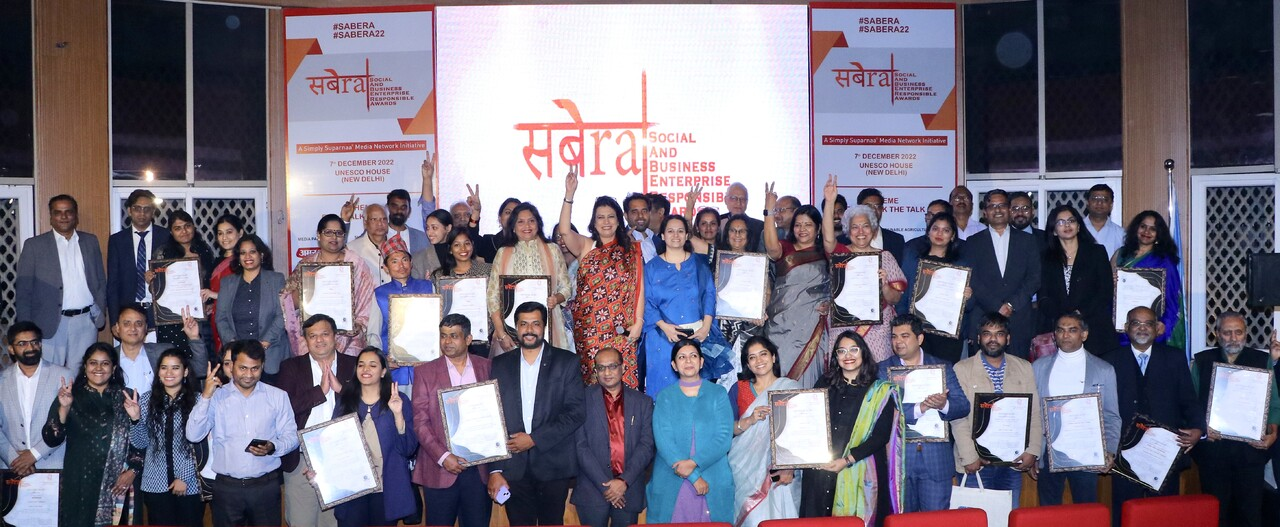
“The most challenging problems cannot be solved by the government and nonprofits alone,” the platform underscores in its intent. SABERA’s design reflects that belief: it curates a community that blends enterprise with empathy, rewarding outcomes that are rigorous, replicable, and responsible.
A media mind builds a development bridge
SABERA was started by Suparna Chadda, a media consultant who has worked across radio, television, and print, and who founded Woman Endangered, an initiative on gender sensitivity.
Her family roots run deep in Indian letters: her grandfather, Ram Rakha Mal Chadda, started the Urdu literary magazine Biswin Sadi, while Krishan Kumar Chadda, the founding editor of Nai Sadi, championed young writers and penned short stories himself. That editorial lineage shows in SABERA’s insistence on both voice and verification.
In another reflection, Suparna told Ascendants: “Basically my learnings from the media industry to help the development sector, so India can see a new SABERA.” The translation of newsroom discipline into development practice is evident in how entries are screened, judged, and showcased.
A jury-first process, not a popularity contest
SABERA’s award winners are finalized by a Jury Board of eminent leaders drawn from diverse sectors. The evaluation runs through a robust, transparent, multi-tier process: internal checks, external verification, a pre-screener evaluation, and finally a Grand Jury round. This layered approach safeguards against tokenism and ensures the laurels go to work that stands up to scrutiny.
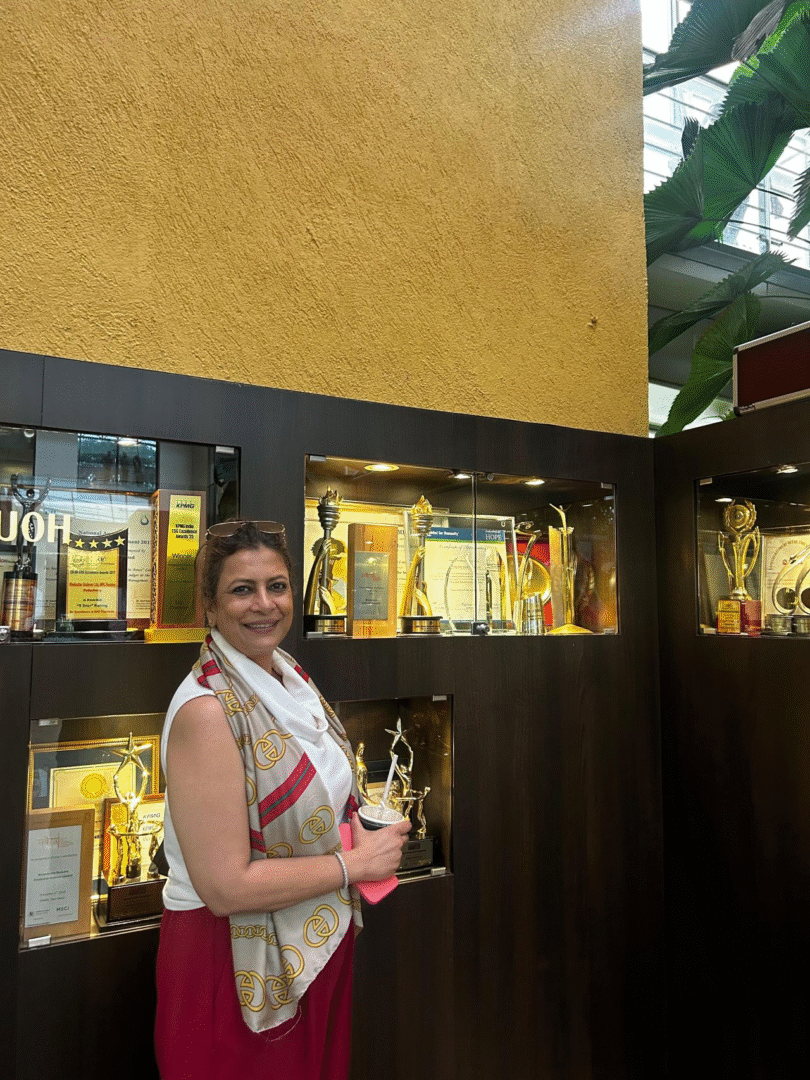
Recognition doesn’t end at the trophy. Awardees are amplified across traditional and social media, while a public repository of “Do-Gooders” on the site preserves each year’s cohort. A summit preceding the awards encourages networking and collaboration so the momentum carries beyond the gala night.
What gets celebrated and who can apply?
There are four main categories, collectively spanning 16 subcategories:
- A: Initiative
- B: Entity
- C: Individual
- D: Responsible Business
SABERA keeps the Individual (Category C) awards free of charge, removing a key barrier for changemakers and social leaders. For Categories A, B, and D, an entry fee applies but is calibrated to organization size.
There are three slabs by top-line revenues, above ₹5 crore, below ₹5 crore, and ₹40 lakh, with fees waived for organizations below ₹40 lakh, and subsidized for those below ₹5 crore. Early-bird discounts apply to early submissions. (Specific fee details and timelines are available in the Rules & Regulations.)
For the Responsible Business awards, SABERA engages an external consultant’s research to highlight the Top 50 Responsible Businesses and Top 50 Promising Responsible Businesses in India based on ESG metrics. Businesses can self-nominate; all entries must submit criteria-based information and face the Grand Jury evaluation.
The platform operates on an annual cycle: pre-screening runs for a month, the Jury Board meets in November, and the awards gala is held in December. Another defining choice: SABERA is deliberate about who it partners with. As a principle, it avoids liquor, tobacco, and gambling companies, keeping alignment tight with its mission of responsible, long-term impact.
Meaningful Not Marketable
India’s development story is being written not just in government corridors and nonprofit field offices but in boardrooms, factories, labs, and startups. SABERA’s architecture, rooted in verification, sector diversity, and public recognition, responds to a core gap: credible signaling. By tying recognition to a transparent process and ESG-informed criteria, it nudges businesses toward outcomes that are socially and environmentally meaningful, not just marketable.
The platform’s emphasis on affordability for smaller enterprises, a no-fee path for individuals, and an open repository of awardees collectively lowers the barrier to entry and raises the ceiling for ambition. When responsible practices are visible, validated, and networked, they find capital, talent, and policy attention faster.
The Suparnaa Signature
Chadda’s media instincts, story discipline, credibility checks, and audience-first framing, shape SABERA’s personality. The initiative reads like a newsroom with a development mandate: rigorous with facts, attuned to context, and relentless about impact. That’s by design.
In the end, SABERA’s contribution is not just the awards it confers; it’s the community it convenes. By creating a stage where responsibility is the headline, and by archiving those stories for others to learn from, SABERA turns recognition into a resource. And in a country of India’s scale and complexity, that kind of honest amplification is more than applause, it’s infrastructure.
Also Read: Astrophel Aerospace’s Cryo Pump Tested at ISRO, Eyes 2026 Goal