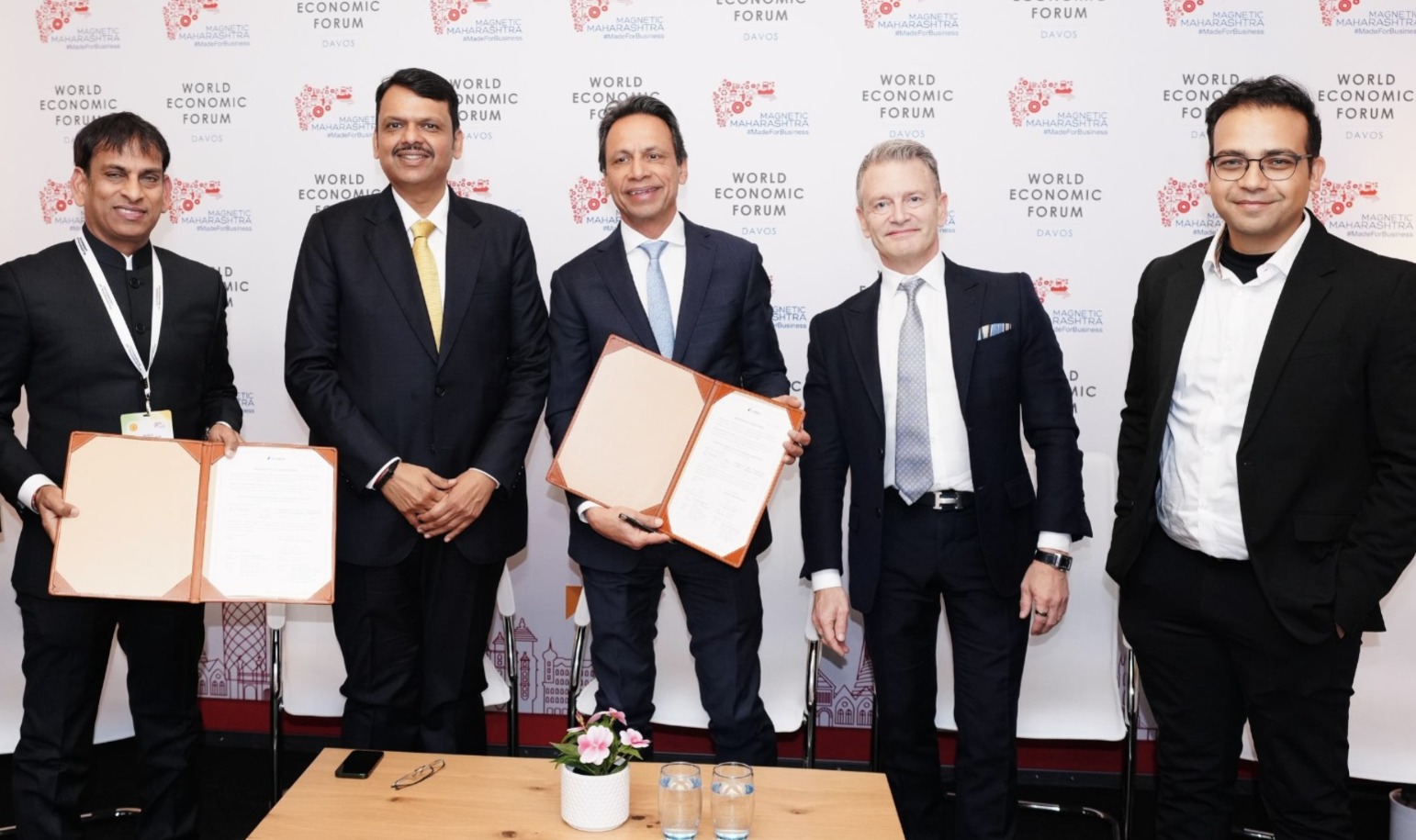
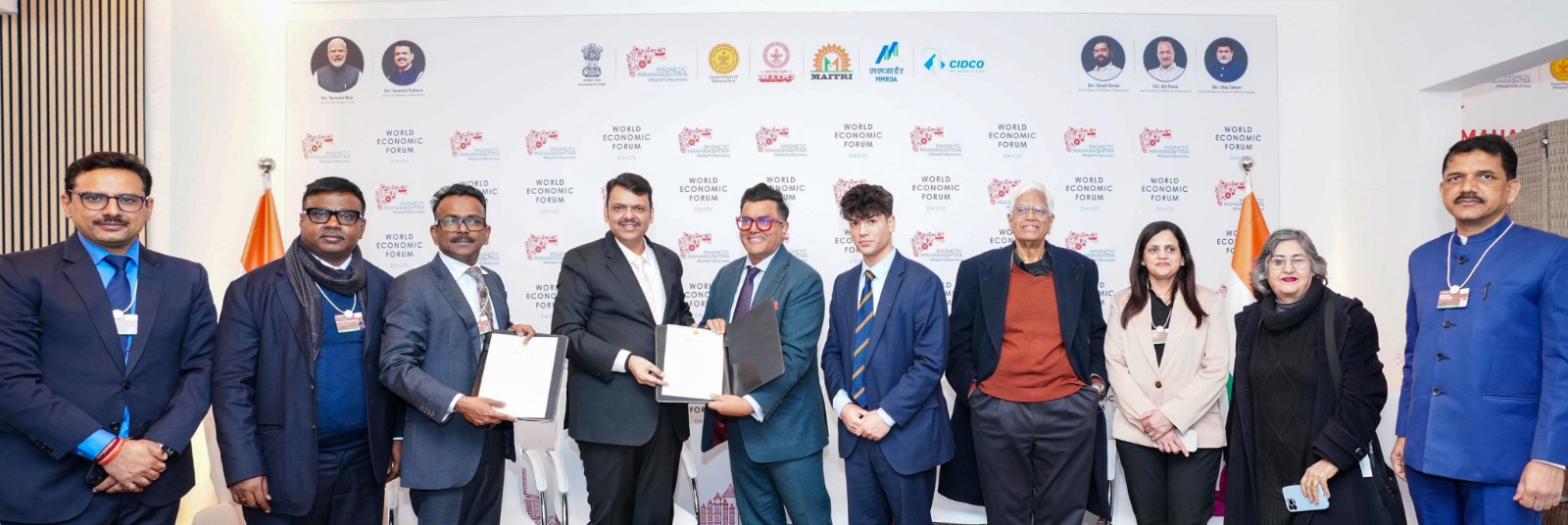
When Maharashtra stepped onto the global stage at the World Economic Forum in Davos this year, it returned with a number designed to command attention: memoranda of understanding worth ₹30 lakh crore. Alongside it came another ambitious projection, the potential creation of up to 40 lakh jobs across sectors ranging from technology to manufacturing.
The announcement was made by Chief Minister Devendra Fadnavis during a virtual press conference from Davos, where he outlined the scale, composition and timeline of the state’s investment pipeline. The message was clear: Maharashtra wants to position itself not just as India’s industrial powerhouse, but as a future-ready investment destination.
Yet, behind the headline figures lies a more complex story of timelines, execution and global capital flows.
Maharashtra: Beyond the headline numbers
According to Fadnavis, Maharashtra signed MoUs worth ₹30 lakh crore during the Davos summit. In addition, the state is in discussions for further projects estimated at ₹7-10 lakh crore, with several agreements expected to be finalised within the next two months.
The government has also tried to frame expectations realistically. Fadnavis said Maharashtra’s MoU realisation rate stands at around 75 per cent and noted that last year’s commitments were implemented at a similar level. He added that the current round of investments is likely to materialise over a period of three to seven years, underlining that Davos announcements are not instant inflows but long-term pipelines.
Foreign capital at the core
A striking feature of Maharashtra’s Davos push is its reliance on global capital. The Chief Minister said that about 83 per cent of the MoUs represent foreign direct investment, while roughly 16 per cent relate to technical partnerships with financial institutions, particularly in areas linked to import-substitute technologies.
Nearly 83 per cent of the expected FDI is projected to come from 18 countries, including the United States, the United Kingdom, Singapore, Japan, Switzerland, Sweden, the Netherlands, Norway, Italy, Germany, France, Austria, the UAE, Spain, Canada and Belgium. This international spread reflects Maharashtra’s effort to diversify its investor base beyond traditional markets.
A mix of global giants and Indian conglomerates
The list of companies that signed MoUs with Maharashtra at Davos spans global funds, multinational corporations and India’s largest industrial groups. Among them are SBGI, Brookfield, ArcelorMittal, Finman Global, Issar, Skoda Auto, Volkswagen, STT Telemedia, Tata Group, Adani Group, Reliance Industries, JBL, Coca-Cola, Bosch, CapitaLand and Iron Mountain.
The diversity of sectors represented by these companies suggests that Maharashtra is betting on both traditional heavy industries and emerging digital infrastructure to drive its next phase of growth.
Sectors shaping the next growth cycle
The proposed investments cover a wide spectrum of industries, including quantum computing, artificial intelligence, global capability centres, data centres, healthcare, food processing, green steel, urban development, shipbuilding, fintech, logistics and digital infrastructure.
This sectoral spread reflects a dual strategy: strengthening Maharashtra’s established industrial base while building capacity in technology-driven and future-oriented industries that promise high-value jobs and global competitiveness.
Redrawing the investment map within Maharashtra
Maharashtra has also highlighted the geographical distribution of proposed investments, signalling an attempt to move beyond Mumbai-centric development.
Konkan and the Mumbai Metropolitan Region together account for about 22 per cent of the total commitments, while Vidarbha has attracted around 13 per cent. North Maharashtra districts such as Nashik, Jalgaon, Dhule and Ahilyanagar have secured proposals worth ₹50,000 crore, while Chhatrapati Sambhajinagar in Marathwada has attracted ₹55,000 crore.
Overall, Konkan, including the MMR, has commitments of about ₹3.5 lakh crore, while Vidarbha is expected to attract around ₹70,000 crore. The emphasis on regional distribution reflects the state’s broader political and economic objective of balancing development across regions.
Two flagship projects near Mumbai
Among the most prominent announcements is the plan to develop India’s first “Innovation City” near Mumbai in partnership with the Tata Group. Detailed planning for the project is expected to take six to eight months. The initiative, first conceptualised during last year’s Davos meeting, is expected to attract more than ₹1 lakh crore in investment from the Tata Group alone, with additional interest from international investors.
Another major initiative is the Raigad–Pen Growth Centre, announced at this year’s WEF, which is envisioned as a new business district and has already attracted investment commitments of ₹1 lakh crore.
Linking investment with urban sustainability
Beyond industrial investment, the state government has also spoken about a circular economy model for Mumbai to address challenges such as water and air pollution. Fadnavis said the government aims to demonstrate tangible results in the city within the next two to three years and to process all types of waste.
This narrative ties Maharashtra’s investment push to broader urban and environmental goals, expanding the Davos story beyond capital inflows to quality of life and sustainability.
Institutional partnerships and global engagement
The state of Maharashtra has entered institutional MoUs with organisations like JICA, JBIC, University of California Berkeley, and even Stanford University’s Stanford Biodesign. Fadnavis has held meetings with international figures and organisations on the sidelines of the meet, like low-carbon transport and development, and trade.
The real test: conversion, not commitments
For Maharashtra, the Davos announcements mark the beginning of a long execution cycle rather than its conclusion. The government’s own benchmark, a 75 per cent MoU realisation rate and a three-to-seven-year implementation horizon, will ultimately determine how much of the ₹30 lakh crore pipeline translates into factories, infrastructure and jobs on the ground.
For now, the state has made a bold statement of intent. Whether that intent becomes a measurable economic transformation will depend not on the scale of MoUs signed in Davos, but on the speed and depth of their conversion back home.
Also Read: Adani Group Sets Out $66 Billion Investment Plan Across Three States