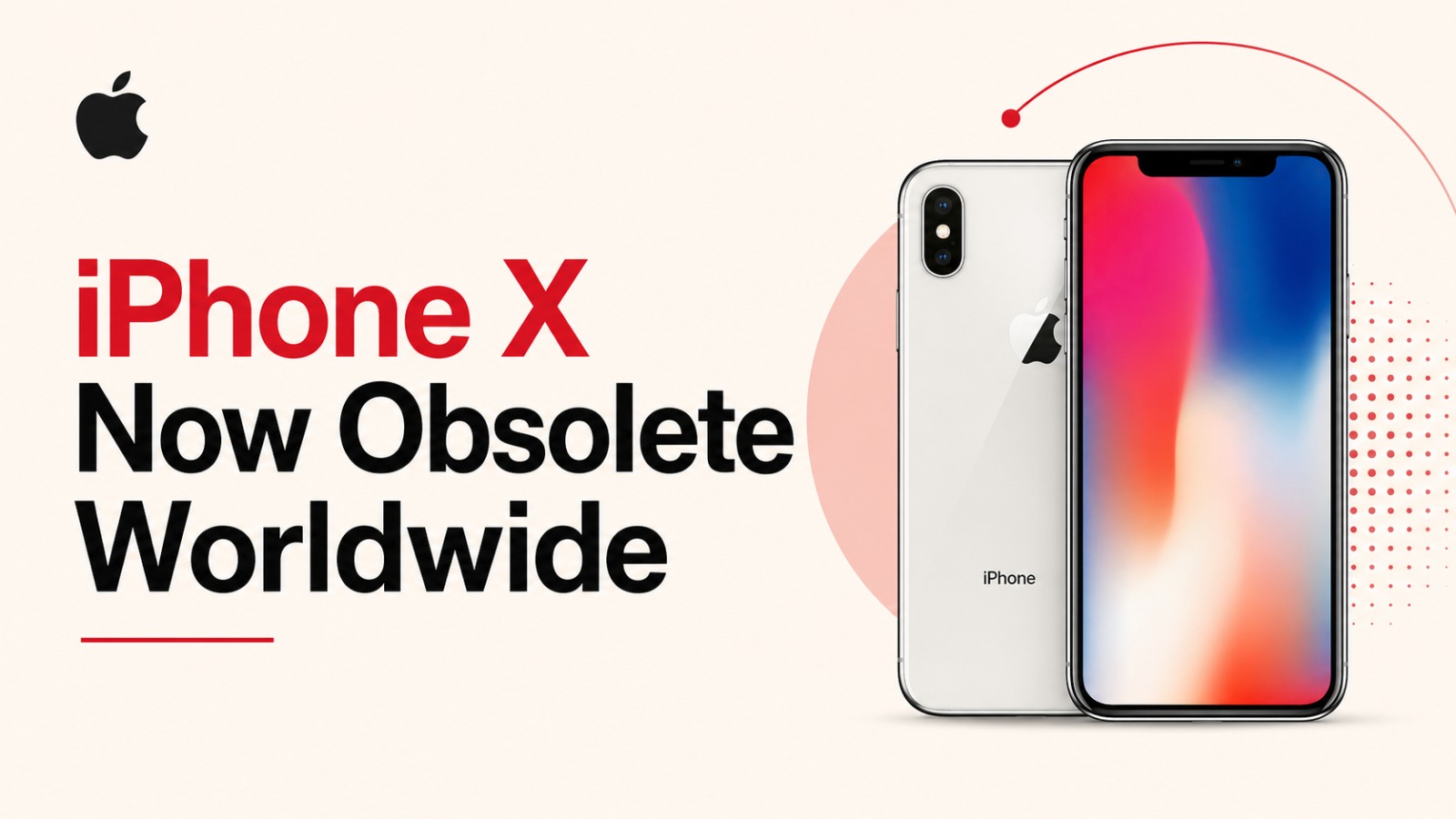
Apple has officially added the iPhone X to its worldwide list of obsolete products, marking the end of the company’s standard hardware service support for the nine-year-old smartphone. The update means Apple and its authorised service providers will no longer be able to order parts or provide hardware service for the device under the company’s obsolete-product policy.
Launched in 2017, the iPhone X represented one of the biggest design changes in the history of the iPhone. It introduced a new look and several features that later became familiar across Apple’s smartphone lineup. Its move to the obsolete category now signals another major milestone in the device’s lifecycle.
Apple’s Obsolete Classification Brings Hardware Support to an End
Apple considers a product obsolete when it has stopped distributing it for sale for more than seven years. Once a device enters this category, Apple discontinues hardware service for it, and authorised service providers cannot order replacement parts through Apple.
The iPhone X was removed from Apple’s sales lineup in 2018. With the model now appearing under Apple’s obsolete iPhone products worldwide, owners should no longer expect official hardware repairs through Apple’s service network.
This does not mean an iPhone X will suddenly stop working. Existing devices can continue to operate as long as their hardware and software remain functional. However, users facing problems with components such as the display, battery or other internal hardware may need to explore independent repair options instead of relying on Apple’s official service network.
Also Read: iPhone 18 Pro Max Launching Next Month With 10 Major New Features: What to Expect
The iPhone That Changed Apple’s Design Direction
The iPhone X remains an important model in Apple’s history because it introduced a design that was significantly different from earlier iPhones.
The smartphone replaced the traditional physical Home button and Touch ID with Face ID. Its OLED display extended closer to the edges of the phone, while the notch at the top housed the front-facing camera and sensors needed for Face ID.
Apple also used a glass back and stainless steel frame, giving the iPhone X a distinct premium appearance. These design choices helped establish the visual direction that Apple continued to develop in later iPhone generations.
Software Support Continued Beyond the Hardware Era
Although the iPhone X has now reached Apple’s obsolete category, its software history shows that hardware support and software updates follow different timelines.
The iPhone X supports iOS 16, and Apple has continued releasing updates for that software branch. Apple’s security documentation lists iOS 16.7.16 as available for the iPhone X, with the update released on May 11, 2026.
This means the end of official hardware servicing does not itself cause an iPhone X to stop functioning. The device can still be used by owners who are comfortable continuing with its existing software capabilities.
iPhone X Joins Apple’s Growing Obsolete Lineup
With the latest update, Apple’s worldwide obsolete iPhone list includes models dating back to the original iPhone and several generations that followed.
The list includes the iPhone 3G, iPhone 3GS, iPhone 4, iPhone 4S, iPhone 5, iPhone 5C, iPhone 5S, iPhone 6, iPhone 6 Plus, selected iPhone 6s and iPhone 6s Plus variants, the iPhone 8 and iPhone 8 Plus PRODUCT(RED) models, the iPhone SE and now the iPhone X.
Apple’s current support document, published August 13, 2026, places the iPhone X in the obsolete category, while several newer models, including the iPhone XS, iPhone XS Max, iPhone 11 Pro and iPhone 11 Pro Max, remain listed as vintage products.
For iPhone X owners, the change is therefore mainly about access to official hardware repairs and replacement parts. The phone itself does not become unusable because of the classification, but repairing a serious hardware failure through Apple is no longer an option under the company’s obsolete-product policy.
Also Read: Marvel Studios Locks 7 Key X-Men Roles With Adam Driver Cast as Mr. Sinister