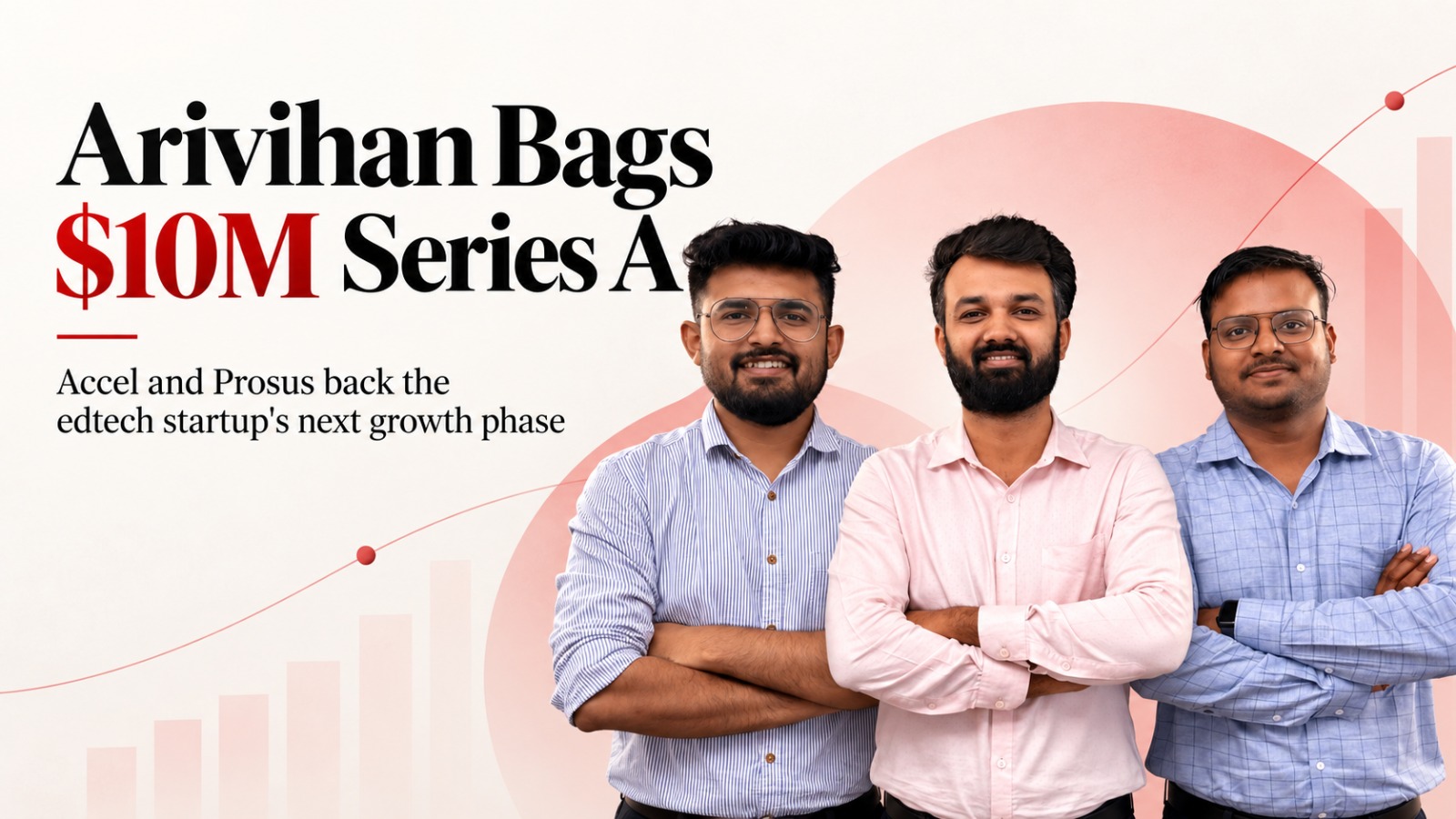
Venture-capital firm Accel has teamed up with Prosus to co-invest in early-stage Indian startups building science-led, breakthrough technologies, from robotics and advanced manufacturing to AI applications. The partners will match investments of up to $2 million each through Accel’s Atoms X programme, which backs companies with longer development cycles than typical software startups. The firms describe these as “LeapTech” ventures.
Prosus called it its first global collaboration of this kind, signalling an appetite for category-defining companies that may take 10-15 years to mature but can win on technical differentiation. “This is Prosus’ first collaboration of its kind globally. Accel is a natural partner to join hands with,” said Ashutosh Sharma, head of India ecosystem at Prosus.
How the co-investment will work
The two firms will invest directly from their respective funds and co-invest in every LeapTech venture under the arrangement. Initial cheques can go up to $1 million from each fund; follow-on rounds will follow each fund’s own mandate. “With this partnership, we can collectively support founders from early ideas to late stage,” Sharma added.
The thesis: “Affordable excellence at population scale”
Accel partner Pratik Agarwal said the goal is to back ideas that create “step-function” shifts in cost, access or performance, whether the breakthrough is technological, product-led or in the business model.
He framed India’s context as distinct from the US or China, arguing for innovations that deliver “affordable excellence at population scale.”
The partners pointed to Indian-scale execution stories, from Jio and UPI to the rise of quick commerce, as proof that LeapTech innovation can reshape categories. They see similar potential in advanced manufacturing, energy transition and AI-driven automation.
Track record and examples
The firms have previously co-backed Wiom, a platform expanding affordable broadband via partnerships with local internet providers in underserved regions. Accel has also invested in Posha, a kitchen-robotics startup that uses AI and computer vision to cook meals, and Sarla Aviation, which is building flying taxis.
Agarwal said Sarla Aviation gained access to testing facilities, R&D centres and policymakers through Accel’s networks, support the founders might not have secured alone. He argued such companies need “capital, credibility, and connections” much earlier in their lifecycle.
Market backdrop
Global startups in this segment drew over $80 billion in venture funding in 2024, with India contributing 6–8% of deal volumes, according to PitchBook and Bain data cited by Accel. Within Accel’s own Atoms programme, the firm has backed 40+ companies, and about 30% have secured follow-on funding from external investors.
Deep-tech bets take patience. Agarwal likened their growth to bamboo, invisible for years while foundations are laid, then rapid scale when the time is right, often culminating in category dominance because of uniqueness.
The Significance
- First-of-its-kind Prosus partnership: A notable global signal from Prosus toward India-first, science-led ventures.
- Bigger cheques for longer cycles: A dedicated co-investment path for startups that need longer R&D arcs, not just software-style sprints.
- Execution at Indian scale: The bet is on “affordable excellence” that can move the needle nationwide, then globally.
Also Read: What If Farmers Owned Their Data?