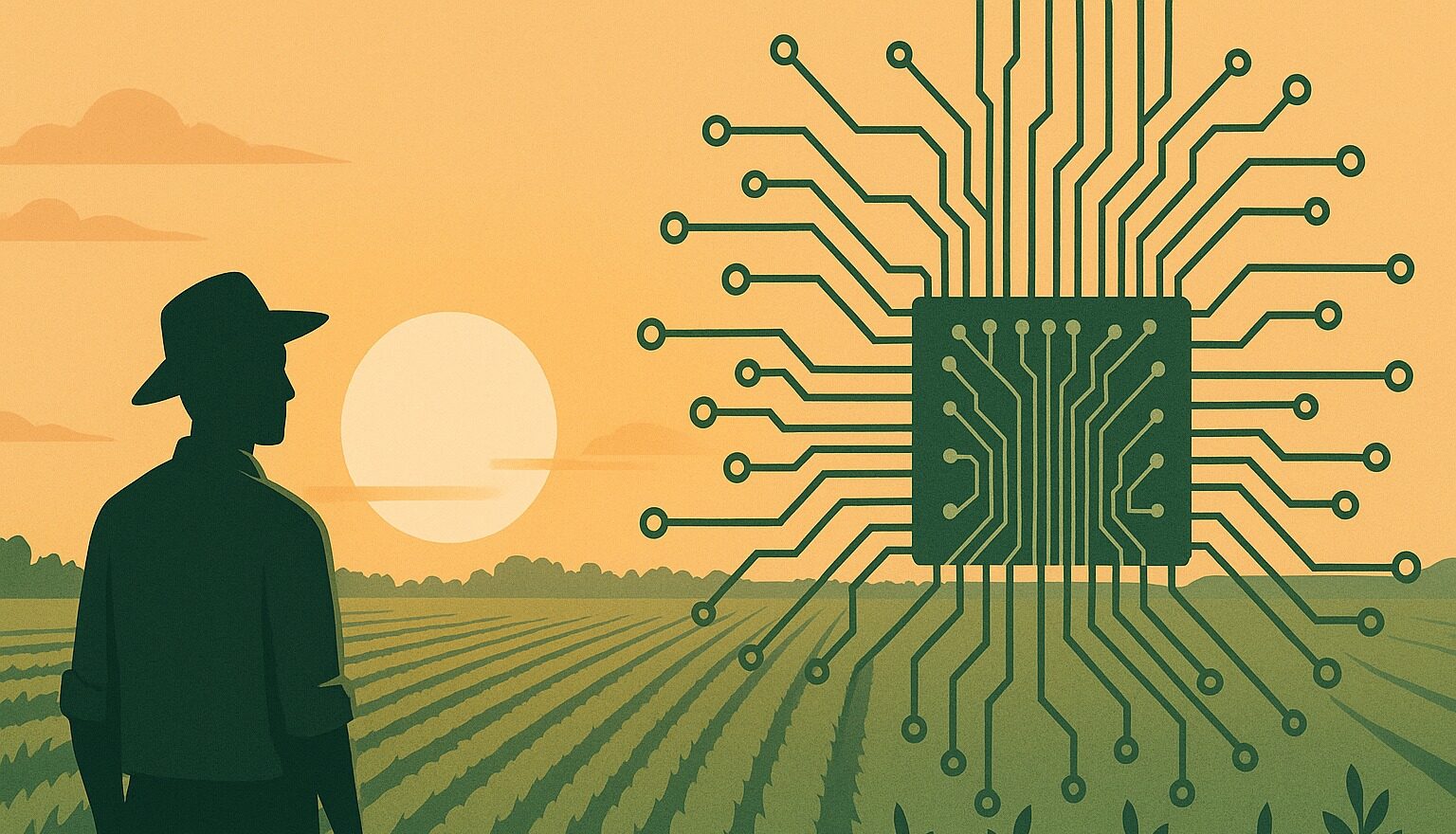
Farmers Data or Cash Crop: In a small district outside Varanasi, a farmer named Rajesh Kumar now checks his mobile app every morning before stepping into his field. The app doesn’t just forecast weather, it predicts soil moisture, pest probabilities, and market rates across three nearby mandis. What Rajesh doesn’t know is that his every click, crop pattern, and soil scan are generating data points, valuable ones, that could soon become more profitable than the crops themselves.
Welcome to India’s emerging frontier: data-driven farming, where the next big question isn’t how much food India can grow, but who owns the data that decides how it’s grown.
Farmers Data: The Hidden Gold in Farmlands
India’s farmlands generate an untapped flood of information every day, from rainfall and soil pH to satellite imaging and local transaction data. According to a 2024 NASSCOM report, India produces nearly 500 million agricultural data points per day, yet less than 5% of this is directly accessible to farmers.
For decades, this data has flowed upward, to government databases, weather agencies, and AgriTech companies like DeHaat, Ninjacart, CropIn, and BharatAgri. These firms have digitized agriculture through AI-based advisories, precision inputs, and supply-chain tracking.
But there’s a catch: while farmers create the data, it’s platforms that own and monetize it.
In contrast, developed markets like the EU have begun moving toward “data sovereignty”, policies ensuring that farmers retain control of how their farm data is collected and used. In India, that idea is just beginning to sprout.
How AgriTech Platforms Harvest Data
Take DeHaat, one of India’s leading AgriTech startups backed by Sofina and Temasek. It aggregates data from over 2 million farmers across 11 states, tracking seed choices, soil health, and crop outcomes. This data powers predictive models that improve yields and supply chains, but it also helps companies design new financial products, price risk, and target input sales.
Similarly, Ninjacart uses its farmer-network data to optimize logistics for urban retailers, while CropIn provides AI-driven farm analytics to agri-enterprises and state governments. Together, these startups have raised over $1.2 billion in funding as of 2025, proving how valuable farm data has become to investors.
Yet, few small farmers have the tools or awareness to access their own digital footprint.
As a development economist, puts it:
“Farmers are the data producers, not the beneficiaries. Unless ownership is formalized, we’re repeating the mistake of treating data like an extractive resource, not a shared asset.”
Can Farm Data Become a New Asset Class?
Imagine if Rajesh Kumar’s soil data could be tokenized, pooled, and traded, just like carbon credits. That’s the concept behind Data Cooperatives, now being piloted by digital commons groups like Digital Green and eChoupal 2.0 initiatives.
These cooperatives treat data as a collective asset, allowing farmers to share and monetize it under transparent governance. For example:
- Crop yield datasets can be licensed to agri-insurers.
- Soil and weather models can train machine-learning systems for public good.
- Supply-chain patterns can improve national food planning.
The World Bank’s 2024 Digital Agriculture report estimates that shared data ownership could increase smallholder income by up to 15% in five years, if integrated with precision farming and digital marketplaces.
Policy Roots: India’s Digital Agriculture Mission
The Indian government’s Digital Agriculture Mission (2021–2026), under the Ministry of Agriculture, envisions a “federated data ecosystem” integrating information from land records, weather services, crop insurance, and AgriStack.
However, this framework sparked debate. Critics warn that AgriStack, though technologically advanced, risks centralizing farm data under private platforms.
In response, several states including Kerala, Telangana, and Punjab have launched parallel models that emphasize data consent, farmer access, and cooperatives.
If these pilots succeed, India could evolve from a “data-poor farmer economy” into a data democracy, where farmers lease their information rather than lose it.
Startups Betting on “Data-as-a-Service” for Farmers
Several Indian AgriTech startups are already experimenting with data ownership models:
- BharatAgri offers digital “farm passports”, detailed, shareable profiles owned by farmers.
- Krishify allows farmers to selectively share input purchase data for discounts.
- CropIn’s SmartFarm is testing blockchain-based traceability for export-grade produce.
- FarmSetu, a Gujarat-based startup, is developing “data wallets” where farmers can store and trade verified agronomic data.
These models may sound futuristic, but they echo what happened in fintech a decade ago, when UPI transformed how Indians managed their own money. In agriculture, data could do the same.
The Global Parallel: Learning from Europe and Africa
In the European Union, the Code of Conduct on Agricultural Data Sharing ensures transparency between farmers and agribusinesses. It explicitly states:
“The data originator, usually the farmer, should be the owner of data generated on their farm.”
Similarly, in Kenya, the DigiFarm platform, backed by Safaricom, allows farmers to view and control who accesses their soil and crop data. This transparency has boosted trust and adoption rates.
India’s challenge, however, is scale. With over 146 million small and marginal farmers, data standardization and consent management are monumental tasks.
The Future: Soil, Satellites, and Sovereignty
If farmers truly owned their data, agriculture could transform from a subsistence activity into an information economy. A farmer’s data profile, soil history, yield record, and digital creditworthiness, could replace the outdated land record as the new unit of economic identity.
Data could become the fourth factor of production, after land, labor, and capital.
It could power personalized advisories, transparent crop insurance, and ethical AI-driven policymaking, all built on farmer consent.
But without legal frameworks, India risks creating a new digital divide, between data-rich platforms and data-blind farmers.
The Real Question
So, what if farmers owned their data? They could negotiate better input prices. Demand fairer credit terms. License insights to companies. Or, simply, choose not to share.
Because ownership, in its truest sense, is not about control, it’s about choice. The day Indian farmers start making money not just from their fields, but from the information those fields generate, is the day India’s digital agriculture story truly begins.
Also Read: Bengaluru’s IT Crisis: 50,000 Jobs Lost to AI Disruption?