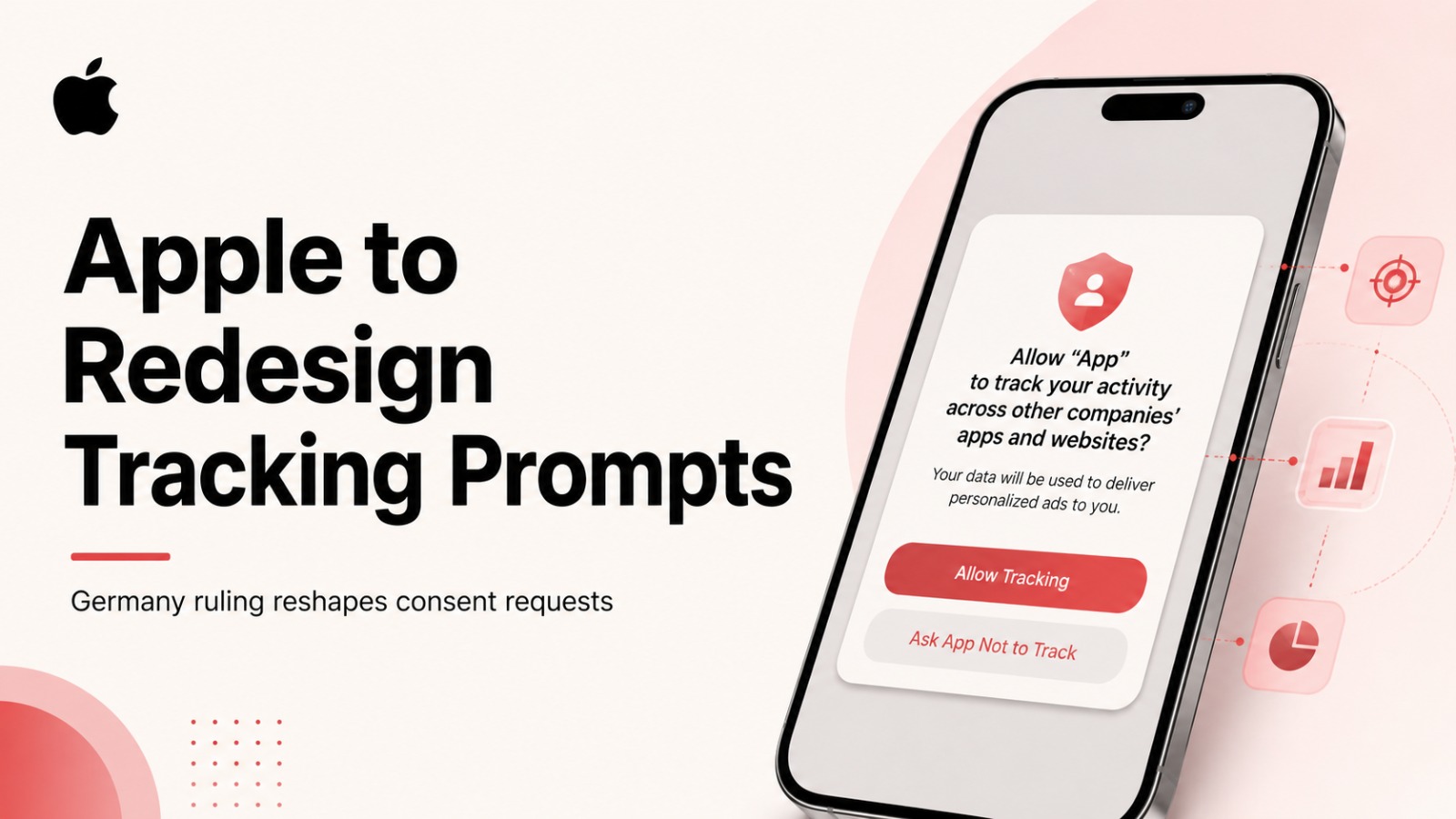
Apple will change the way app developers seek permission to use personal data for targeted advertising on iPhones and iPads, following a decision by Germany’s Federal Cartel Office that ends a years-long investigation into the company’s App Tracking Transparency framework.
The German competition authority said Apple’s existing system gave its own apps more favourable consent prompts than those available to third-party developers. The regulator concluded that this difference could raise concerns under competition rules and has secured commitments from Apple to change the way consent requests are presented.
German Regulator Flags Unequal Consent Treatment
Apple’s App Tracking Transparency framework requires apps to seek users’ permission before tracking them across other companies’ apps and websites for advertising or similar purposes.
The Federal Cartel Office found that Apple’s own applications were treated differently from third-party apps under the framework. According to the authority, the consent prompts shown by Apple’s apps were more favourable, while third-party developers faced a different process.
The regulator’s decision closes an investigation that had examined whether Apple’s approach placed competing app developers at a disadvantage.
Third-Party Consent Prompts Face a Redesign
Under the commitments agreed with the German authority, consent pop-ups used by third-party apps will have to be redesigned. The language and visual presentation must be made neutral, with wording and symbols that do not discourage users from giving permission.
The changes are intended to ensure that third-party developers are not placed at a disadvantage when asking users for consent to data tracking.
Apple will have four months to implement the required changes once the decision has been formally served. The commitments will remain in effect for seven years and will be monitored by a trustee.
Also Read: Pat Cummins-Backed Everlab: Inside the $500 Million Preventive Health Startup
Developers Get More Flexibility Over Privacy Requests
The agreement will also give third-party app publishers greater flexibility in how they present Apple’s required consent request alongside other data-protection permissions.
Developers will be allowed to combine Apple’s consent request with separate privacy consent prompts. This could give app publishers more control over how they communicate their data practices to users while still following Apple’s requirements.
Apple said the changes will apply in almost all European Union countries. The company has also adapted the wording and design of its consent prompt at the request of the German authority.
Targeted Advertising Remains a Key Concern
The dispute is closely linked to the advertising business built around access to user data. Third-party app developers, including Meta Platforms, the parent company of Facebook, seek accurate information about users so they can deliver more targeted advertisements.
Targeted advertising can generate more revenue than broader campaigns because advertisers can use information about users to reach audiences that are considered more relevant to their products and services.
Apple’s tracking rules have therefore been closely watched by developers and advertising companies that rely on data-driven advertising.
Apple Faces Similar Scrutiny Across Europe
Germany is not the only European country to have taken action against Apple over its App Tracking Transparency framework.
France has fined Apple €150 million in connection with the framework, while Italy imposed a €98.6 million fine. The actions add to regulatory pressure surrounding Apple’s approach to user consent and the way its privacy rules affect third-party businesses.
The latest German decision does not remove Apple’s App Tracking Transparency system. Instead, it requires changes to how consent is requested from users, particularly by third-party applications.
With the new commitments set to remain in place for seven years, the German authority will continue to oversee Apple’s compliance through a trustee. The changes are expected to affect how developers present tracking permissions to users across much of the European Union.
Also Read: Why Is Australian Beef Cheaper in Canada? The Price Gap Explained