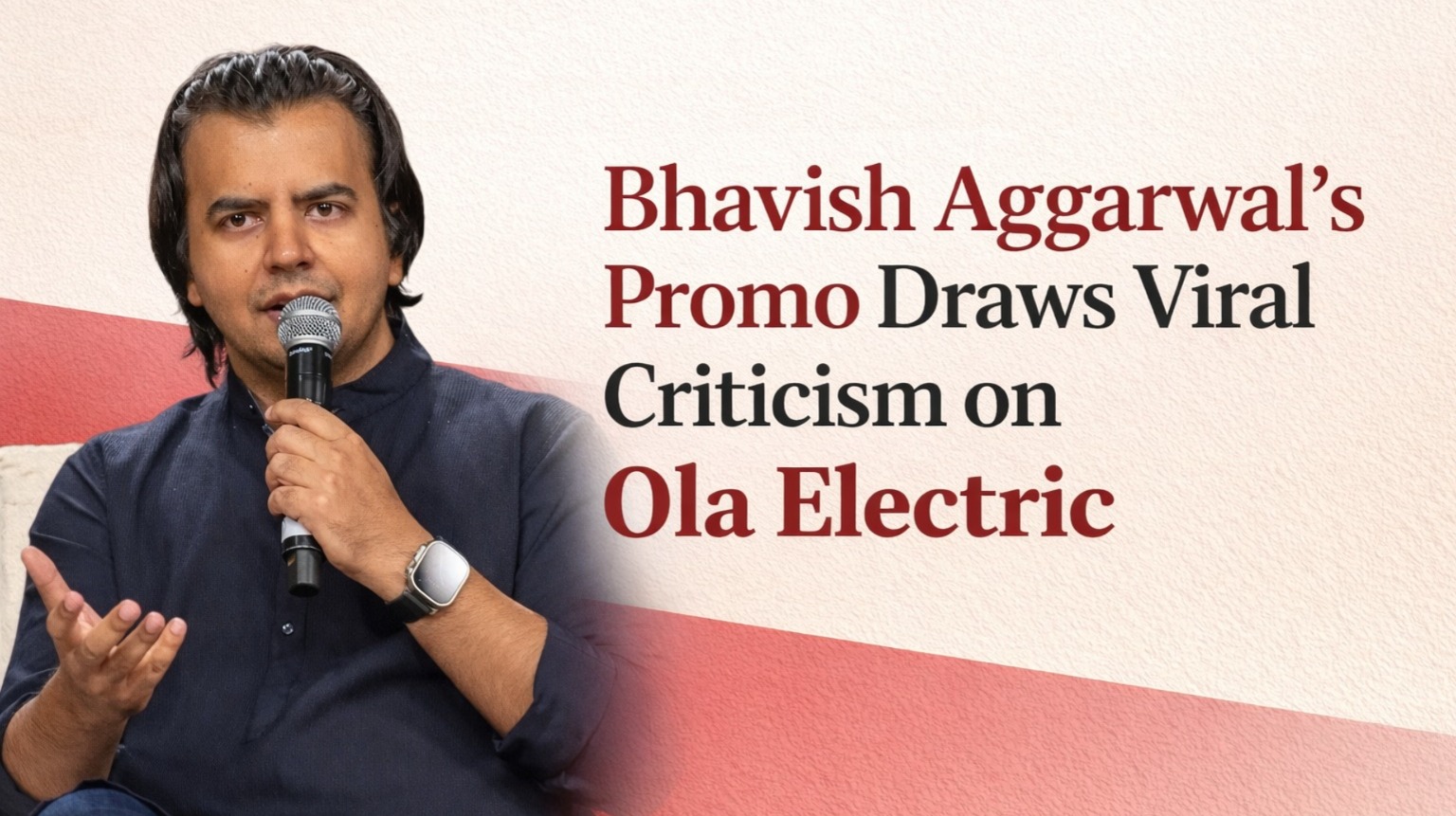
A promotional tweet from Ola founder Bhavish Aggarwal meant to build excitement around a match-day offer quickly turned into a renewed flashpoint over Ola Electric’s troubles, after investor and commentator Anish Moonka posted a blistering reply detailing what he described as the company’s steep operational and market decline.
Aggarwal’s original post was upbeat and simple. He invited users to explain why they wanted a blue Ola Electric scooter or bike, promising that the “best response” would win either a blue S1 Pro+ 5.2 kWh or a blue Roadster X+ 9.1 kWh. He also announced a ₹10,000 discount on any blue vehicle bought from Ola stores during match hours.
Bhavish Aggarwal’s Tweet: Promotional tone did not last long
Moonka’s response shifted the conversation from branding and offers to market share, service complaints, falling sales and investor pain. In a post that drew attention precisely because it appeared under a cheerful sales-led tweet, Moonka argued that the biggest issue facing Ola Electric was no longer visibility or marketing, but trust.
According to Moonka, Ola Electric held 35% of India’s electric scooter market when it went public in August 2024. By February 2026, he claimed, that number had fallen to 3.5%, a tenfold collapse in just 18 months.
He paired that with a sharp comment on the company’s stock performance. Moonka wrote that Ola Electric listed at ₹76 a share and was trading around ₹24, adding that the company’s valuation had dropped from about $5.4 billion to roughly $1.2 billion.
The most damaging part of his reply, however, was not about valuation. It was about customer experience.
Moonka claimed Ola Electric receives around 80,000 customer complaints every month. He also referred to more than 10,000 complaints logged with the National Consumer Helpline in a single year, saying those complaints triggered a formal government probe. In his telling, Ola told regulators it had resolved 99.1% of complaints, but when the consumer protection authority reportedly contacted 130 customers, 79.2% of them said they were still dissatisfied.
That allegation, the gap between official resolution claims and actual customer sentiment, formed the core of Moonka’s argument. His point was clear: service, not sales promotion, is what now defines the company in the public mind.
He went further, linking service issues to business performance. Moonka said Ola sold 53,647 scooters in its best month, March 2024, but only 3,968 in February 2026, a drop of 93%. He added that the company had slipped from the number one position to number six and had been outsold for the first time by Greaves Electric’s Ampere brand. He also said TVS and Bajaj together now control 51% of the market, and cited Rajiv Bajaj as calling Ola “a non-entity.”
The contrast in Moonka’s post was deliberate. While Ola was running a cricket-themed consumer offer with discounts and giveaway language, he positioned the company as one battling a deep credibility crisis.
He also referred to a legal controversy involving a customer complaint in Goa. In his reply, Moonka said a Goa consumer court had issued a bailable arrest warrant against Bhavish Aggarwal personally after a customer’s scooter was taken for repair and the company could not explain where it had gone.
He added that the bail amount was set at ₹1,47,499, equal to the scooter’s purchase price and that the Bombay High Court later stayed the warrant. He further claimed that Goa had already suspended all new Ola registrations in November 2025 because of a complaint backlog. Moonka also said the company’s quarterly revenue had fallen 57% year-on-year.
Taken together, the reply read less like a routine social media rebuttal and more like a compact indictment of Ola Electric’s recent trajectory.
What gave the exchange additional sting was Moonka’s closing observation: while Bhavish Aggarwal was offering a discount on blue scooters, the top reply under the tweet, he said, came from a customer claiming that their Ola vehicle had been lying dead at a service centre for 74 days without a diagnosis.
That detail, whether anecdotal or symbolic, captured the wider tension surrounding Ola Electric’s public image. The company has long excelled at visibility, big messaging and founder-led communication. But in Moonka’s framing, the present challenge is not getting consumers to notice Ola. It is convincing them that the ownership experience will not turn into a prolonged after-sales struggle.
The episode also shows how social media has become a real-time battleground for corporate reputation. A festive, consumer-facing campaign that might once have generated engagement instead became a vehicle for criticism about unresolved grievances, market erosion and leadership accountability.
For Ola Electric, that is the harder problem. Discounts can drive store visits. Viral posts can generate buzz. But when the conversation underneath turns into a public ledger of complaints, sales decline and customer frustration, the brand message risks being overwhelmed by the service narrative.
And that is what made Moonka’s reply land the way it did. It was not merely critical; it directly challenged the gap between promotional energy and operating reality.
At a time when India’s EV market is becoming more competitive and buyers have more choices, that gap can be costly.
Also Read: Have You Bought Noice Without Knowing It’s Swiggy’s?