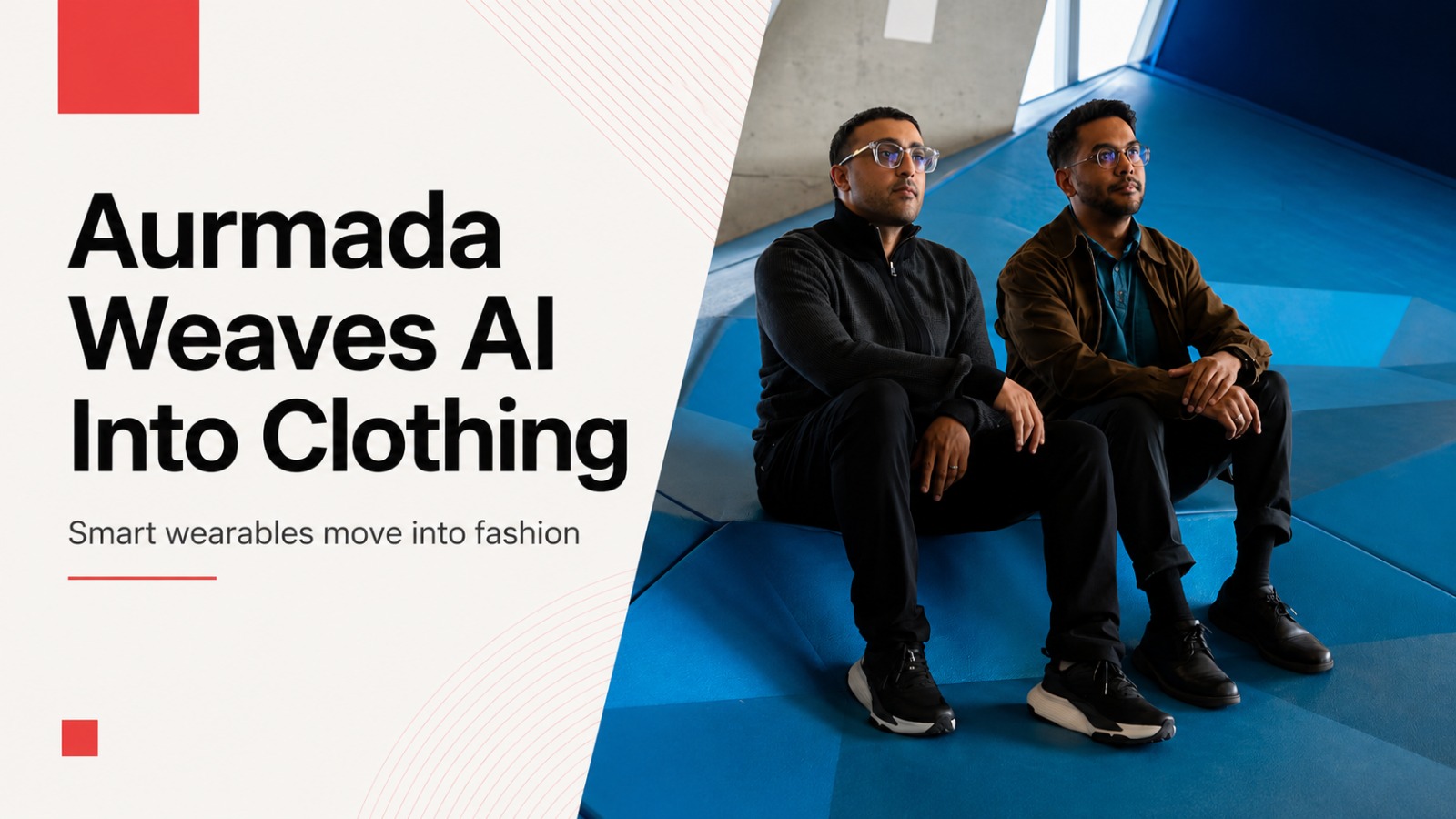
Toronto-based startup Aurmada is experimenting with AI-powered clothing and footwear that can read movement, detect surroundings and turn everyday garments into responsive technology. But privacy, comfort and public trust may decide how fast this future arrives.
Clothing has always responded to human life in simple ways. A jacket keeps out the cold. Shoes absorb the shock of walking. A uniform signals the work a person does. Now, a new wave of designers and wearable-tech companies is trying to push garments beyond protection and style, asking a more ambitious question: can clothes actually understand the body wearing them?
Toronto-based startup Aurmada is among the young companies testing that idea. The company is experimenting with artificial intelligence, sensors and smart fabrics to build clothing and footwear that can interact with both the human body and the surrounding environment.
Its work sits at the intersection of fashion, rehabilitation, safety and assistive technology. The early products are still largely experimental, but the direction is clear. Wearable technology may no longer remain limited to watches, glasses and fitness bands. It could soon move into shirts, socks, shoes and jackets.
Aurmada: From Injury to Intelligent Clothing
Aurmada’s story began with a personal problem. Co-founder and CEO Zavosh Zaboliyan started thinking seriously about responsive clothing after a car-crash injury forced him to retrain himself to walk.
During recovery, he found himself waiting for medical assessments and X-ray results while trying to understand what was wrong with his gait. That experience led him to imagine a system that could read the body in real time and help users correct movement patterns as they happen.
That thought has now taken shape in Aurmada’s prototypes. The company has developed shoe-sole sensors that can detect how weight is distributed across the foot. The idea is that such sensors could help identify asymmetry in a person’s gait, especially during rehabilitation after injuries that affect walking.
For patients, athletes or workers recovering from physical strain, this could make feedback more immediate. Instead of relying only on periodic check-ups, the body’s movement could be tracked continuously through the footwear itself.
The Shirt as a Sensor
Aurmada is also working on sensors small enough to be sewn into clothing. These could eventually behave like a wearable assistant, using AI to respond to questions, monitor movement or detect nearby objects and people.
One of the company’s demonstrations showed AI software detecting nearby people and objects. In practical terms, such a system could be used to alert wearers to blind spots, movement around them or potential hazards in their environment.
That possibility is especially relevant for industrial and high-risk work settings. Aurmada’s products are being positioned largely toward workers in security, defence and manufacturing. In such environments, a garment that can improve body awareness or environmental awareness could become more than a novelty. It could become a safety tool.
The company is also exploring fabrics woven with metals such as copper and silver. These materials can help protect embedded sensors from interference caused by nearby phone signals. Some of these fabrics are washable, and Aurmada is also looking at lightweight solar panels that could eventually help power the technology inside garments.
Beyond AI: Cooling Jackets, Smart Socks and Protective Shirts
Not all of Aurmada’s work is AI-driven. The company has also launched or developed non-AI wearable products, including lightweight Kevlar-based bulletproof shirts and socks made with thread that conducts electricity to stimulate muscles.
Other prototypes include a vest with a device that can heat up or cool down using electrical currents. The company is also developing lightweight jackets with small fans sewn into the back, powered by a portable charger.
These products show that the broader wearable-tech race is not only about artificial intelligence. It is also about making clothing more functional without making it feel uncomfortable, bulky or overly technical.
That may prove to be one of the biggest challenges. Consumers may be willing to wear technology on the wrist, but clothing is far more personal.
A smart jacket still has to look good. A sensor-filled shirt still has to feel normal. A medical or safety garment still has to survive washing, weather and daily movement.
Fashion’s Tech Experiments Are Getting More Serious
The idea of technology-infused fashion is not new. Designers have spent years experimenting with interactive fabrics, colour-changing garments and sensor-based apparel.
In 2023, Adobe introduced a dress capable of changing colours and patterns. In 2020, Levi’s partnered with Google on a connected jacket that allowed users to play music, receive alerts and take photos by tapping a sensor embedded in the sleeve cuff.
At the Fashion Institute of Technology’s DTech Lab in New York, students and researchers have also been exploring responsive clothing. One example involved a jacket with colour-changing thread and fibres that reacted to external signals, including the wearer’s Instagram feed.
Another garment used conductive fibres to track heart rate and breathing, feeding that data into an AI algorithm designed to detect anxiety. The garment could then tighten to create the feeling of a comforting hug.
These experiments suggest that smart fashion may develop along two paths. One path is mainstream fashion, where technology becomes a style feature. The other is purpose-built apparel for health care, emergency response, defence, manufacturing and accessibility.
The Privacy Question
For AI-powered clothing to become widely accepted, the industry will need to answer difficult questions about data.
A smart shirt that tracks movement or vital signs could be useful. But it also raises concerns about who can access that information, how it is stored and whether users fully understand what their clothes are collecting.
Janey Park, founder of wearable-technology and fashion media platform Digital Runway, believes broader adoption will take time because people remain cautious about personal data collection and AI. She expects more brands to experiment with AI-enhanced clothing over the next three years, but believes the industry still has a major challenge in making the idea feel normal.
Her view captures the central tension in this sector. The technology may be exciting, but clothing is intimate. Unlike a phone or a smartwatch, garments sit directly on the body throughout the day. That makes trust a core part of the product.
The next stage of wearable technology may not be about adding another screen to daily life. It may be about removing the screen altogether.
If companies like Aurmada succeed, clothing could quietly collect signals, interpret movement, improve safety and provide feedback without demanding constant attention from the user. That could change how rehabilitation is monitored, how workers stay aware of hazards and how people with different physical needs interact with their surroundings.
But the future of AI clothing will not be decided only in labs or fashion studios. It will depend on whether these garments are comfortable, useful, washable, affordable and trustworthy.
For now, AI-powered fashion remains early, experimental and full of unanswered questions. Still, the direction is significant. The wearable-tech conversation is moving from accessories to apparel, from watches to wardrobes, and from passive clothing to garments that may one day respond to the body in real time.
Also Read: Vaibhav Sooryavanshi’s Bat Deal Race Heats Up As Brands Line Up With Big-Money Offers