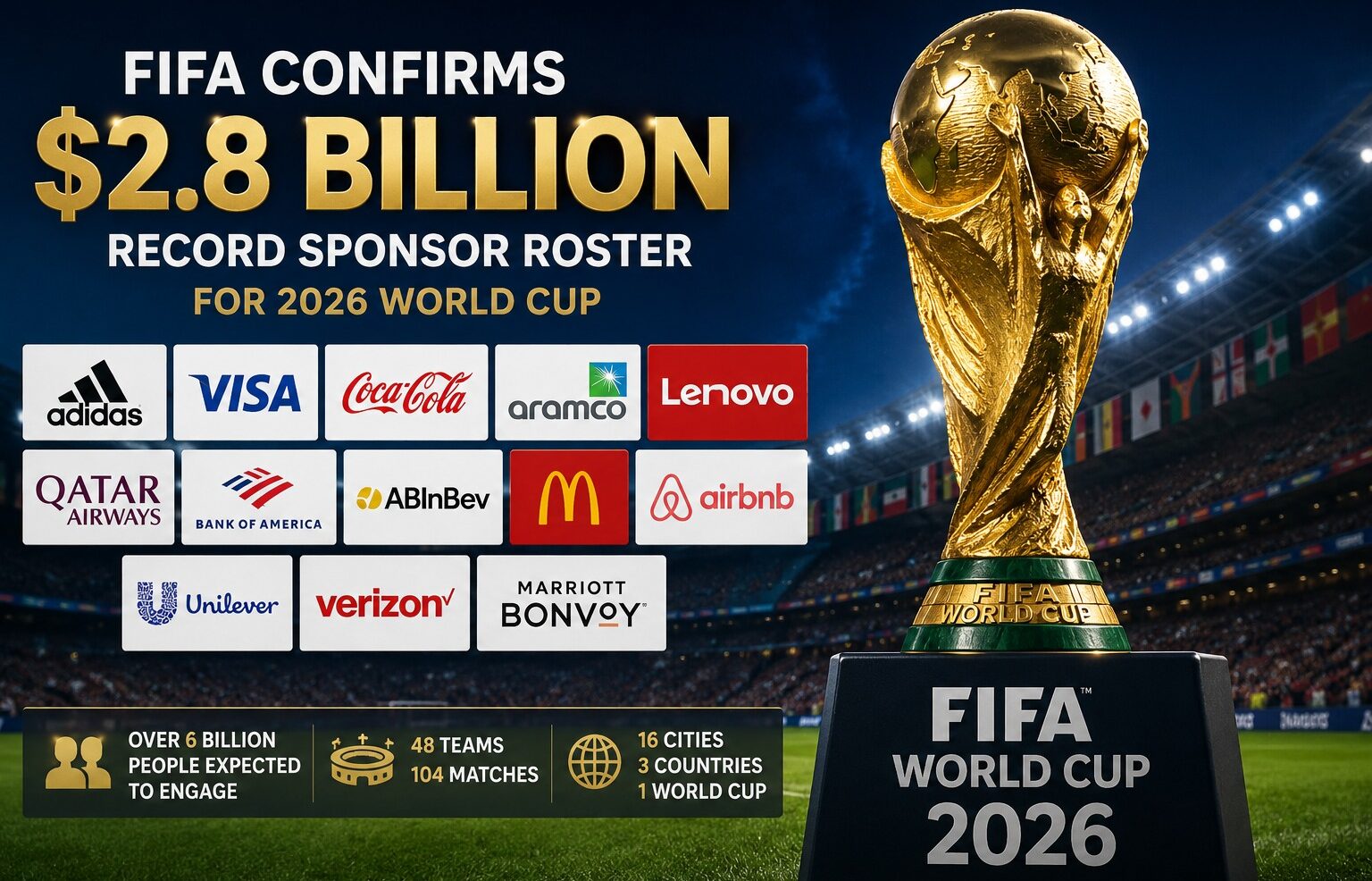
The 2026 FIFA World Cup is set to become the most commercially successful edition of the tournament to date, with FIFA confirming a record-breaking $2.8 billion in sponsorship revenue. The figure marks a significant increase from the $1.8 billion generated through sponsorship agreements during the 2022 World Cup, highlighting the growing global appeal of football’s biggest event.
The unprecedented sponsorship haul reflects strong interest from major international brands eager to align themselves with one of the most-watched sporting spectacles in the world. FIFA’s expanding commercial partnerships underline the tournament’s increasing value as a global marketing platform.
Expanded Tournament Drives Commercial Growth
A major factor behind the surge in sponsorship revenue is the expanded format of the 2026 World Cup. For the first time, the competition will feature 48 national teams and 104 matches, creating more opportunities for fan engagement, brand visibility, and commercial activation.
The tournament will be hosted across 16 cities, offering sponsors access to a broader geographic footprint and a larger audience than any previous World Cup. The expanded schedule also provides additional matchdays and promotional opportunities, enabling brands to maintain a sustained presence throughout the competition.
As FIFA continues to grow the scale of the tournament, commercial partners are increasingly viewing the World Cup as a unique platform capable of delivering worldwide exposure across multiple channels.
Also Read: Blyp Founder Dhananjaya Bharadwaj Shares Startup Losses Behind the Wins
Global Brands Back Football’s Biggest Event
FIFA’s sponsor roster for the 2026 World Cup includes a diverse mix of long-standing partners and newer corporate entrants from industries such as technology, finance, aviation, hospitality, consumer goods, and telecommunications.
Leading global sponsors include Adidas, Visa, Coca-Cola, Aramco, Lenovo, and Qatar Airways. The broader partnership lineup also features major brands such as Bank of America, AB InBev, McDonald’s, Airbnb, Unilever, Verizon, and Marriott Bonvoy.
The wide range of participating companies demonstrates the tournament’s ability to attract investment from multiple sectors, each seeking to connect with football fans through one of the most influential sporting events on the planet.
Unmatched Global Audience Appeal
One of the key attractions for sponsors is the enormous audience reach associated with the World Cup. FIFA projects that more than six billion people worldwide will engage with the tournament through television broadcasts, digital platforms, social media content, and in-person experiences.
This vast audience provides sponsors with unparalleled opportunities to strengthen brand recognition and engage consumers across international markets. The tournament’s ability to bring together fans from different countries, cultures, and demographics makes it one of the most valuable marketing properties in global sports.
The multi-country hosting model further enhances this appeal by allowing sponsors to activate campaigns across multiple regions simultaneously, extending their reach and creating more localized engagement opportunities.
Hospitality and Travel Brands See Major Opportunity
Among the companies investing heavily in the 2026 World Cup is Airbnb, which expects the tournament to become the largest hosting event in the company’s history. The company anticipates that approximately 400,000 fans will book accommodation through its platform during the competition.
The expected influx of supporters across host cities presents significant opportunities for businesses operating in travel, hospitality, transportation, and tourism. As fans travel across North America to attend matches, sponsors and partners are positioning themselves to benefit from heightened consumer activity before and during the tournament.
Sponsorship Revenue Fuels Tournament Operations
Sponsorship income plays a vital role in supporting the delivery of the World Cup. These commercial partnerships help fund tournament operations, fan engagement initiatives, promotional activities, and global marketing efforts.
FIFA’s tiered sponsorship structure allows companies to participate at different levels, ranging from top-tier global partnerships to more targeted regional activations. This approach enables brands of varying sizes and sectors to align with the tournament while maximizing the value of their investment.
With a record sponsorship portfolio already in place, the 2026 FIFA World Cup is poised to set new benchmarks both on and off the pitch, reinforcing the tournament’s position as one of the most powerful commercial and sporting events in the world.
Also Read: BCCI Hands T20I Captaincy to Shreyas Iyer as India Begins a New Cycle