


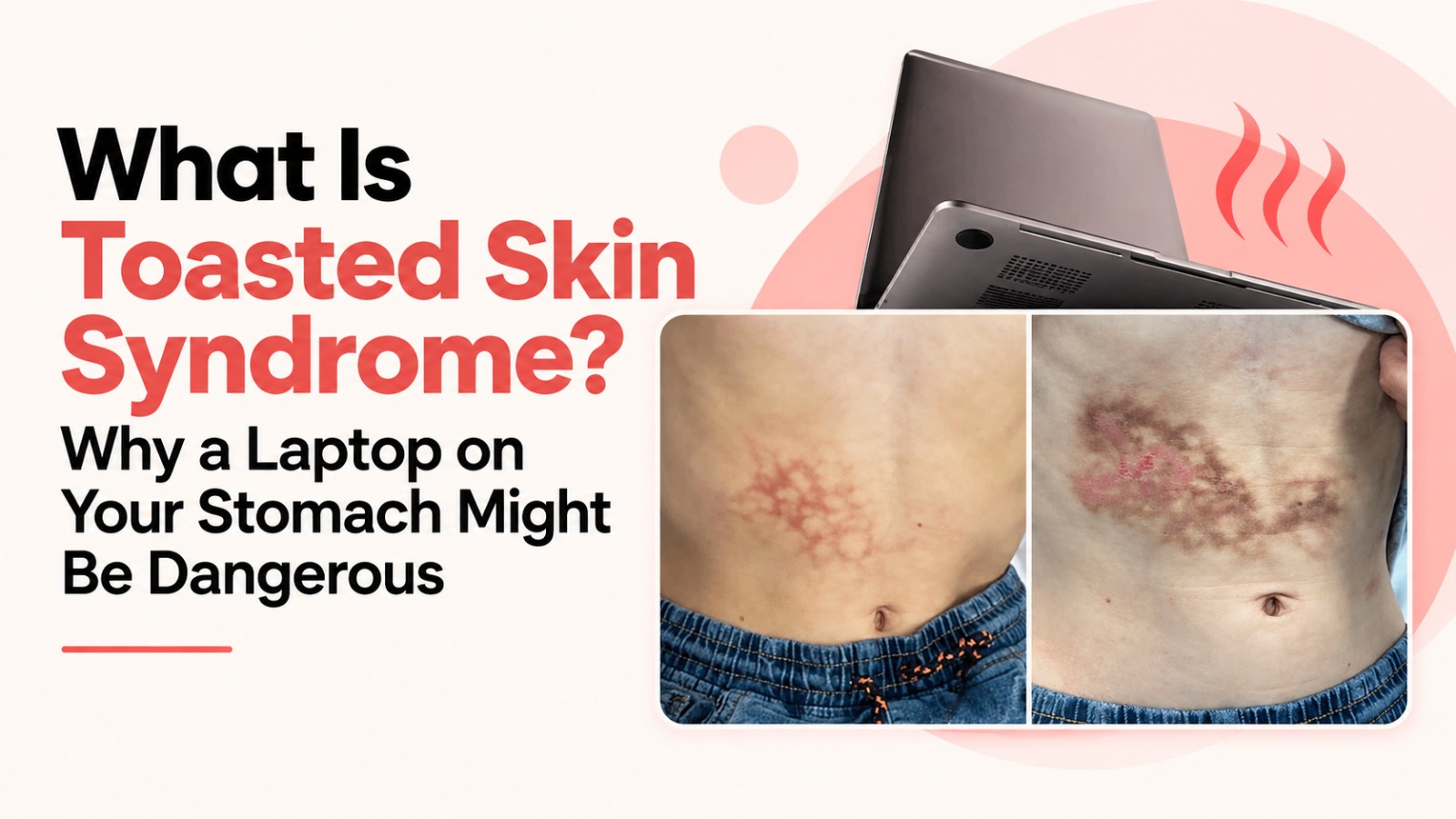
A laptop resting on the stomach may feel comfortably warm, especially during a long work or study session. But when that warmth is concentrated on the same patch of skin for hours, it can cause a condition known as erythema ab igne, commonly called toasted skin syndrome.
The condition has come into focus after a boy developed a distinctive net-like rash after repeatedly using a laptop directly on his abdomen. He was reportedly homeschooled and could spend as long as eight hours a day on the device, sometimes while it was charging. Doctors eventually linked the skin changes to prolonged exposure to heat from the laptop.
Unlike a conventional burn, toasted skin syndrome does not necessarily begin with severe pain, blistering or a moment when the skin suddenly feels dangerously hot. That is part of what makes it easy to miss.
What is toasted skin syndrome?
Toasted skin syndrome is the informal name for erythema ab igne, a skin reaction caused by repeated exposure to moderate heat, particularly infrared radiation.
The temperature involved may not be high enough to cause an immediate thermal burn. Instead, repeated warming of the same area can gradually produce visible changes in the skin. The rash commonly appears reddish, brown or darker than the surrounding skin and often develops a distinctive reticular, or net-like, pattern.
The condition itself is not new. Historically, it was associated with people who spent long periods close to fireplaces, heaters or other sources of sustained warmth. Modern sources of repeated heat can include hot-water bottles, heating pads, heated car seats and laptop computers.
That means a device does not need to feel painfully hot to cause a problem. A laptop can feel merely warm while repeatedly exposing the same area of skin to enough heat to trigger changes over time.
What happened to the boy using a laptop on his stomach?
The boy initially developed a net-like rash on his abdomen. Doctors first considered whether an underlying medical problem might be responsible, but blood tests and scans did not identify the suspected cause.
About two weeks later, he returned to hospital after the rash had spread and the affected skin had begun peeling. A closer examination of his routine revealed that he regularly rested a laptop directly on his stomach for prolonged periods.
That repeated exposure provided an important clue.
His case illustrates why laptop-related erythema ab igne can be overlooked. There may be no dramatic burn at the beginning. Instead, the skin can change slowly while the person continues using the device in the same position.
Why does the rash look like a net?
The unusual pattern is linked to the effect prolonged heat exposure can have on small blood vessels in the skin.
Early changes may appear simply as redness. If the exposure continues, pigmentation can become more noticeable. In more advanced cases, the skin may become thinner or develop other structural changes.
That fishnet-like appearance can therefore be an important warning sign, particularly when it appears in an area that is regularly exposed to a heater, hot-water bottle or electronic device.
Is toasted skin syndrome dangerous?
Mild cases may improve once the heat source is removed, but the discoloration does not always disappear quickly. Pigmentation can remain for months and, after prolonged exposure, may persist for years.
More severe or longstanding cases can lead to skin thinning and, rarely, ulceration. Medical references cited in the report also note a small risk of skin cancer, particularly squamous cell carcinoma, developing in chronically affected skin. Persistent sores or a new lump in the affected area should therefore be medically evaluated.
That does not mean ordinary laptop use causes skin cancer. The concern described is associated with repeated, chronic heat exposure and persistent skin damage, rather than normal use of a laptop.
Why putting a laptop directly on your stomach can be a problem
The issue is not simply that laptops produce heat. It is the combination of direct contact, prolonged use and repeated exposure to the same area of skin.
Using a laptop on the abdomen, thighs or another part of the body for hours can prevent the skin from getting a break from the heat. Charging the device may also coincide with extended periods of use, as happened in the boy’s case.
The warning signs may be subtle at first. A patch of persistent redness, brown discoloration or a net-like pattern where the laptop usually rests deserves attention, especially if it does not fade after the device is removed.
How to reduce the risk of laptop-related skin damage
The simplest precaution is to avoid resting a laptop directly against bare skin for extended periods.
Using the computer on a desk, table or another hard surface can keep the heated underside away from the body while also allowing heat to dissipate more effectively. A laptop stand can similarly reduce direct contact and improve airflow.
Anyone who develops a persistent red, brown or net-like patch in an area repeatedly exposed to heat should stop that exposure and consider having the skin assessed by a healthcare professional. Medical attention is particularly important if the area becomes painful, thickened, crusted or ulcerated, or if a persistent lump develops.
Also Read: GTA 6 Ultimate Edition: $20 Extra Gets You a Gang Compound