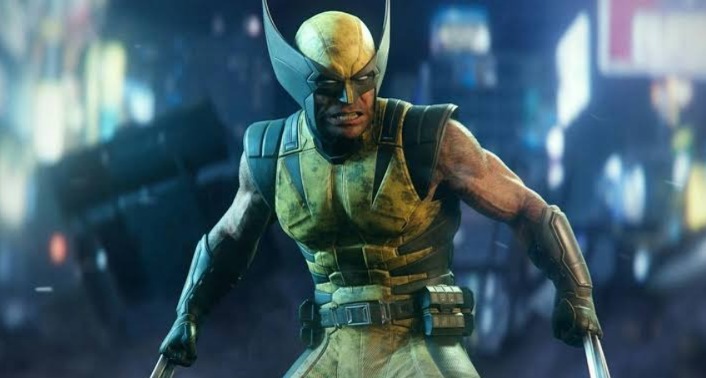
Marvel’s Wolverine arrives with a darker mutant story, cinematic set pieces and some of Insomniac Games’ most graphic combat yet, but its relatively simple fighting system keeps the PS5 adventure from reaching the same mechanical heights as the studio’s Spider-Man games.
Insomniac Games has taken a noticeably different route with Marvel’s Wolverine. Rather than building another sprawling superhero playground, the studio has shaped Logan’s story around a darker, more linear adventure where character relationships and cinematic momentum carry much of the experience.
The approach largely works. The game delivers an original mutant storyline, strong performances and lavish action sequences, while making Wolverine feel every bit as dangerous as his reputation suggests. The trade-off is depth. Combat can become repetitive, stealth is less convincing, and the range of ways players can approach encounters is narrower than in Insomniac’s other recent games.
Wolverine enters an established mutant world
The game takes place in the same universe as Insomniac’s Spider-Man titles, but mutants are not treated as a newly discovered phenomenon.
Logan begins the story as part of Team X, a task force assembled by Nathaniel Essex. The opening establishes a conflict involving Dr Bolivar Trask while introducing a world in which Wolverine, Sabretooth, Mystique, Omega Red and Jean Grey have already existed openly for years.
One of the more distinctive choices is what this universe does not yet have: the X-Men.
Instead, a small group of mutants is left to determine what their future might look like. The game uses that setup to explore mutant persecution while keeping Logan at the centre of a personal story rather than immediately turning the adventure into a conventional X-Men ensemble narrative.
Logan’s relationship with Jean Grey becomes the backbone of the plot. The pair spend much of the game together on a journey that reaches beyond the locations explored in Insomniac’s Spider-Man games. Logan’s fragmented memory also plays directly into the narrative, with parts of his past gradually becoming a source of conflict.
Cinematic action is where Wolverine finds its identity
The game appears most confident when it embraces spectacle.
Its campaign moves through chase sequences, aircraft encounters, bars, wilderness areas and skyscrapers. Tokyo also receives more room for exploration than many of the game’s tightly directed locations. The structure combines larger spaces with a mostly linear progression rather than shifting Wolverine into a full open-world format.
That tighter structure helps keep the story moving, although it also contributes to one of the game’s biggest limitations: players have fewer opportunities to build dramatically different playstyles.
Combat rewards aggression, but variety becomes a problem
Wolverine’s fighting system revolves heavily around positioning, parrying and crowd control.
A berserker rage mechanic encourages players to remain aggressive. Building the rage meter through combos and finishers provides passive healing during combat, while losing that meter removes an important route to recovery. Special abilities are also linked closely to dealing with tougher enemies and larger groups.
It sounds well suited to Wolverine on paper, but the campaign’s combat progression does not always keep pace with the number of encounters.
New abilities take time to unlock, which can make multi-stage fights feel familiar before the player’s options meaningfully expand. Even with parries, special attacks and finishers available, lengthy stretches still lean heavily on repeated face-button attacks. Enemies can also take considerable punishment, adding to the sense of repetition during extended battles.
Where the combat does stand apart is presentation.
Damage is deliberately graphic. Wolverine can be pushed into situations that visibly strip away skin and expose his Adamantium structure, turning his healing ability into part of the game’s visual storytelling rather than simply a background gameplay mechanic.
Boss encounters are comparatively limited in number, but they make greater use of the surrounding environment. The scale can also grow dramatically, including clashes involving Sentinels towering over skyscrapers.
Stealth does not make the same impression
Stealth is one area where Wolverine appears less refined.
Getting detected can quickly turn a planned sequence into open combat, while Logan’s traversal tools do not offer the same degree of flexibility associated with Insomniac’s other superheroes. Stalking enemies from elevated positions is possible, but players ultimately still need to close the distance, making direct aggression the easier solution in many encounters.
PS5 performance is a stronger part of the package
Technically, the game makes substantial use of the PS5.
Players with compatible 120Hz displays can choose between several performance and quality configurations, including high-resolution 30fps and 40fps options alongside an unlocked mode designed to make use of VRR displays.
During the reviewed 14-hour playthrough, only one crash was reported. Outside that incident, the game remained stable while delivering highly detailed environments, destruction and large-scale set pieces.
DualSense haptic feedback and controller speaker cues are also used during exploration, although adaptive trigger functionality is described as limited.
Is Marvel’s Wolverine worth Rs 4,999 or around 52 Dollars?
Marvel’s Wolverine is priced at around 50 Dollars or Rs 4,999 on PlayStation 5.
The review finds plenty to praise in the story, presentation and performances, but considers the game’s length and limited combat depth harder to justify at full price. Its recommendation is to consider buying the game during a sale.
The final verdict lands at 7.5 out of 10, describing the game as a good Insomniac outing whose strong mutant narrative and violent spectacle are held back by mechanical simplicity.
What emerges is a Wolverine game that understands its central character better than it expands the superhero-action formula. Logan gets rage, vulnerability, brutality and a story built around his place in a hostile mutant world. The combat underneath it simply does not evolve at the same pace as the spectacle surrounding it.
Marvel’s Wolverine is listed for September 15, 2026, on PlayStation 5.
Also Read: Hania Aamir Makes Music Debut With Pablo Alongside Rakhi Sawant