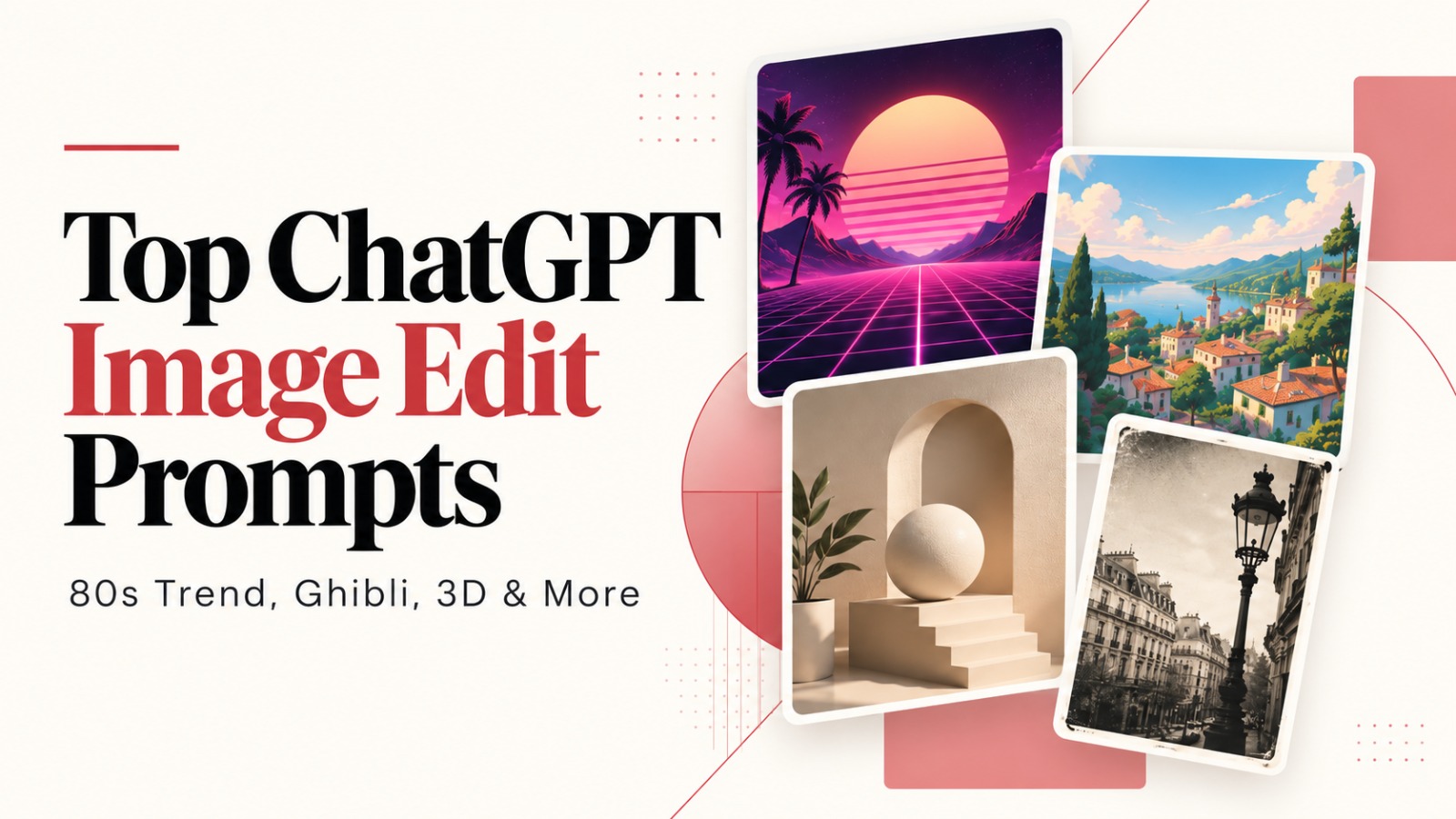
Top ChatGPT Image Edit Prompts: The 1980s are finding their way back into photographs, only this time the transformation is happening through AI.
Neon lights, retro colour palettes, film grain, glowing cityscapes and the unmistakable synthwave look have become part of a wider wave of image-editing prompts used with generative AI tools such as ChatGPT.
The 80s-inspired aesthetic now sits alongside Ghibli-style illustrations, 3D animated portraits, vintage film edits and futuristic cyberpunk transformations as some of the most recognisable ways people are reimagining ordinary photographs.
The trend highlights how AI image editing is increasingly being used not just to improve photographs, but to completely reinterpret them.
80s AI Image Trend Brings Retro Aesthetics Back
A typical 80s-style AI image prompt asks the system to transform an existing photograph using neon lighting, pink and purple gradients, vintage film grain, dramatic shadows and a cinematic synthwave atmosphere.
The appeal is easy to understand from a creative standpoint. Instead of simply applying a filter, users can ask an AI image tool to rebuild the visual mood of a photograph around a specific era or artistic direction.
That same approach has helped several other image-editing styles become widely recognisable among AI users.
Ghibli-Style Images Remain One of the Most Recognisable AI Edits
Among the styles discussed most frequently in connection with AI image transformations is the Ghibli-inspired look.
These prompts typically ask for a photograph to be recreated with a hand-painted animation feel, soft colours, expressive characters, warm lighting and detailed backgrounds.
The transformation is fundamentally different from conventional photo editing. The objective is not necessarily to make the original image sharper or cleaner. Instead, the user is asking the AI to reinterpret the photograph through a completely different visual language.
3D Animated Portraits Are Another Major Prompt Category
Another frequently requested transformation is the polished 3D animated character look.
Users commonly ask AI tools to convert photographs into characters featuring expressive facial details, soft cinematic lighting, smooth textures and a colourful animated-film appearance.
This category is sometimes casually described by users as a “Pixar-style” transformation, although it is more accurately understood as a broader 3D animated character aesthetic.
Vintage and 90s Film Photography Is Also Returning Through AI
Not every popular AI transformation aims to make images look futuristic.
Some prompts deliberately make photographs appear older.
Vintage film and 1990s disposable-camera edits usually focus on natural grain, faded colours, direct flash, slight blur and the imperfect appearance associated with consumer film photography.
Modern AI technology is being used to recreate the visual imperfections of older cameras, suggesting that users are often searching for character and atmosphere rather than technical perfection.
Cyberpunk Prompts Take Images in the Opposite Direction
At the other end of the aesthetic spectrum is cyberpunk.
These prompts generally transform photographs using futuristic city environments, neon signage, holographic elements, rain-soaked streets and dramatic lighting.
While vintage and 80s prompts look backward for inspiration, cyberpunk edits imagine a highly stylised future.
Together, these trends illustrate the range of visual identities people can now experiment with using a single photograph.
What Are the Top AI Image-Editing Prompt Trends?
Based on the styles discussed in this trend set, five categories stand out for their recognisability:
- Ghibli-inspired image transformations
- 3D animated character transformations
- 80s retro and synthwave image transformations
- Vintage film and 90s disposable-camera transformations
- Cyberpunk and futuristic neon transformations
This list should be understood as a trend-based categorisation rather than an official global usage ranking.
AI Image Editing Is Becoming More About Style Than Correction
The common thread connecting these prompts is not traditional photo enhancement.
Users are increasingly asking AI to reinterpret images according to eras, animation techniques, cinematic genres and cultural aesthetics.
A photograph can become a retro 80s poster, an animated illustration, a grainy 90s snapshot or a neon-lit futuristic scene without requiring the user to manually recreate each individual design element.
That shift is helping prompt writing become part of the creative process itself.
The better the description of the lighting, atmosphere, texture, era and artistic direction, the more precisely users can communicate the visual result they want.
For now, Ghibli-inspired art, 3D animation, vintage photography, cyberpunk imagery and the returning 80s aesthetic represent some of the clearest examples of how people are experimenting with AI image transformations.
And among them, the 80s trend carries an unusual twist: one of the newest forms of image technology is being used to recreate one of the most distinctive visual eras of the past.
Also Read: Instagram’s ChatGPT 80s Trend Has a Hidden Cost: How Much Energy Does One AI Image Use?