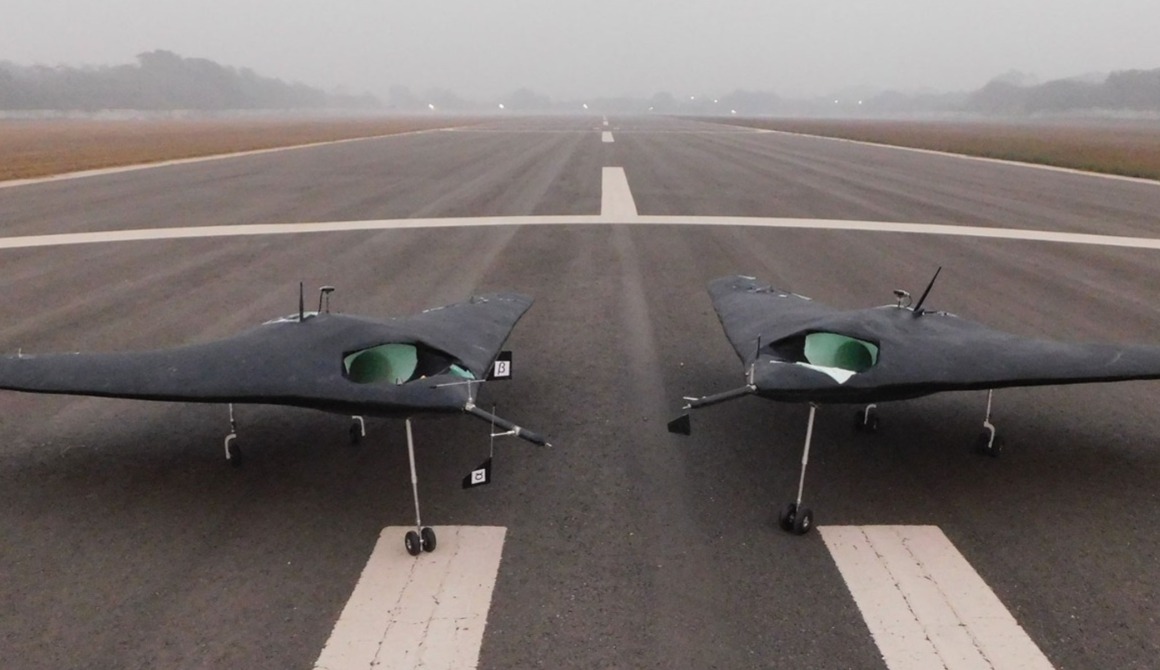
In a new signal of India’s push for indigenous defence innovation, IIT Kanpur has unveiled the APJK-6C100, an AI-enabled “kamikaze” drone developed by VU Dynamics, a startup incubated at the institute, in collaboration with DRDO.
Named APJK-6C100 in honour of Dr. A.P.J. Abdul Kalam, the system is being positioned as a technology demonstrator for precision strike missions, with an emphasis on autonomy in contested environments.
What is IIT Kanpur’s APJK-6C100?
The APJK-6C100 is designed as a one-way attack platform (“kamikaze” drone) that relies on AI-enabled visual guidance for terminal targeting.
The drone is described as having an operational range of 100 km, and a capability to prosecute targets even in GPS-denied conditions, critical in modern battlefields where satellite navigation can be disrupted.
Key capabilities highlighted
The drone’s defining features include:
- 100 km operational range
- AI-enabled visual guidance
- GPS-denied strike capability (ability to operate without satellite support)
- Stealth features intended to reduce detectability by radar
- A demonstration to DRDO officials in November 2025
The combination of visual guidance and GPS-denied operation is being framed as a step toward greater autonomy, an area where militaries globally are investing heavily.
From campus lab to battlefield tech
The project, as described, sits squarely within the Atmanirbhar Bharat narrative in defence, where the emphasis is not just on assembling platforms locally, but on developing core technologies (autonomy, guidance, survivability) inside India’s ecosystem.
A growing drone ecosystem beyond one platform
The APJK-6C100 is arriving alongside an expanding set of Indian drone players. Your brief points to:
- IG Drones, described as serving 500+ organisations, including the Indian Army
- VECROS, highlighted for work in autonomous drone systems
- Policy and industry tailwinds including PLI schemes, liberalised regulations, and manufacturing partnerships such as JSW Defence’s reported $90 million investment in V-BAT drone manufacturing
Taken together, these developments suggest that the next phase of India’s drone story is shifting from “adoption” to domestic design, testing, and manufacturing depth, particularly in defence applications.
Market momentum and what comes next
Your brief also cites industry projections that India’s drone market could expand from $1.15 billion (2024) to $23 billion (2030), figures that, if realised, would place India among the most significant drone markets globally.
Specifically, for APJK-6C100, another critical milestone would be full-scale trials in early 2026. Additionally, if these tests prove the capabilities of this technology, especially concerning GPS-denied and stealth-crafting capabilities, this would go a long way in increasing faith in their indigenous capabilities with regards to developing enhanced autonomous systems.
APJK-6C100 is proffered not just as a prototype but symbolizes where the future of Indian defence innovation will go, the confluence of IIT-quality research, start-up delivery capabilities, and validation support by DRDO and where trials will prove to be a true testing time.
Also Read: Why Ambition Isn’t Enough: Ragini Das on What Makes Startups Scale