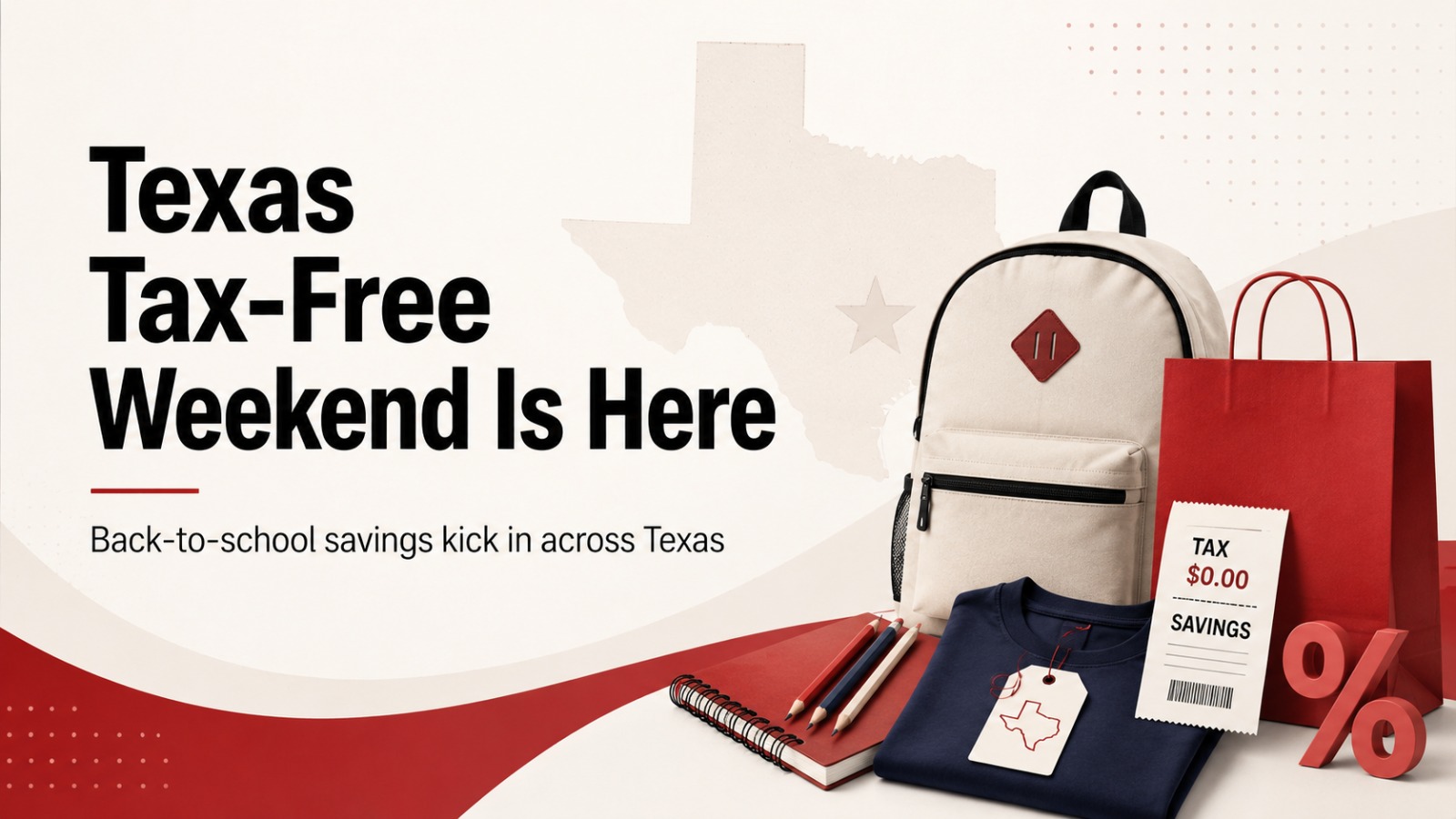
Texas Tax Free Weekend: Texas’ 2026 Sales Tax Holiday is underway, giving families a chance to buy qualifying clothing, footwear, school supplies and backpacks without paying state and local sales taxes. The holiday began on Aug. 7 and runs through midnight Sunday. Each qualifying item must cost less than $100.
For Houston households, the timing comes during an expensive back-to-school season.
A Deloitte survey of 420 Houston-area parents found that families expect to spend an average of $796 on back-to-school shopping, compared with a projected national average of $557. Houston’s expected spending is also broadly in line with major metropolitan markets such as Dallas-Fort Worth and Los Angeles.
That puts Houston well above the national average even though local back-to-school spending has fallen from its earlier peak. Deloitte data presented in the Houston reporting shows spending is down 19% from its 2022 high.
How the Texas tax free weekend works?
The rules are straightforward for most shoppers. Clothing, footwear, school supplies and backpacks qualify when the price of each individual item is below $100. There is no stated limit on how many qualifying items a customer may purchase, provided every item meets the price requirement.
The exemption is not limited to purchases made inside a store. Eligible goods can also be bought online, by telephone or through the mail.
Online shoppers, however, need to watch shipping and handling charges.
Those costs are included when determining whether an item falls below the $100 threshold. A $95 pair of jeans with $10 in shipping, for example, would have a total purchase price of $105 and would not qualify for the exemption.
With the combined state and local sales tax rate at 8.25%, a shopper spending $300 entirely on qualifying purchases would save $24.75 during the holiday.
Across Texas, Comptroller Don Huffines estimated that consumers would save $142.5 million during the tax holiday. He also estimated that Texas families have saved more than $2 billion over the life of the program.
Houston shoppers are looking beyond the tax break
The larger challenge for the tax holiday is that many Houston consumers are increasingly focused on the price of the product itself rather than the tax charged at checkout.
Deloitte found that nearly half of Houston shoppers fall into a group it describes as “hyper-value seekers.” These consumers are willing to buy in bulk, choose lower-priced generic products or change stores to find a better deal. Nationally, fewer than one-third of shoppers fall into that category.
The behavior is visible in when families shop, too.
According to the survey, 58% of Houston consumers complete their back-to-school purchases by the end of July. That means a large share of spending has already happened before the traditional August tax-free weekend arrives.
Houston shopper Eboni Gilchrist illustrates that shift. She begins shopping in July and focuses on retailer discounts that can reach 40% or 50%, according to the reporting. She also shops early to reduce the chance that essential school items will be sold out.
That comparison matters. An 8.25% tax saving can help, particularly across a long shopping list, but a substantially discounted item purchased before the holiday may still offer a larger reduction in the final price.
Technology is taking a bigger share of school budgets
Another issue is what families are actually buying.
Laptops and other electronics have become a growing part of back-to-school budgets, but those products are not covered by the current tax exemption. Deloitte estimates that Houston families will spend an average of $550 on technology products this year.
That shift has prompted calls to update the program.
State Rep. Charlene Ward Johnson, D-Houston, said she plans to introduce legislation next year that would add laptops and textbooks to the tax holiday. She has also called for the tax-free period to be extended to two weekends. Ward Johnson said she expects the proposal to attract bipartisan support among lawmakers concerned about living costs.
Her argument is that technology has moved from an optional purchase to a much more important part of education since the tax holiday was introduced in 1999.
Debate grows over whether the policy still works
Not everyone believes expanding the tax holiday is the answer.
Nicole Fox, a policy analyst at the Tax Foundation, has questioned whether short-term sales tax holidays provide the best form of relief.
Among the concerns raised are lost state revenue, the possibility of retailers adjusting prices around the holiday and additional administrative work for smaller businesses handling temporary exemptions, particularly for online transactions.
Ward Johnson takes a different view. She argues that even relatively small savings can matter to households managing tight budgets because money saved on school purchases can be redirected toward other necessities.
That leaves the 2026 Texas Tax-Free Weekend occupying an unusual place in the back-to-school calendar. It still offers a clear and immediate saving on qualifying purchases, but Houston’s shopping patterns are changing around it.
Families are shopping earlier, hunting more aggressively for discounts and directing a growing part of their school budgets toward technology that does not currently qualify for the exemption. For shoppers who still have clothing, backpacks and supplies left to buy, the tax holiday provides a useful window. The broader debate is now about whether the policy should change as quickly as the back-to-school shopping list has.
Also Read: Apple’s iPhone 18 Pro Max Featured Leaked: 12 Big Possible Upgrades You Need to See