

Howard Buffett has succeeded his father, Warren Buffett, as chairman of Berkshire Hathaway, but the handover is not a transfer of the job Warren Buffett performed for decades. Greg Abel will continue running the company, while Howard takes responsibility for helping protect the culture and values that have defined Berkshire.
Berkshire Hathaway has entered a new chapter in one of corporate America’s most closely watched succession stories.
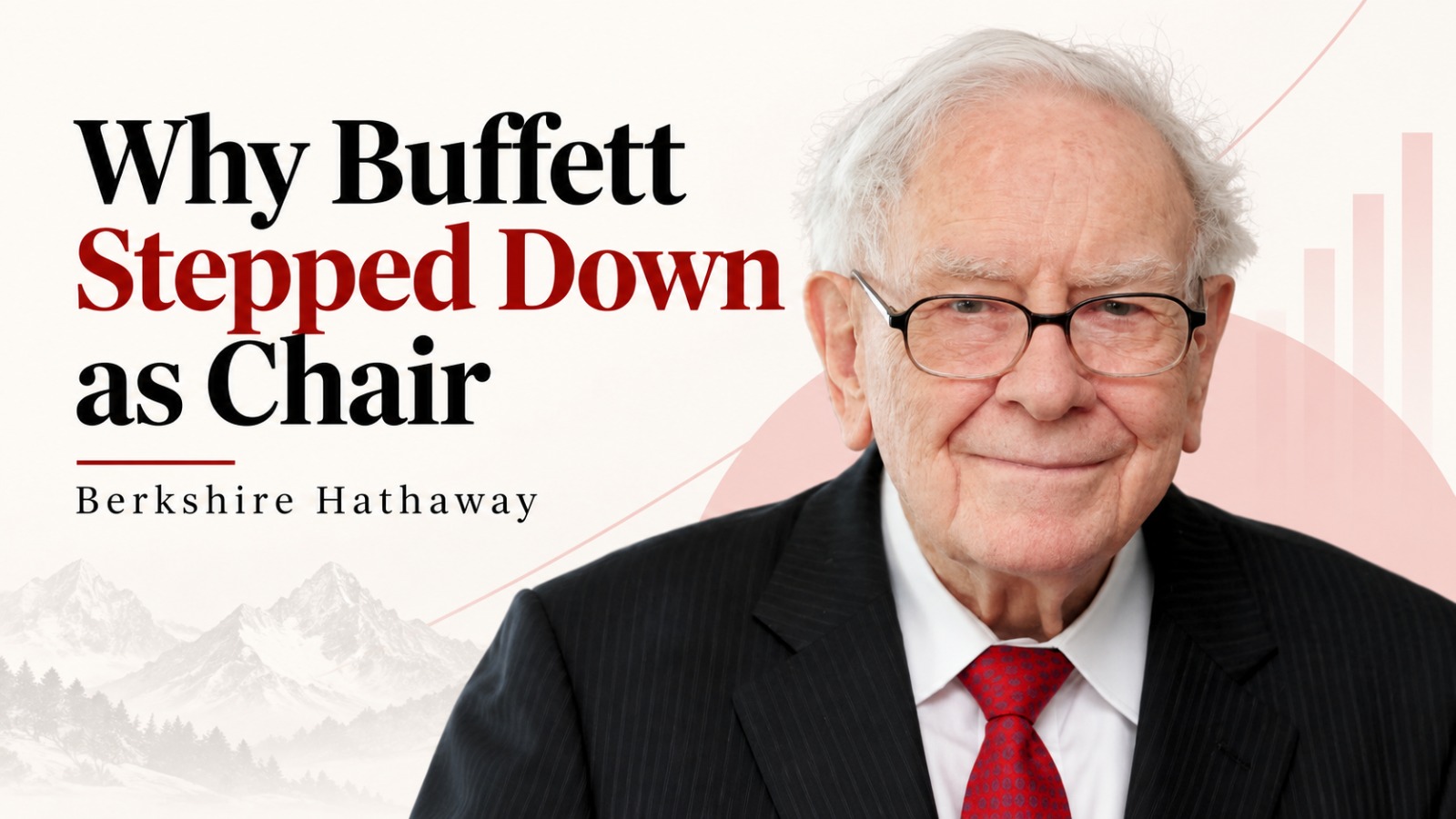
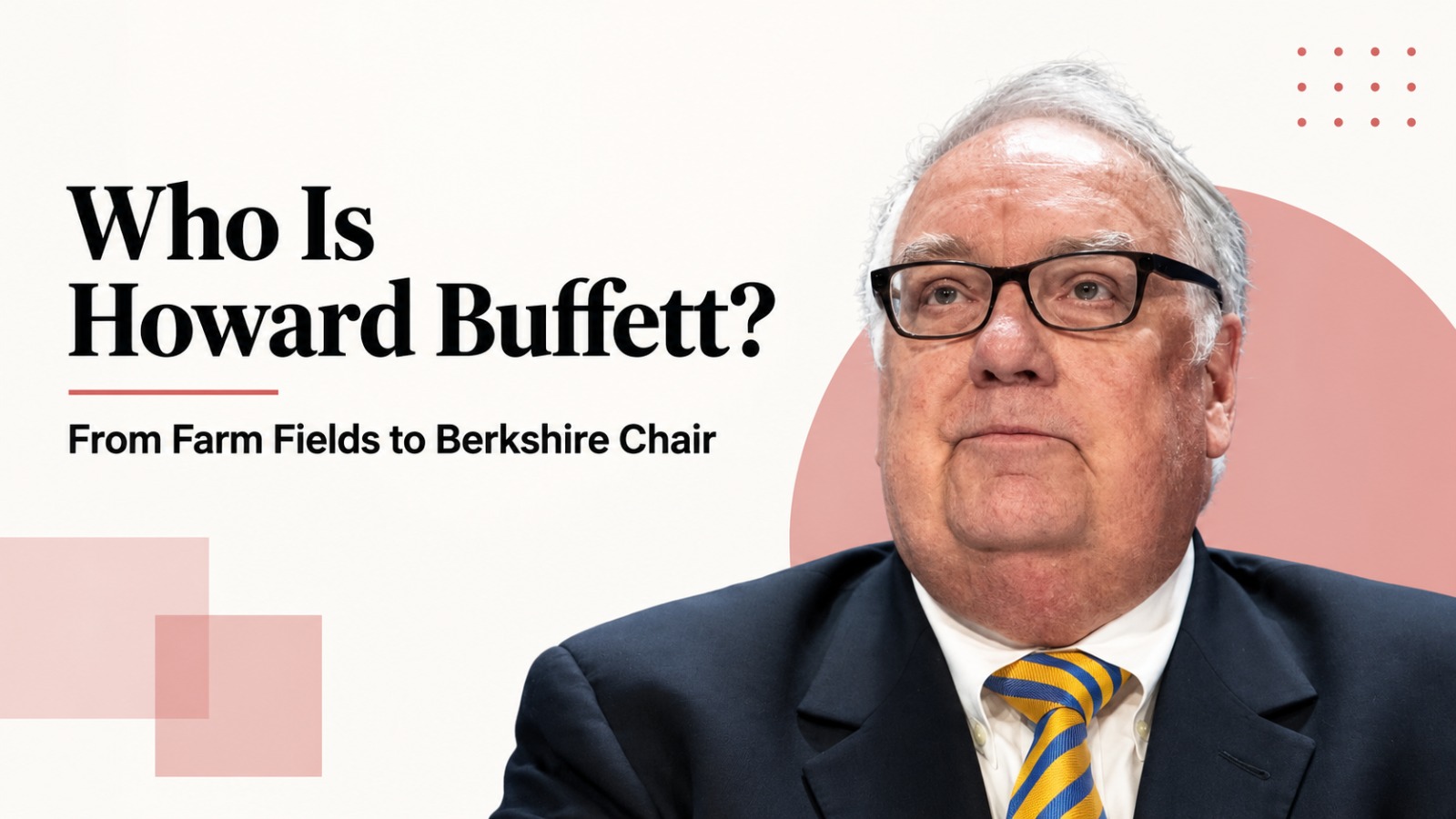
Howard G. Buffett, the 71-year-old middle son of Warren Buffett, has been elected chairman of Berkshire Hathaway after his father stepped down from the role. Warren Buffett will become chairman emeritus and remain on the company’s board. Howard, meanwhile, moves into the chair after serving as a Berkshire director since 1993.
The change puts another Buffett at the head of the board, but it does not place him in charge of Berkshire’s day-to-day operations.
That responsibility belongs to Greg Abel.
The distinction is central to understanding what has actually changed at Berkshire. Warren Buffett described the arrangement in unusually clear terms, saying that Abel runs the company while Howard will guard its culture and values.
So while the Buffett surname remains attached to the chairman’s office, Berkshire’s operating leadership has already moved to Abel.
For Howard Buffett, the assignment brings him into one of the world’s most prominent boardrooms after a career that has rarely followed the conventional Wall Street route.
From farming to Berkshire Hathaway
Born on December 16, 1954, Howard Graham Buffett is the middle child of Warren Buffett and Susan Thompson Buffett. He grew up in Omaha alongside his older sister Susan and younger brother Peter.
Unlike his father, Howard did not build his professional identity around investing.
He began farming in Nebraska in 1977 before later moving to Illinois. His agricultural work has included conservation-focused farming and efforts to improve food production while protecting soil and other natural resources.
Mint reports that he oversees a 1,500-acre family farm in Pana, Illinois, while also managing foundation-backed research farms, including more than 1,500 acres in Arizona and about 9,200 acres in South Africa.
Agriculture has remained one of the clearest threads running through Howard Buffett’s career, but it is far from the only one.
His foundation says he has travelled to 156 countries, with his work combining agriculture, conservation, photography and humanitarian activity.
That is an unusual résumé for the man now occupying the chairman’s seat at Berkshire Hathaway.
Howard Buffett also spent years inside corporate America
Howard Buffett’s career outside traditional investing should not be mistaken for a lack of corporate experience.
He served as a director of Archer Daniels Midland and was the company’s corporate vice president and assistant to the chairman between 1992 and 1995. His board experience has also included companies such as Coca-Cola Enterprises, Coca-Cola, ConAgra Foods and Lindsay Corporation.
Mint separately notes that he served as an Archer Daniels Midland director from 1991 to 1995 and held senior responsibilities there while building a broader record across the agriculture, food and manufacturing sectors.
Most importantly for Berkshire, Howard has been on its board since 1993.
That gives him more than three decades of exposure to a company whose structure is notably different from that of many large corporations. Berkshire owns a wide collection of operating businesses and has historically given substantial autonomy to the managers running them.
Howard’s new position is therefore less about learning Berkshire from scratch and more about taking on a different level of responsibility within an organisation he has observed from the board for decades.
A former sheriff now guarding Berkshire’s culture
One of the more unexpected chapters in Howard Buffett’s career came in law enforcement.
He served on the Douglas County Board of Commissioners in Nebraska from 1989 to 1992 and later volunteered with the Macon County Sheriff’s Office in Illinois. In 2017, he became sheriff, completing the term of his predecessor.
That background now sits alongside his farming, corporate and philanthropic work as part of the experience he brings to Berkshire.
The link between those seemingly separate worlds becomes clearer when looking at the job Warren Buffett expects him to perform.
Howard is not being asked to replace his father as Berkshire’s principal investor or operating executive. His role is centred on governance, board oversight and preservation of the company’s culture. Greg Abel remains responsible for running the business.
Abel has described that division in similar terms, saying Warren Buffett’s culture and values would remain at Berkshire’s heart and that Howard would be their “guardian.”
Philanthropy has taken Howard Buffett far beyond the boardroom
Howard Buffett’s work through the Howard G. Buffett Foundation has also shaped much of his public life.
Established in 1999, the foundation focuses primarily on food security, conflict mitigation and efforts to counter human trafficking, while maintaining smaller conservation programmes.
Photography has become part of that work as well. His books and projects have dealt with wildlife, biodiversity, poverty and conflict, often connecting what he documented with the foundation’s humanitarian activities.
Ukraine has been one of the most visible examples.
Since Russia’s full-scale invasion in 2022, Howard has travelled repeatedly to the country while his foundation has backed work involving humanitarian relief, agriculture, demining and infrastructure. The foundation provided $353 million in development finance to Ukraine in 2023.
His photographs from the conflict have also been published in Courage of a Nation: Three Years of War.
Warren Buffett leaves the chairman’s seat, but not Berkshire
The leadership change also marks the end of an extraordinary stretch for Warren Buffett.
He has led Berkshire for decades and will now serve as chairman emeritus while remaining a director.
The transition has been designed so that no single successor simply assumes everything associated with Warren Buffett.
Abel runs the company.
Howard chairs the board and is expected to protect Berkshire’s culture.
Warren Buffett remains connected to the organisation as chairman emeritus and a director.
That separation of duties may be one of the most important details in the succession. The arrival of Howard Buffett as chairman does not represent the installation of another Buffett as Berkshire’s investment chief. Instead, it formalises a role that Warren Buffett had discussed for years, with Howard positioned as a steward of the institution rather than a replica of his father.
A Buffett succession unlike the usual family handover
There is another reason Howard Buffett’s appointment stands apart from a conventional family succession.
Howard and his siblings, Susan and Peter, are expected to direct the vast majority of the Berkshire shares their father ultimately leaves behind toward philanthropy rather than personal inheritance. Their foundations have already received substantial amounts of Berkshire stock from Warren Buffett.
Howard now occupies a position linking those two parts of the Buffett legacy.
One is Berkshire Hathaway, the company Warren Buffett spent decades building.
The other is a family philanthropic network that Howard has already spent years using to work on agriculture, food security, conflict and humanitarian issues.
That is what makes the new Berkshire chairman such an unconventional successor. His path to the job did not run primarily through trading desks or investment offices. It ran through farmland, corporate boards, a sheriff’s department, photography assignments and humanitarian projects.
Now it leads back to Berkshire Hathaway, where the job awaiting him is not to become Warren Buffett, but to help preserve what Warren Buffett leaves behind.
Also Read: Why Did Warren Buffett Resign as Berkshire Hathaway Chairman?