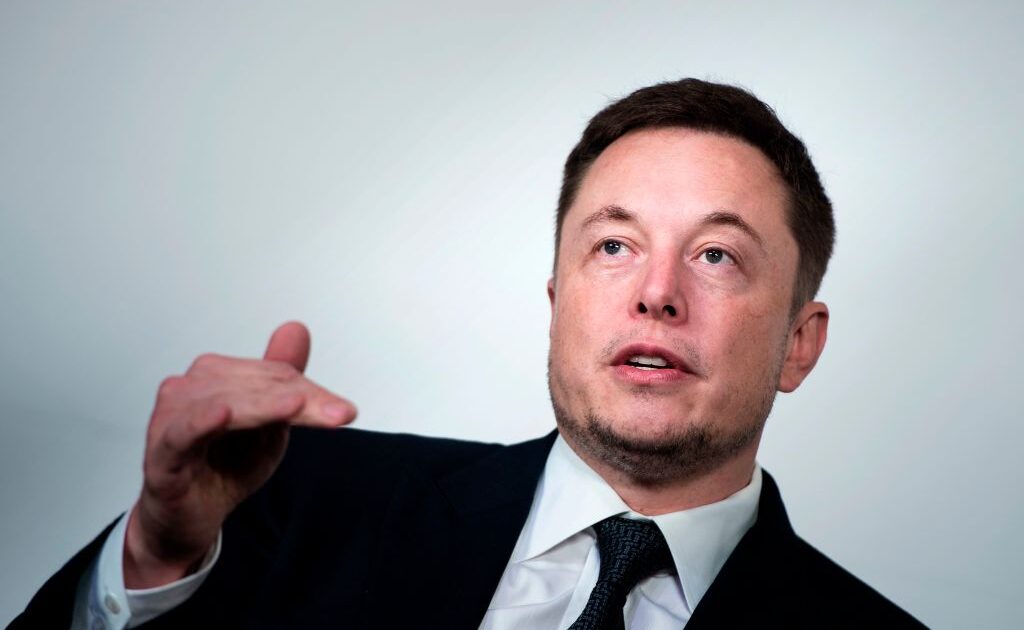
Elon Musk’s artificial intelligence startup xAI has brought on two researchers from Nvidia with experience in “world models,” a class of AI systems designed to understand and interact with physical environments. The hires, identified in reporting as Zeeshan Patel and Ethan He, mark a clear push by xAI to expand beyond text-only systems and deepen work that could underpin next-generation gaming, robotics and multimodal creation.
Elon Musk’s Hire: The Significance
Unlike today’s popular generative models that predict the next word or the next pixel, world models aim for a causal grasp of reality, physics, objects, and how things move and respond. That capability is central to two fast-moving frontiers:
- Gaming: Generating interactive 3D worlds that behave consistently with real-world rules.
- Robotics: Powering robots that can reason about and act in complex, changing environments.
Industry leaders including Google and Meta are investing in similar systems; xAI’s Nvidia-linked hires signal Musk’s intent to compete directly on this technically demanding track.
What xAI is building?
According to the report, xAI is training world models on real-world video and robot data, aiming to push beyond the limitations of text-first chatbots such as Grok and ChatGPT. The company also recently introduced a new image-and-video generation model with “massive upgrades,” available to users at no cost, while staffing up an “omni team” focused on multimodal understanding and generation across photo, video and audio.
Hiring signals and roles?
xAI’s recruiting drive provides a window into the roadmap:
- Specialist research roles in image and video generation tied to the omni team.
- Compensation: listed salary bands for technical roles from $180,000 to $440,000.
- A “video games tutor” opening, tasked with teaching Grok to create games and guide users in AI-assisted game design, with hourly pay between $45 and $100.
These postings align with Musk’s stated goal of releasing a “great AI-generated game before the end of next year,” a timeline he reiterated in a recent post referencing a target set last year.
The Nvidia connection
Nvidia is a natural talent wellspring for this work. Its Omniverse platform is widely used to create and run simulations, fertile ground for researchers working on world models that learn from rich, physics-consistent virtual environments as well as real-world data. Bringing ex-Nvidia talent into xAI should accelerate the translation of simulation-centric research into deployable product features.
Building credible world models is expensive and data-hungry. Gathering, curating and training on sufficient robot and video datasets and ensuring the models infer cause-and-effect rather than memorize patterns, has been a sticking point across labs. The report underscores that data scale and fidelity remain the bottleneck, not just raw compute.
Competitive backdrop
- Google, Meta: Pursuing systems that marry perception with action, a prerequisite for embodied AI.
- OpenAI and others: Advancing state-of-the-art video generators (e.g., models akin to Sora) that predict frames; xAI’s push is framed as a step beyond frame prediction toward real-time causal reasoning.
What to watch next
- Demo cadence: Whether xAI begins showcasing interactive 3D environments or robot-reasoning benchmarks, beyond static video reels.
- Hiring velocity: Further senior research appointments in simulation, reinforcement learning, and robot datasets would suggest a deeper robotics tilt.
- Game initiative: Evidence of internal playtests, toolchains, or creator-facing workflows tying Grok to level design and mechanics could validate the “AI-generated game” timeline.
Also Read: Elon Musk vs. Indian-Origin Technocrats: Power Struggles or Subtle Bias?