Australia Unemployment Rate: Australia’s labour market is sending two seemingly conflicting signals at once. More people are finding work, but even more are looking for it.
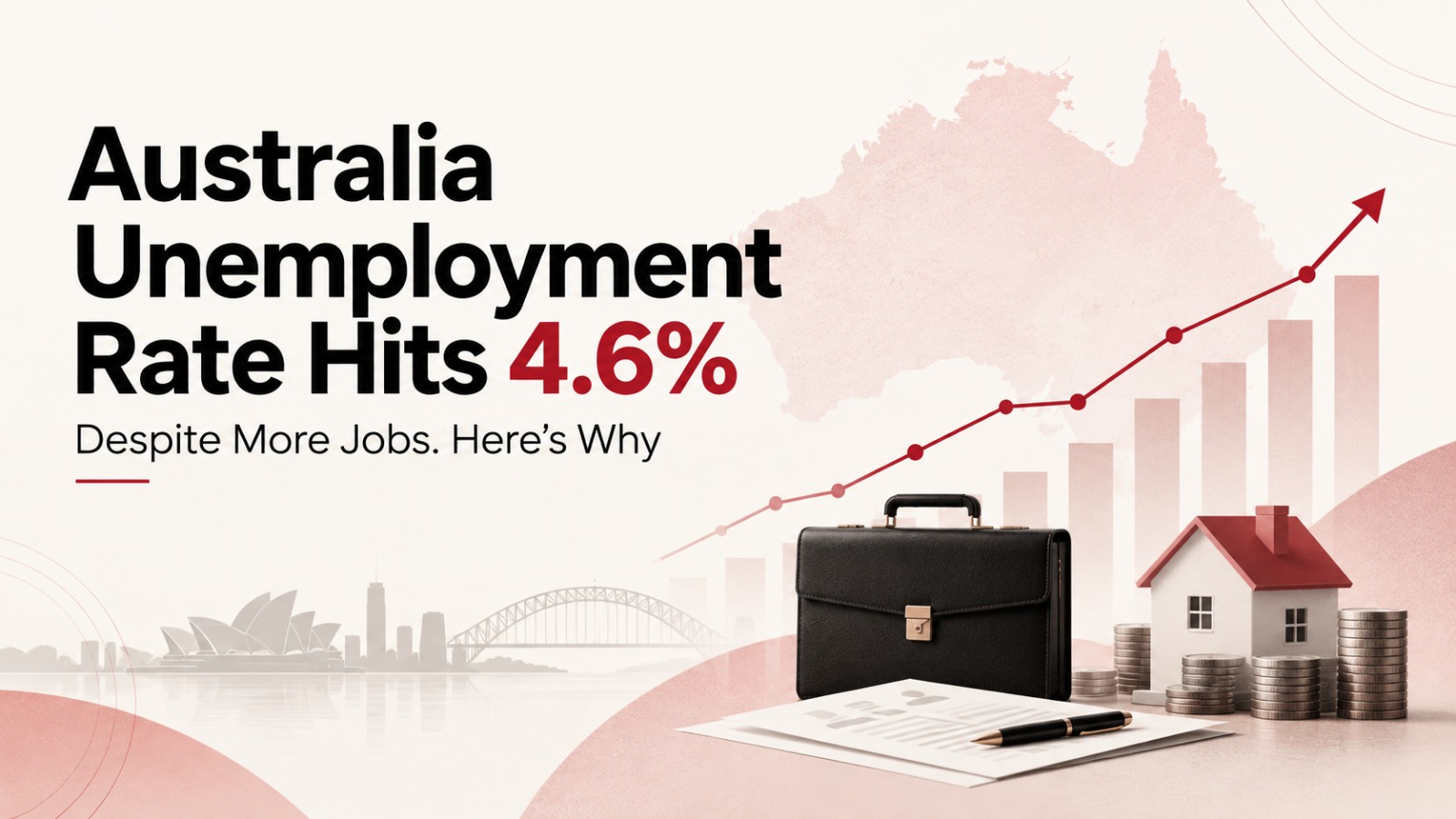
The unemployment rate rose to 4.6 per cent in August from 4.5 per cent in July, reaching its highest level of the post-COVID period. At the same time, employment increased and the proportion of Australians participating in the labour market moved back close to a record high.
More Australians are entering the workforce, while the number of people holding multiple jobs has crossed 1 million for the first time.
The Australian labour force grew by 67,700 people in August, lifting the participation rate to 67.1 per cent from 66.9 per cent in July. That puts participation just below its record high of 67.2 per cent.
Of those entering the labour force, an additional 39,500 people were employed while another 28,200 were recorded as unemployed. In other words, employment grew, but not quickly enough to absorb the larger number of people seeking work. That pushed the unemployment rate higher.
The latest numbers therefore tell a more complicated story than the 4.6 per cent jobless rate alone suggests.
More people are working, but the mix has changed
The underlying employment figures also point to a shift towards part-time work.
Employment increased by roughly 39,000 people during the month, but the rise was driven by part-time jobs. Full-time employment fell by about 6,000.
That combination matters because it comes at a time when households are dealing with higher living costs and the prospect of further increases in mortgage repayments.
The pressure is showing up elsewhere in the labour market too.
Earlier ABS figures showed that the number of Australians working more than one job had climbed above 1 million for the first time. Multiple-job holders now account for 6.9 per cent of employed Australians, an all-time high and around one percentage point above the level recorded before the inflation and interest-rate increases that began in 2022.
KPMG chief economist Brendan Rynne linked the near-record participation rate to the financial pressure on households.
“Households are still feeling the pinch of higher inflation and anticipatory higher mortgage rates which can be seen through a rise in the participation rate to just below all-time peak level of 67.2%,” Rynne said.
He added that the figures suggested households were seeking additional income to meet everyday expenses and prepare for possible increases in mortgage payments.
Westpac economist Ryan Wells made a similar observation, saying cost-of-living pressure and rising interest rates were encouraging people into the labour market even though weaker economic conditions would normally discourage some jobseekers.
The pattern is significant because it means a rising participation rate is not necessarily evidence that household finances are becoming easier. In this case, economists cited in the reports argue that financial pressure itself may be pushing more people to look for work.
Why unemployment rose even as employment increased
The August figures highlight an important distinction in labour market data.
A country can add jobs and still record a higher unemployment rate if the number of people entering the labour force grows faster than employment.
That is what happened in August.
The ABS recorded a 67,700-person increase in the labour force, compared with a 39,500 rise in employment. The remaining increase was reflected in the number of people classified as unemployed.
Sean Crick, the ABS head of labour statistics, said August recorded a higher proportion of people moving from outside the labour force into unemployment compared with recent years.
The result pushed Australia’s unemployment rate to 4.6 per cent in both seasonally adjusted and trend terms.
Attention now turns to the Reserve Bank
The latest employment numbers arrive only days before the Reserve Bank of Australia’s monetary policy board is due to meet on September 28 and 29.
The rise in unemployment might ordinarily strengthen the argument for leaving interest rates unchanged, particularly as a softer labour market can reduce pressure on wages and household demand.
Economists quoted in both reports, however, said the August figures were unlikely on their own to prevent another rate rise.
RBA governor Michele Bullock recently said an unemployment rate somewhere between 4.5 and 5 per cent could remove enough heat from the labour market to help ease inflation pressure.
Despite unemployment now moving into that range, several economists still expect the central bank to focus heavily on inflation.
The RBA cash rate currently stands at 4.35 per cent. A quarter-percentage-point increase would take it to 4.6 per cent, which would be its highest level in nearly 15 years.
All four major banks and much of the money market were reported to be expecting an increase at the upcoming meeting.
Oxford Economics Australia economist Oscar Guth said the higher unemployment rate should reduce some of the tightness in the labour market, but he still expected the RBA to raise rates.
BetaShares chief economist David Bassanese also said the strength of employment remained important for the central bank, while EY senior economist Paula Gadsby said the latest labour market result was unlikely to materially alter the interest-rate outlook.
Inflation remains another central concern. The Guardian reported inflation at 3.5 per cent, while the RBA’s target band is 2 to 3 per cent.
A labour market under pressure from both directions
Australia’s August employment report is unusual because weakness and resilience are appearing together.
Unemployment has reached a post-COVID high. Yet employment is still growing. Participation is close to a record. More than a million people are now holding multiple jobs.
Those figures point to a labour market in which Australians continue to seek work even as economic conditions soften.
For households, the next question is whether that pressure intensifies.
If the Reserve Bank raises the cash rate again, mortgage borrowers would face another increase in financing costs at the same time that more Australians are already seeking additional work to strengthen household incomes.
That makes the August employment figures more than a simple story about unemployment moving from 4.5 to 4.6 per cent. The more revealing shift may be the growing number of Australians entering the labour market, taking part-time work or holding additional jobs while living costs and interest rates remain elevated.
Also Read: NAB Outage Explained: Why NAB Internet Banking and Mobile App Are Down