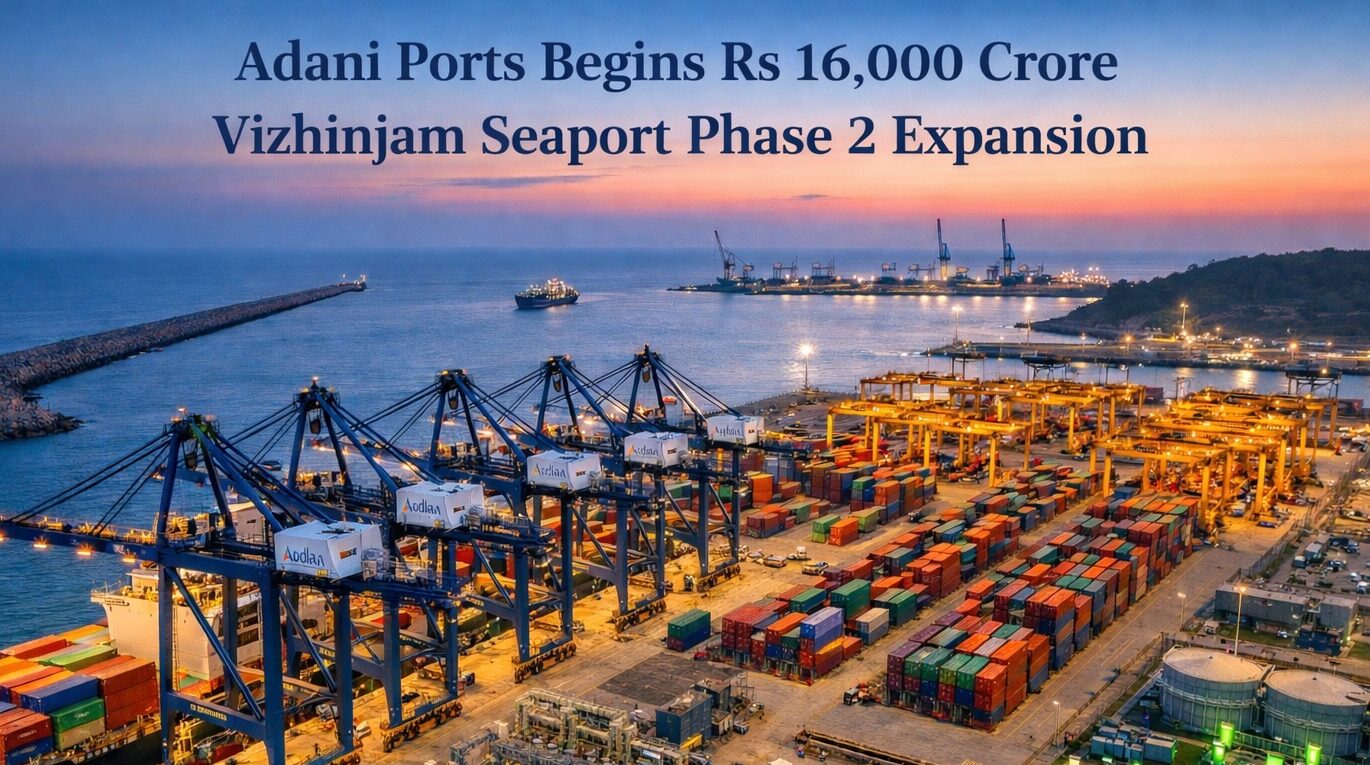
Adani Ports and Special Economic Zone Ltd is set to undertake the second phase of development of the Vizhinjam International Seaport, with an estimated investment of around Rs 16,000 crore. According to sources familiar with the development, the formal announcement is expected to be made during the port’s inaugural ceremony scheduled for Saturday. This next phase marks a significant step in expanding the port’s operational scale and long-term role in regional maritime trade.
Formal Inauguration by Kerala’s Chief Minister
The second phase of development will be inaugurated on Saturday evening by Kerala Chief Minister Pinarayi Vijayan. The event is expected to highlight the strategic importance of Vizhinjam as a key maritime infrastructure project for the state and the country. The inauguration follows the completion of critical initial infrastructure, paving the way for large-scale capacity enhancement under the next development stage.
Ambition to Emerge as a Regional Transhipment Leader
Adani Ports expects the second phase to position Vizhinjam as the largest transhipment hub in the Indian subcontinent. Sources indicated that the expansion will significantly strengthen the port’s ability to handle international cargo traffic, particularly container transhipment that currently relies heavily on overseas ports. With its natural depth and strategic location, Vizhinjam is being developed to handle large container vessels efficiently.
Also Read: Cyclic Materials Raises USD 75 Million in Series C to Scale Rare Earth Recycling Worldwide
Substantial Capacity Addition Through Phase Two
The upcoming development phase will add 4.1 million Twenty-foot Equivalent Units to the port’s existing container handling capacity. This expansion is expected to substantially increase the port’s throughput and enable it to cater to growing demand from shipping lines operating in the region. The additional capacity is designed to support both current and future trade volumes while maintaining high operational efficiency.
Advanced Automation at the Core of Expansion
Vizhinjam is currently regarded as the most advanced and fully automated transhipment hub in India. Sources said that the second phase will further enhance this status through the deployment of updated automation technologies and modern equipment. The focus remains on improving turnaround time, operational precision, and overall productivity through high levels of automation.
High-End Equipment to Strengthen Operations
The second phase will include the installation of 21 automated ship-to-shore cranes and 45 automated cantilever rail-mounted gantry cranes. In addition, a dedicated rail handling yard will be developed to support efficient cargo movement. State-of-the-art electrical and automation systems will form the backbone of these operations, ensuring seamless integration of equipment and infrastructure across the port.
Expanded Marine Infrastructure for Larger Vessels
Phase two also includes major marine infrastructure works aimed at increasing operational depth and berth availability. These include berth expansion, dredging, and land reclamation to create additional working areas. A key highlight of this phase is the construction of India’s deepest breakwater, extending 920 meters at a depth of 21 meters. This structure is expected to enhance navigational safety and enable the port to handle ultra-large container vessels.
Focus on Sustainability and Essential Facilities
Sustainability features form an important part of the second phase development. The plan includes the deployment of green equipment such as electric vehicle charging stations within the port area. Critical support infrastructure will also be developed, including an electrical substation, a sewage treatment plant, and International Ship and Port Facility Security fencing. These facilities are intended to support uninterrupted operations while meeting safety and environmental requirements.
Strengthening Vizhinjam’s Long-Term Role
With the planned investments and infrastructure upgrades, the second phase of Vizhinjam’s development is expected to significantly enhance its operational capabilities and strategic relevance. The expansion reflects Adani Ports’ long-term vision of building a globally competitive transhipment hub that can serve as a key gateway for international maritime trade in the region.
Also Read: Cheaper BMWs, Easier Exports: How the India-EU Trade Deal Could Affect You