


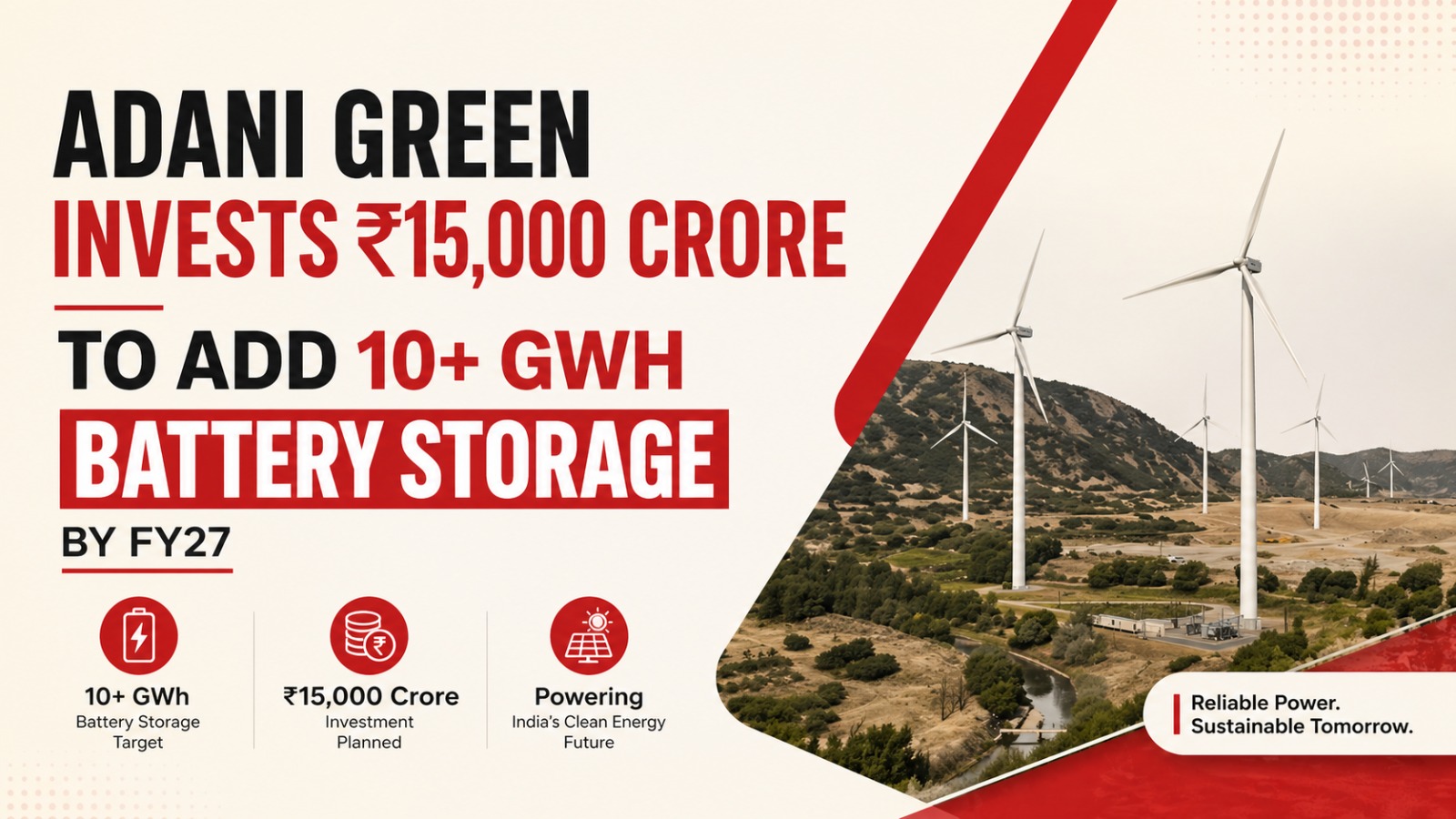
Adani Green Energy Ltd is preparing for a major push into battery energy storage, with plans to invest around ₹15,000 crore to add more than 10 gigawatt-hours of storage capacity in FY27. The move marks a clear shift in India’s renewable energy race: the focus is no longer only on building solar and wind capacity, but on making clean power available when the grid needs it most.
The planned addition will come on top of the roughly 3 GWh of installed storage capacity the company expects to reach shortly, after commissioning 1.4 GWh in FY26. Executive Director Sagar Adani said the company is “significantly ramping up” battery capacity and expects additions to exceed 10 GWh in the current fiscal year.
The storage systems are being developed alongside renewable generation at Khavda in Gujarat, where Adani Green is building its large renewable energy park. The practical purpose is simple but crucial: store clean power when generation is high and supply it during peak evening demand, especially when solar output drops.
Adani Green already has a 19.3 GW operational renewable portfolio and is targeting 50 GW by FY30. Its current capacity mix includes 70% solar, 13% wind and 17% hybrid projects. In FY26, the company generated 38 billion units of electricity, up from 28 billion units in the previous financial year.
A key detail in the company’s battery plan is revenue visibility. About 75% of the proposed 10 plus GWh storage capacity is expected to be backed by 25-year fixed-tariff power purchase agreements. That gives the expansion a firmer commercial base at a time when battery storage is still emerging in India.
The larger message is that India’s green energy transition is entering a more demanding phase. Solar and wind have grown rapidly, but without storage, they cannot fully solve the problem of evening peaks and grid reliability. Battery systems are now becoming essential infrastructure, not just an add-on to renewable projects.
For Adani Green, the FY27 storage plan is more than a capacity announcement. It is a bet that the next winner in clean energy will not simply be the company producing the most renewable power, but the one able to deliver it steadily, flexibly and at the right hour.
Also Read: Who Owns Your Team Now? IPL’s Latest Ownership Breakdown