

Camel Startups: For years, the startup ecosystem celebrated one kind of success story. Build fast, raise aggressively and chase scale at any cost. The unicorn became the ultimate benchmark, a symbol of ambition backed by capital and rapid expansion.
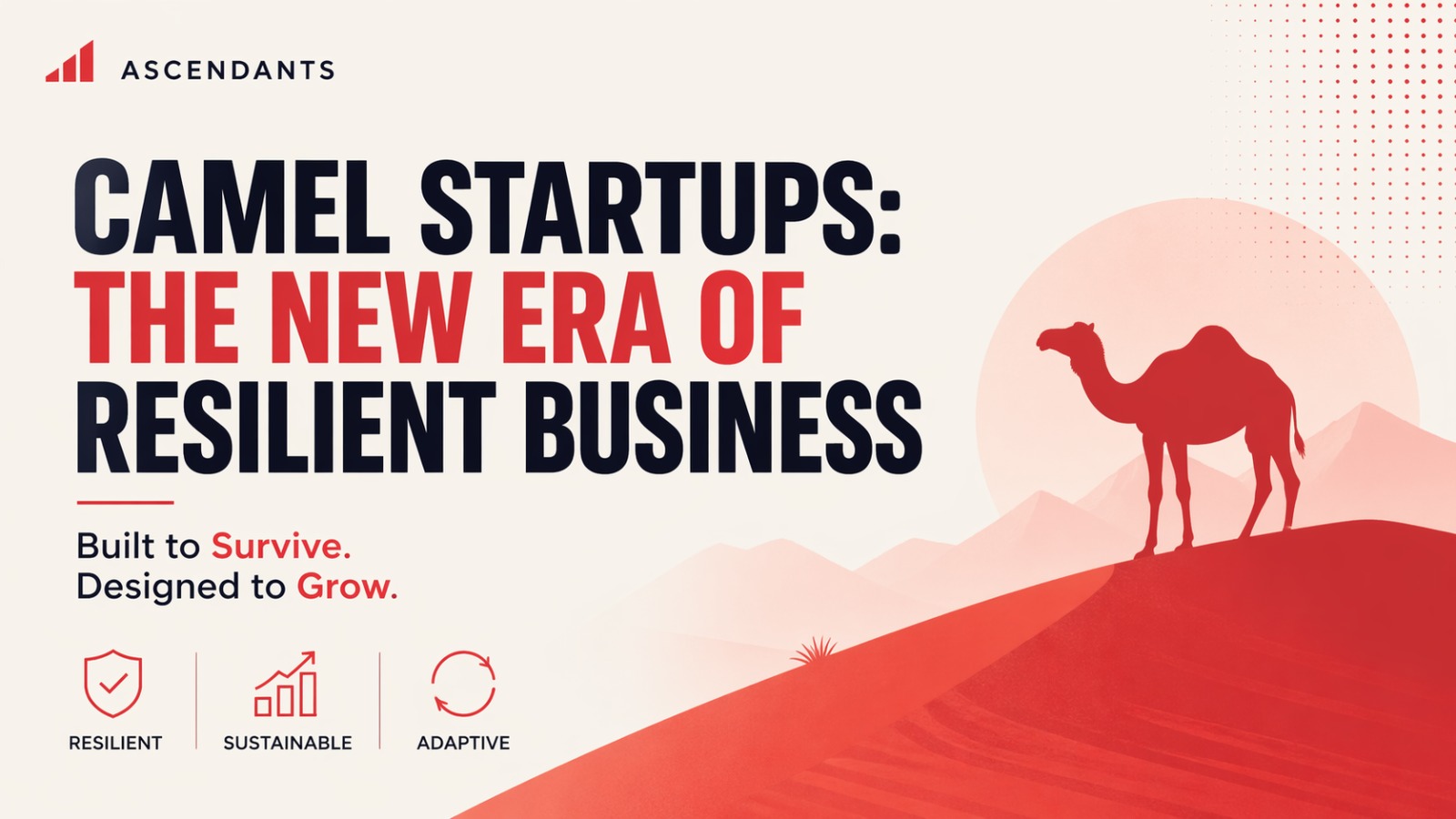
But a quieter shift is underway. A growing number of founders are stepping away from that playbook and embracing a different model, one that values endurance over acceleration. This is the rise of the camel startup.
The idea draws from a simple metaphor. Camels survive in harsh environments by conserving energy, storing resources and adapting to unpredictable conditions. In business terms, a camel startup follows the same logic. It is built to last, not just to grow quickly.
At its core, the camel approach is about discipline. These startups prioritise financial efficiency, measured hiring and early revenue generation. Growth is still important, but it is approached with caution rather than urgency. The goal is not to dominate markets overnight but to build a company that can sustain itself through changing economic cycles.
This mindset is becoming more relevant as the funding environment evolves. Venture capital, once abundant and easily accessible, has become more selective. Investors are no longer driven only by growth potential. They are looking more closely at how businesses manage costs, generate revenue and maintain stability over time.
That shift has exposed the vulnerabilities of the traditional high-growth model. Startups that expanded rapidly during funding booms often built cost structures that depended on continuous capital inflows. When those inflows slowed, many found themselves struggling to adjust. The pressure to maintain growth without the same level of financial support has forced a rethink across the ecosystem.
Camel startups are designed to avoid that trap. By focusing on sustainability from the beginning, they reduce their dependence on external funding. They build leaner operations, make more deliberate decisions and create revenue streams early enough to support ongoing operations.
The ability to be flexible is another important characteristic of camel businesses. Due to the fact that they do not commit to fast growth, they are in a much more flexible position whenever there are changes in the market environment.
The growing interest in this model also reflects a broader change in how success is perceived. For a long time, valuation milestones dominated the conversation. Today, there is increasing recognition that longevity and operational strength matter just as much. A company that can survive downturns, adjust its strategy and continue delivering value may not always make headlines, but it often builds a stronger foundation.
Importantly, the camel startup is not positioned as a replacement for the unicorn model. High-growth ventures will continue to play a key role in industries where speed creates competitive advantage. What is changing is the range of acceptable strategies. Founders now have a clearer alternative that does not rely on constant fundraising or aggressive scaling from day one.
For entrepreneurs operating outside major venture capital hubs, this approach can be especially practical. It allows them to build businesses aligned with real market demand rather than investor expectations alone. It also reduces the pressure to pursue growth metrics that may not be sustainable in their specific context.
The rise of camel startups signals a more grounded phase in startup thinking. It reflects a move away from excess and toward efficiency, away from speed for its own sake and toward stability with purpose.
In a business environment where uncertainty has become the norm, that shift does not just feel timely. It feels necessary.
Also Read: Vaibhav Suryavanshi’s Rise Is Bigger Than a Net-Worth Number