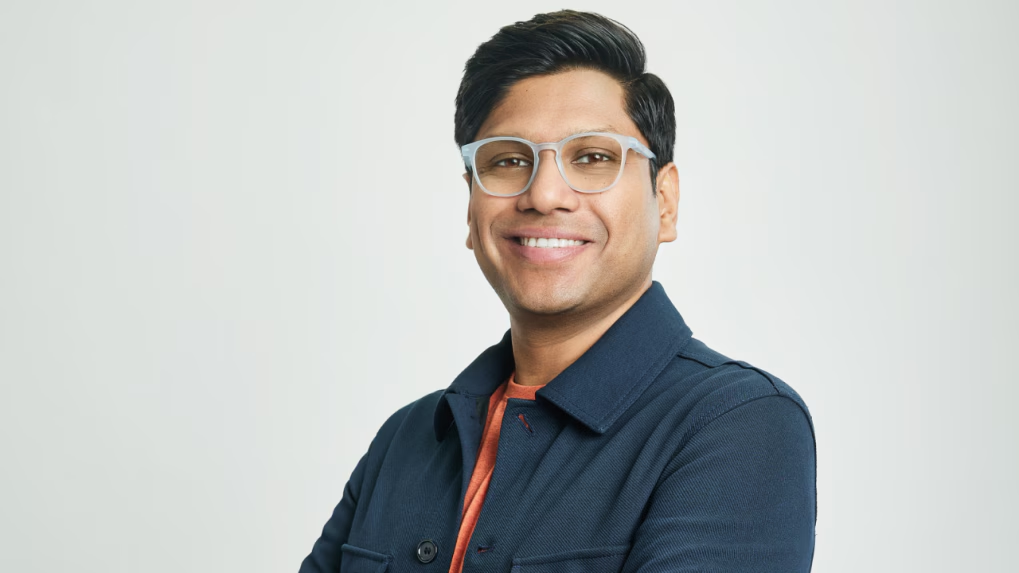
Lenskart founder and Shark Tank India judge Peyush Bansal is on the cusp of joining the country’s billionaire ranks as his eyewear giant readies a public listing pegged to a roughly $9 billion valuation next month. If the stock pops about 25% on debut, Bansal’s wealth would cross $1 billion, according to calculations based on the company’s draft filings and stake disclosures.
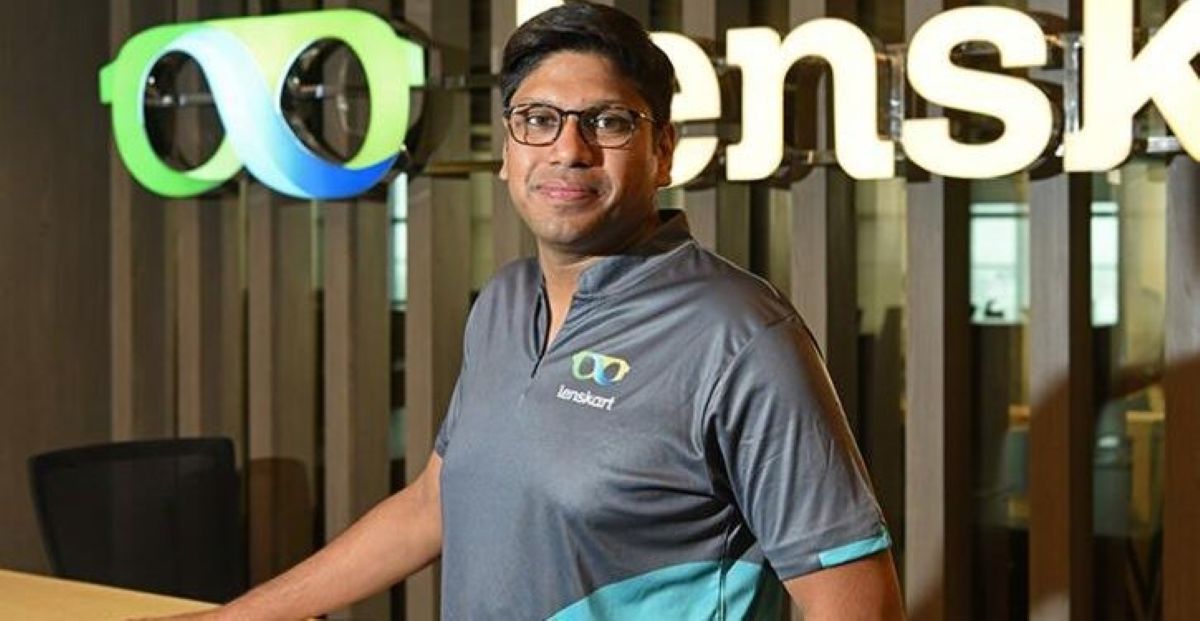
After two choppy years for Indian tech floats, Lenskart’s IPO is a litmus test for profitable, founder-led consumer tech. The company reported its first full-year profit in FY24 and now wants to deploy fresh capital to open more stores, invest in tech and AI, make acquisitions, and fund general corporate purposes, a conventional use-of-proceeds list that signals operating discipline over blitzscaling.
The numbers behind the moment
- Target valuation: about $9 billion at IPO.
- Founder stake math: Bansal’s holding is valued at ~$800 million post partial sale; a ~25% listing-day rise would tip him past the $1B mark.
- Network & footprint: 2,723 stores across India, the Middle East and Southeast Asia.
- Revenue mix: ~40% now generated outside India, reflecting a deliberate Southeast Asia push (Indonesia, Vietnam) where demand mirrors India’s past trajectory.
- Supply chain reality: > one-third of purchases (frames, moulds, raw materials) still sourced from China, a disclosed vulnerability to tariffs and export swings.
- Capex in the pipeline: a 50-acre Hyderabad plant slated to be one of the world’s largest eyewear facilities, with capacity for hundreds of thousands of pairs daily.
- Shareholder signals: SoftBank ~15% (framing itself as patient capital); Fidelity earlier tagged Lenskart at $6.1B this year—both touchpoints on the valuation glide path.
How Lenskart got here?
Lenskart’s moat is part physical, part digital, and heavily operational. The company designs, manufactures and sells under one roof, leaning on German robotic lines to bring down defects and speed up throughput, while its e-commerce experience reduces friction for remote try-ons and home fulfilment. It even employs hundreds of ophthalmologists in Kolkata to power remote consultations, bridging access gaps in smaller cities, while AI-based vision testing is under development.
Bansal’s founder story is now part of Indian startup lore: an engineer from McGill University, a stint at Microsoft (Redmond), and a return home to build, via an early student-housing experiment, what became India’s most recognisable eyewear brand. He and co-founder Amit Chaudhary famously schedule weekly ideation days; Bansal jokes the hit rate is “about 50%… a coin toss might have worked just as well.” That irreverence masks a core belief: “India is the myopia capital of the world… If we can solve that, everything else, scale, profit, market cap, will follow.”
What’s different this time
Unlike several 2021-23 vintage listings, Lenskart already prints profit and commands an offline+online flywheel at national scale. The business is not merely an app; it’s a retail and manufacturing engine with defensible unit economics. That positioning could resonate with investors newly cautious after earlier startup IPO stumbles, especially on the heels of Urban Company’s 62% day-one surge last month, which hinted at renewed appetite for consumer-tech stories with clearer paths to cash flow.
The risk ledger
- China exposure: With over a third of inputs tied to China, any tariff shock or export curb risks margin compression or delivery delays.
- Execution at scale: The planned Hyderabad mega-facility must ramp without quality slippage to keep the brand’s service promise.
- New bets discipline: A 70-member smart-eyewear team is exploring UPI, AI tools, cameras, and audio baked into frames. The temptation to “go all in” is real; management insists timing matters—and public markets will demand proof.
Peyush Bansal: The founder factor
Bansal’s celebrity turn on Shark Tank India, with a combined audience reach and ~900,000 Instagram followers, isn’t just vanity: it’s brand oxygen. But public markets eventually strip away charisma and grade founders on capital allocation, governance, and predictability. Lenskart’s “patient capital” backers and a measured expansion playbook suggest an awareness of that reality.
The broader read on Indian markets
If Lenskart lands its mark, it strengthens the case for profitable consumer platforms as the next leg of India tech’s public-market evolution. It also revives a point seasoned investors keep making: in India, category creators with operational moats tend to outlast hype cycles. In eyewear, a category with chronic under-penetration and medical adjacency, Lenskart is, for now, that creator.
Is Peyush Bansal India’s next billionaire? The math says he’s one listing-day rally away. But the more durable story is whether Lenskart can translate profit-stage discipline into post-IPO compounding, expanding internationally, derisking supply chains, and proving that smart eyewear can be more than a curiosity. Nail those, and the billionaire label becomes a footnote to a bigger headline: India’s eyewear champion built for the long haul.