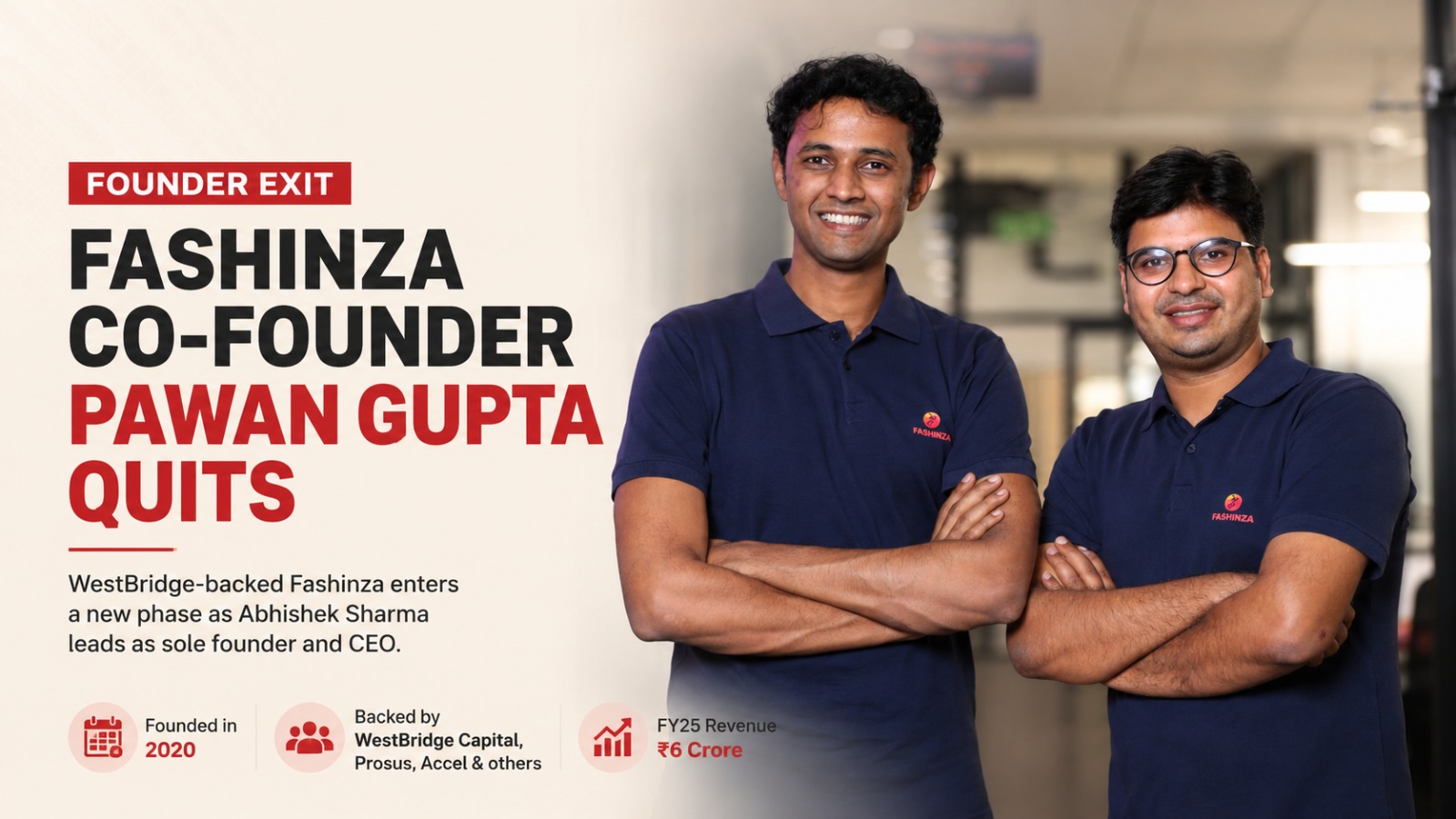
Gurugram-based Fashinza is entering a new chapter after co-founder and former CEO Pawan Gupta stepped away from the company, leaving Abhishek Sharma as the sole founder and CEO at the WestBridge-backed startup.
Founded in 2020 by Pawan Gupta and Abhishek Sharma, Fashinza began with the promise of digitising fashion manufacturing and supply chains for brands and exporters. The company later elevated Jamil Ahmad as co-founder and chief business officer, but with Gupta’s exit, Sharma is now the only founder still operating the business.
Fashinza confirmed that Gupta has become non-operational and is pursuing a new venture in the AI space. Sharma said the move was personal, fully amicable and not linked to the company’s business performance. He also said the company had reached profitability and operational stability, making it the right time for Gupta to explore a new opportunity.
The exit, however, comes at a sensitive time for Fashinza. The startup, which has raised more than $120 million from investors including WestBridge Capital, Prosus, Accel, Elevation Capital and Naval Ravikant, has seen its business shrink sharply from earlier levels. Its revenue fell from Rs 33 crore in FY22 to Rs 6 crore in FY25, while the company moved from a Rs 5 crore loss in FY22 to a Rs 1 crore profit in FY25.
That shift tells two stories at once. Fashinza is now a much smaller company than it once aimed to be, but it has also cut its way to profitability. For a startup built during the funding boom, that is a very different place from where it began.
Problems at the firm began in 2023, when the demand fell and its gross merchandise value remained flat for at least 18 months. The exits of senior members, several attempts to pivot its strategy, and returning funds to its shareholders have been observed. The company has bought out its smaller competitor Qckin and even declared EBITDA profitability in Q3FY26, but the burning issue remains its survival at this smaller level.
Gupta’s departure also fits into a wider pattern in India’s startup ecosystem. Several founders from heavily funded companies have moved on from their original ventures in recent months, either to build again or explore new sectors. The list includes exits from Swiggy, BharatPe and Cars24, while companies such as DealShare and PharmEasy have also seen founding teams thin out over time.
For Fashinza, the immediate challenge is clear. It has to prove that a leaner, founder-led version of the company can survive beyond the hype cycle that once lifted B2B commerce, supply-chain platforms and marketplace-led manufacturing models.
The startup is no longer selling the same high-growth story investors bought into during the boom years. It is now selling something harder but more valuable: discipline, operational control and a path to staying alive in a market that has become far less forgiving.
Also Read: Vaibhav Suryavanshi’s Rise Is Bigger Than a Net-Worth Number