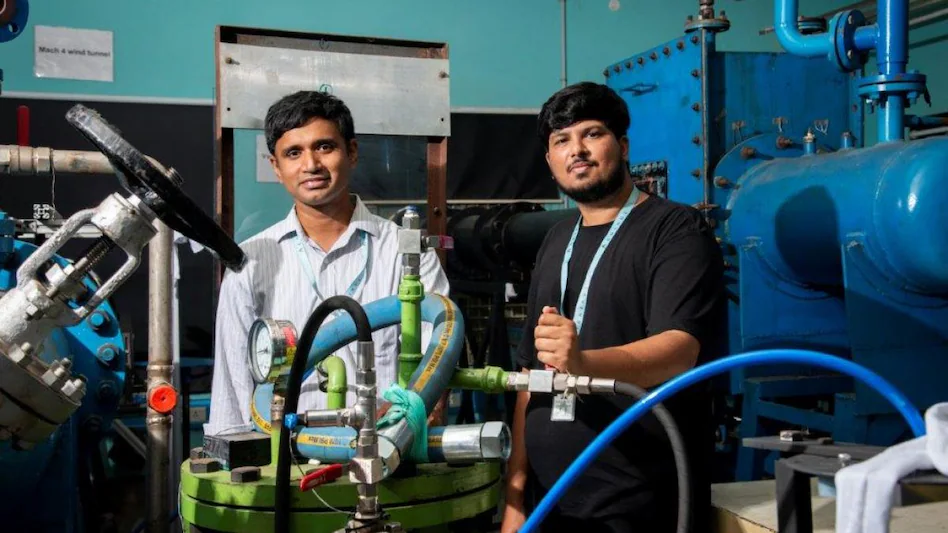
Chennai-based space startup Agnikul Cosmos has secured ₹150 crore in fresh funding, drawing in a new set of backers even as one of its earlier marquee investors chose to sit out this round. The capital will go towards building and scaling its small satellite launch vehicles, a segment that has become a focal point for India’s emerging space-tech economy.
Agnikul Cosmos: Separate from stalled $50 million plan
According to regulatory filings and people familiar with the transaction cited in the Livemint report, the latest fundraise is structured as a Series C round and is distinct from an earlier plan by Agnikul to raise up to $50 million, which did not find enough investor appetite.
Two new investors Advenza Global Ltd and Atharva Green Ecotech Pvt Ltd have together committed ₹60 crore, putting in ₹30 crore each. The company has also raised ₹7 crore in debt from Pratithi Investments, taking the total size of the round to ₹150 crore.
With this, Agnikul’s cumulative fundraising since its founding in 2017 stands at nearly $58 million, as reported by both NewsBytes and Livemint.
Celesta Capital sits out, new money steps in
The new round marks a visible shift in Agnikul’s cap table. Celesta Capital, which led the startup’s $26.7 million Series B round in 2023, has not participated in the Series C, even though it was the lead investor only two years ago. That earlier round also saw participation from Rocketship.vc, Artha Venture Fund, Artha Select Fund and Mayfield India.
People tracking the company told Livemint that an existing investor had put in a term sheet for a smaller cheque in the more ambitious $50 million round, and overall demand for that larger raise did not materialise at the time. Instead, Agnikul has now closed the more modest ₹150 crore round, anchored by new investors and supplemented by debt.
Despite the absence of Celesta in this round, interest around Agnikul has hardly dried up. Both reports note strong in-bound interest from family offices and corporate venture capital funds keen to write larger tickets into the company. At the same time, some investors are choosing to stay on the sidelines until Agnikul achieves an orbital launch, viewing that milestone as a proof point before committing fresh capital.
A focused bet on small satellite launchers
Agnikul is part of a small but prominent group of Indian startups building hardware for the space economy. From its base in Chennai, the company is developing and launching small satellite launch vehicles, targeting a market where operators increasingly want dedicated or flexible launch options for smaller payloads rather than piggybacking on larger missions.
It is frequently mentioned in the same breath as other Indian space-tech firms such as Pixxel, Bellatrix Aerospace and GalaxEye, all of which are working on different parts of the satellite and launch value chain and have attracted venture backing.
Together, these companies form the core of a new generation of commercial players that are building around India’s long-standing strengths in space science and engineering.
The timing of Agnikul’s round is significant. Even as many consumer internet and fintech startups grapple with slower funding, deeptech ventures across aerospace, defence, manufacturing and robotics have seen a discernible pickup in capital flows, according to the Livemint report.
On the institutional side, the Small Industries Development Bank of India (SIDBI), through its venture arm, recently announced the first close of ₹1,005 crore for its 12th vehicle, the Antariksh Venture Capital Fund, which is specifically mandated to invest in space-tech startups.
That kind of dedicated pool signals that space-tech is moving from a niche curiosity to a defined asset class in Indian venture portfolios.
At the same time, large, traditionally “generalist” venture capital firms such as Peak XV Partners, Accel and Elevation Capital have stepped up their deeptech exposure despite the long gestation periods such companies demand.
Livemint notes that Accel alone has backed multiple such firms this year, including micro gas turbine maker Nabhdrishti Aerospace (seed, $3 million), eVTOL manufacturer Sarla Aviation (Series A, $10 million), composites firm Fabheads, and a $40 million Series B in chemicals platform Scimplify.
In this context, Agnikul’s ability to close a Series C round with fresh investors, even if it is smaller than the originally envisaged $50 million raise, underlines how specialised hardware and space-tech platforms are still able to command capital, provided they show technical progress and a credible commercial path.
What the round signals for Agnikul Cosmos and Indian space-tech
For Agnikul, the immediate outcome of the round is straightforward: it extends the company’s financial runway as it works towards its next big technical milestone in small satellite launches. The combination of equity and debt gives it room to build and test its vehicles without relying solely on equity dilution.
The more interesting signal lies in who is backing the company now. The participation of new investors like Advenza Global and Atharva Green Ecotech, alongside debt from Pratithi Investments and interest from family offices and corporate venture arms, shows that space-tech in India is no longer confined to a narrow set of specialist funds.
Instead, it is beginning to draw capital from a wider pool of financial and strategic investors who see a long-term opportunity in launch services, imaging and satellite-based applications.
At the same time, the decision of some investors to wait until an orbital launch before putting in money is a reminder of the execution risk inherent in deeptech and space hardware.
Unlike software startups that can iterate quickly, companies like Agnikul operate on longer development cycles, making every test and launch a critical inflection point for future funding.
India’s private space sector is still in its formative years, but the contours are becoming clearer: a handful of hardware-heavy startups such as Agnikul, Pixxel, Bellatrix and GalaxEye at the core; a layer of institutional capital, from SIDBI’s Antariksh fund to mainstream venture firms; and a growing interest from family offices and corporates that are willing to underwrite long-term bets on space infrastructure.
If Agnikul can convert this fresh capital into reliable launch capability, it will not only validate the thesis of its current investors but also help set the benchmark for how India’s next generation of space-tech startups raise and deploy growth capital.
Also Read: Yamuna Pushta Road: A gateway to growth for Noida and Greater Noida