


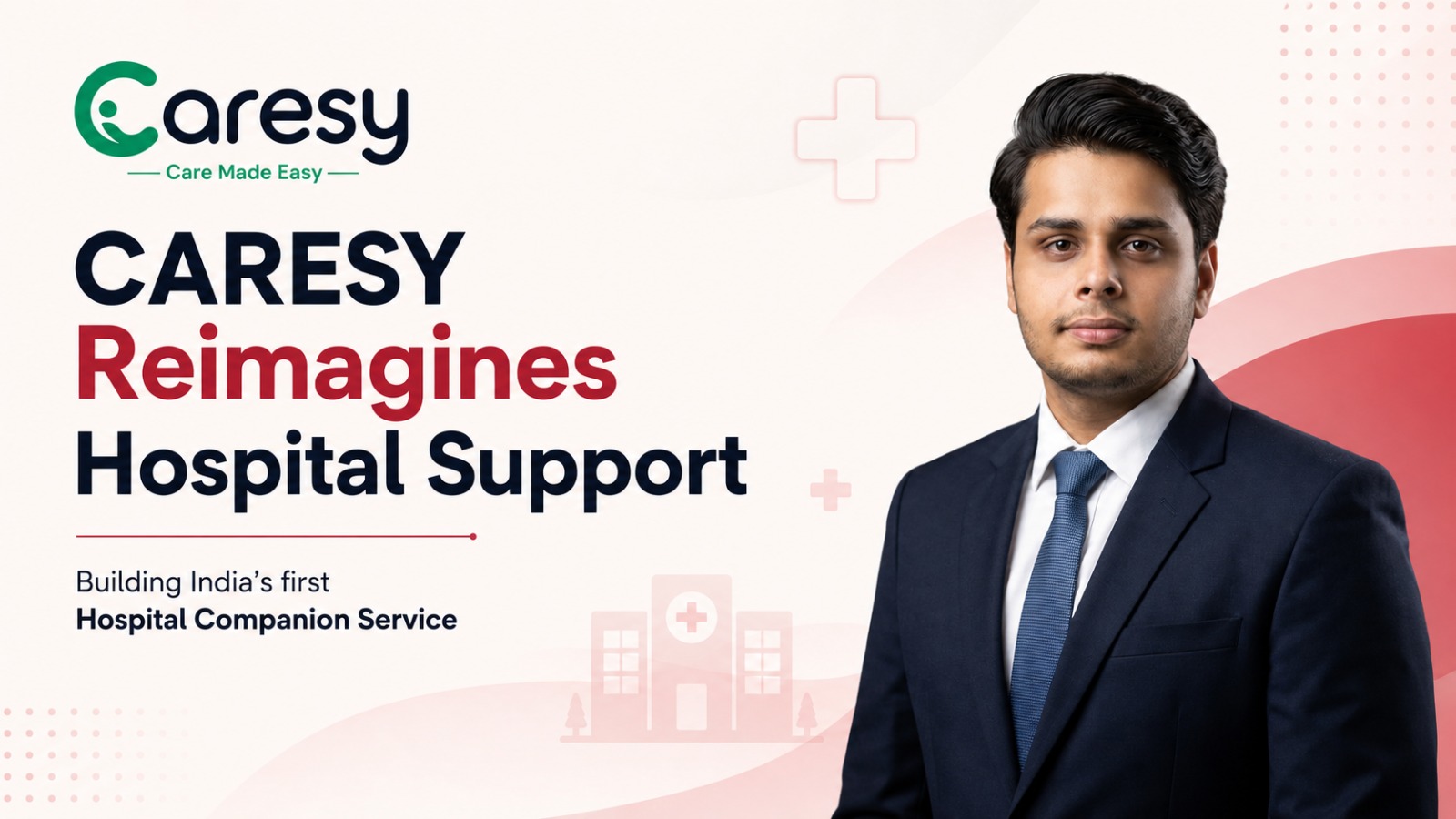
Founder Adarsh Yadav is building a Hospital Companion Service designed to help patients and families manage paperwork, queues, coordination and other practical challenges during hospital visits.
A hospital visit rarely begins and ends with a consultation.
For many patients and their families, the experience also involves navigating unfamiliar departments, completing paperwork, waiting in queues, coordinating appointments and managing admission or discharge formalities. These responsibilities can become particularly difficult when a family is already dealing with anxiety, uncertainty or emotional strain.
CARESY is attempting to address this overlooked part of the healthcare experience through what it describes as a Hospital Companion Service.
The idea, according to founder Adarsh Yadav, emerged from observing how stressful hospitals can be for both patients and their families. He noticed that many people do not have someone available to remain with them, manage administrative work or guide them through different stages of a hospital visit.
That absence of reliable support became the starting point for CARESY.
Yadav believes patients should not have to navigate a difficult hospital experience alone. Through CARESY, he wants to make those journeys more manageable by providing a trained person who can assist with practical responsibilities and remain available throughout the process.
Addressing the Work Around Medical Treatment
India’s hospitals may provide access to doctors and treatment, but families are often responsible for managing much of what happens around the medical care itself.
This may include finding the right department, coordinating appointments, completing forms, handling admission procedures, waiting in queues and managing discharge formalities. For someone unfamiliar with hospital systems, even routine tasks can feel overwhelming.
CARESY’s proposed role is focused on this non-medical layer of the patient journey.
Its Hospital Companions are intended to support patients and families with coordination and day-to-day assistance inside hospitals. By taking responsibility for these practical tasks, the service aims to give family members more space to concentrate on the patient’s comfort, well-being and recovery.
The company’s approach is based on a simple distinction. It is not positioning Hospital Companions as a replacement for doctors, nurses or medical caregivers. Instead, the service is designed to help people manage the administrative and logistical demands that often accompany treatment.
What a Hospital Companion Does
A Hospital Companion is described by CARESY as a trained professional who assists patients and their families during hospital visits.
The role may involve helping with appointments, paperwork, admissions, discharge procedures and queues. It also includes being a reliable point of support for people who may otherwise have to manage the hospital process on their own.
The need for this kind of assistance, Yadav says, is becoming more visible as family structures and working patterns change.
Relatives may live in different cities. Working professionals may find it difficult to take extended time away from their responsibilities. Elderly patients, individuals living alone and families facing unexpected hospital visits may not always have someone immediately available to accompany them.
In such situations, a Hospital Companion could provide practical help while also offering reassurance to the patient and family.
A Service Built Around Human Presence
Many healthcare platforms are designed to connect patients with doctors, hospitals or medical services. CARESY is taking a different route by concentrating on the experience surrounding those interactions.
Its focus extends across the stages before, during and after a hospital appointment or admission.
A central part of the company’s positioning is the presence of a real person inside the hospital journey. CARESY says its companions are trained and verified, with selection based not only on their ability to complete tasks but also on qualities such as empathy.
That emphasis matters because hospital support is not purely administrative.
Patients may be anxious, tired or uncertain. Family members may be balancing emotional concerns with multiple practical responsibilities. In those moments, efficient assistance is valuable, but so are patience, sensitivity and trust.
For CARESY, the companion is therefore meant to be more than someone who completes formalities. The company wants patients to feel that they have a dependable person beside them during a challenging experience.
Making Patient Assistance More Familiar
Yadav’s long-term ambition is to make Hospital Companions a recognised part of healthcare support in India.
He envisions a future in which arranging patient assistance becomes simple and familiar, rather than something families have to organise informally during an emergency or hospital visit.
CARESY ultimately wants to support patients across multiple hospitals and cities while building trust around the concept of professional hospital companionship.
The larger goal is to reduce stress, improve coordination and make the patient experience feel more organised and compassionate.
Whether Hospital Companion Services become a regular part of India’s healthcare ecosystem will depend on how effectively the model earns the confidence of patients, families and hospitals. CARESY’s early proposition, however, is rooted in a need that many people recognise: medical treatment may happen inside a hospital, but patients and families also need help navigating everything that surrounds it.
By focusing on that gap, CARESY is seeking to bring structure, reassurance and human presence to one of the most demanding experiences a family can face.
Also Read: iPhone 18 Pro Price Hike Could Reach $300