


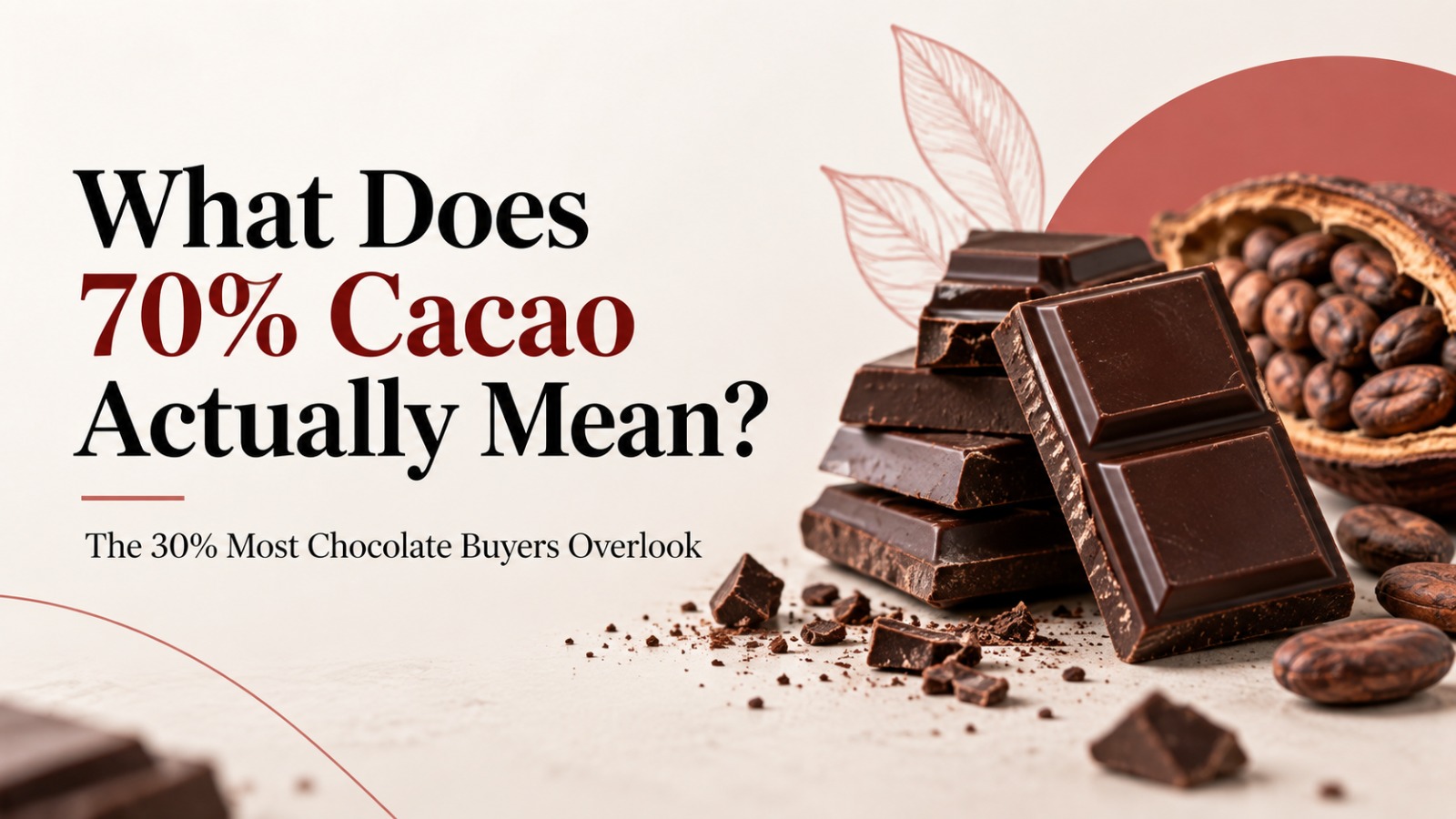
A chocolate bar labelled 70% cacao might sound like a promise of premium quality, but that number tells a more specific story. It reveals how much of the bar comes from cacao ingredients, offering clues about sweetness, flavour and texture.
For shoppers standing in front of a chocolate shelf, understanding that percentage can make choosing a bar much easier. Whether it is a mildly sweet chocolate or a darker 85% bar, the cacao figure helps explain what goes into each bite.
However, there is one important distinction to remember: a higher cacao percentage does not automatically mean better chocolate.
What Cacao Percentage Actually Measures
The cacao percentage on a chocolate bar represents the proportion of its total weight that comes from cacao ingredients. These include cocoa solids and cocoa butter, which may be listed together as chocolate liquor.
For example, a bar marked 70% cacao contains 70% cacao-derived ingredients by weight. The remaining 30% generally consists of sugar and may include other ingredients, such as milk powder or flavourings, depending on the product.
This is where the number becomes useful. A chocolate bar with 85% cacao has a smaller proportion of its weight available for sugar and other non-cacao ingredients than a 70% bar.
That difference often translates into a less sweet, more intense chocolate experience.
Still, the percentage is a measure of composition, not a quality rating. The way cacao beans are sourced, roasted and processed also plays a role in the finished chocolate. A larger number on the wrapper alone cannot tell shoppers whether a bar will taste better.
Why 85% Cacao Chocolate Tastes Different From 70%
The difference between cacao percentages becomes particularly noticeable when it comes to flavour.
Chocolate with a lower cacao percentage generally has a sweeter, milder profile. This makes it appealing to people who enjoy chocolate as a dessert or prefer less intense flavours.
As the cacao percentage rises, sweetness typically decreases and the flavour of cacao becomes more pronounced. Darker chocolate may have earthy, bitter or fruity notes, depending on the cacao used.
Texture is another part of the experience. Cocoa butter contributes to chocolate’s smoothness and melting quality. Its proportion and balance with other ingredients can influence how a bar feels on the tongue.
This means two chocolates with similar cacao percentages may still taste and feel quite different.
The number offers a useful starting point, but it cannot fully describe the flavour or texture of the chocolate inside the wrapper.
The Nutrition Difference Behind the Number
Cacao percentages can also offer some clues about a chocolate bar’s nutritional composition.
Higher-cacao chocolate generally contains less sugar than lower-cacao varieties because a greater share of its weight comes from cacao ingredients. This can make darker chocolate an option for shoppers who want to limit their sugar intake.
Cacao also contains flavanols, compounds that function as antioxidants. Darker chocolate can contain more of these compounds, although the amount varies with the cacao beans and how they are processed.
Caffeine and theobromine are also naturally present in cacao. These compounds are more prominent in darker chocolate and can produce mild stimulant effects.
However, a higher cacao percentage alone does not provide a complete picture of a chocolate bar’s nutritional value. The ingredient list and nutrition label remain important, particularly for people comparing sugar content or other nutritional details.
Why Milk Chocolate Usually Has a Lower Cacao Percentage
Milk chocolate generally contains around 30% to 40% cacao, with milk solids and sugar making up a larger share of the bar.
That composition helps explain its sweeter flavour and creamier mouthfeel compared with many dark chocolate varieties.
Dark chocolate, meanwhile, typically contains a greater proportion of cacao ingredients, allowing their flavours to come through more strongly.
Neither style is automatically better. They simply offer different experiences, and the right choice depends on what a person enjoys.
How to Choose the Right Cacao Percentage
Instead of treating cacao percentages as a quality ranking, shoppers can use them to narrow down their preferences.
- 50% to 60% cacao: A useful starting point for people who prefer sweeter chocolate with a milder cacao flavour.
- Around 70% cacao: An option for those who want a more pronounced chocolate flavour without moving too far into intense bitterness.
- 85% cacao and above: A choice for people who enjoy less sweetness and a stronger, more concentrated cacao taste.
These ranges are not strict rules. Individual bars can taste different even when their percentages are similar, and personal preferences matter more than any particular number.
Trying chocolate at different cacao levels is often the simplest way to discover what works. A 70% bar might strike the right balance for one person, while another may prefer the sweetness of a 55% bar or the intensity of an 85% variety.
The Bottom Line: Cacao Percentage Is a Guide, Not a Grade
The next time a chocolate bar displays a bold cacao percentage, it is worth looking beyond the number itself.
A 70% label tells shoppers how much of the bar comes from cacao ingredients, not whether it is the finest chocolate available. It can help explain differences in sweetness, flavour and composition, but it cannot account for every detail that shapes the eating experience.
Ultimately, the most satisfying chocolate is not necessarily the one with the highest percentage. It is the one whose flavour, sweetness and texture match the person eating it.
Also Read: Delhi Man Says He Sold Gold to Buy iPhone 18 Pro for Wife