


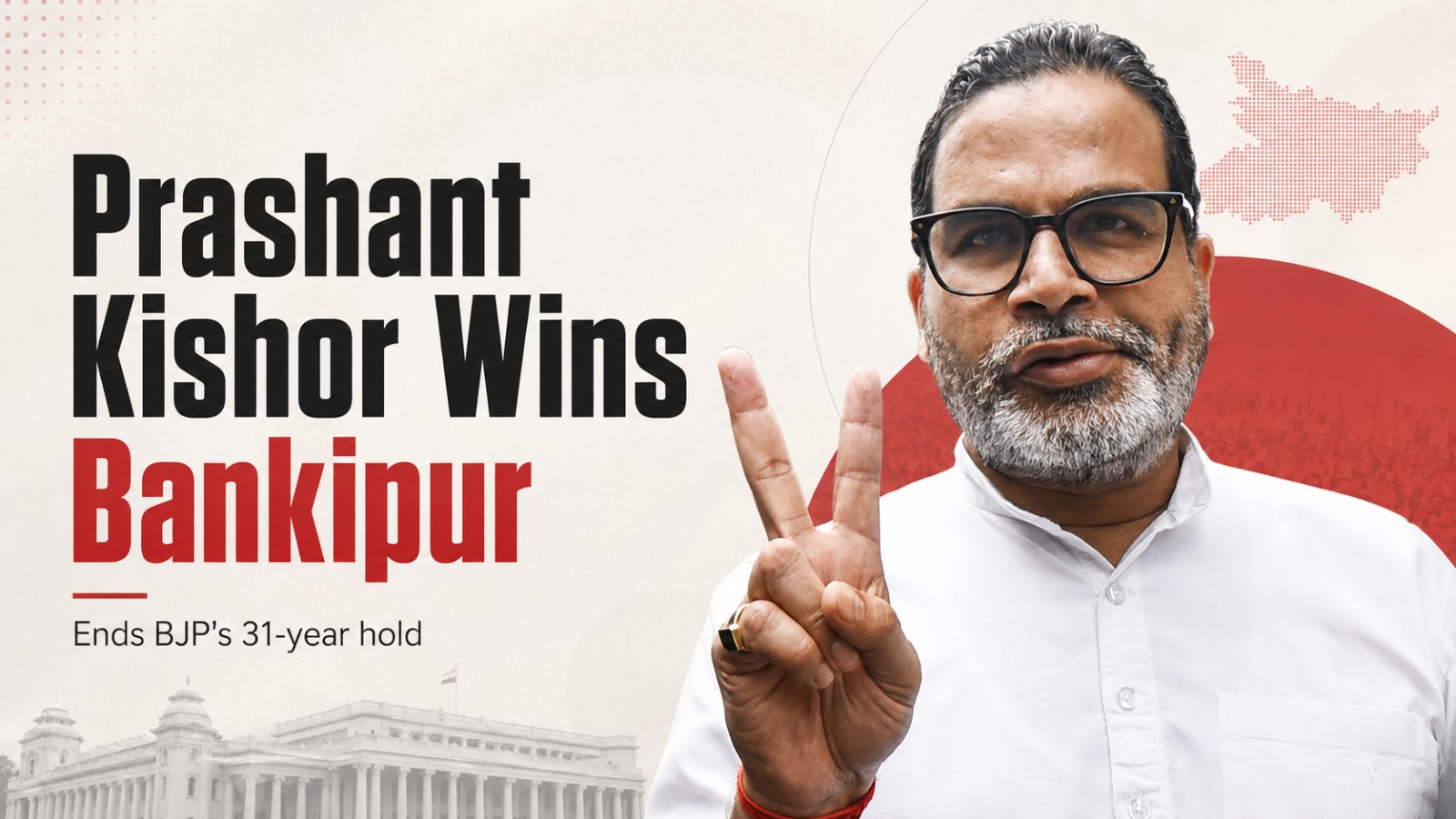
The Jan Suraaj founder Prashant Kishor defeated BJP candidate Neeraj Kumar Sinha by 18,953 votes, securing his first elected office from one of the party’s strongest constituencies in Bihar.
Prashant Kishor has made the leap from planning election campaigns to winning one himself. The Jan Suraaj Party founder secured the Bankipur Assembly seat in his first electoral contest, defeating Bharatiya Janata Party candidate Neeraj Kumar Sinha by 18,953 votes.
The result ended the BJP’s hold over a constituency it had dominated for more than three decades. It also gave Kishor, long known for shaping political strategies away from the ballot, his first direct mandate from voters and a place in the Bihar Assembly.
A difficult seat for a political debut
Bankipur was not an easy constituency for a first-time candidate.
The seat has been closely associated with BJP national president Nitin Nabin and his family. Nabin represented the constituency four times before vacating it earlier in 2026 to enter the Rajya Sabha. Before delimitation, when the area was known as Patna West, his father had also represented it for four terms.
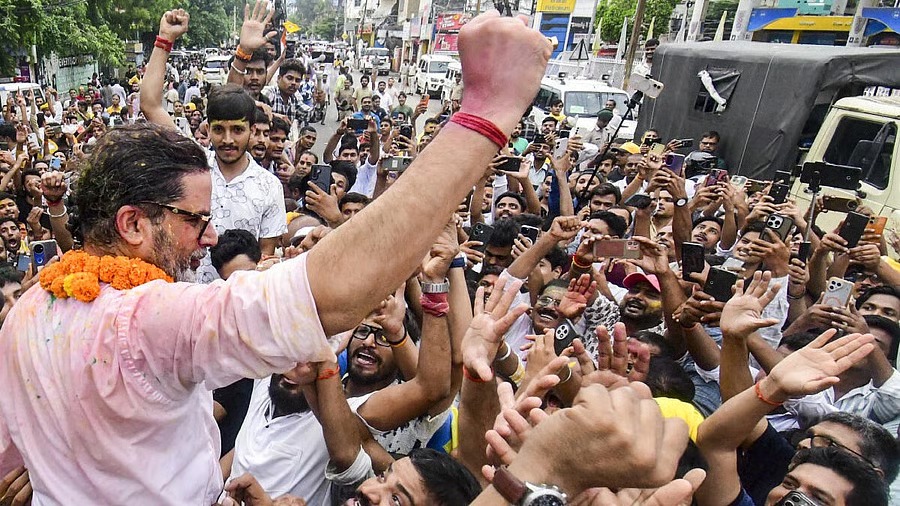
Image Courtesy: PTI
The BJP’s record under Bankipur’s present boundaries reflected the depth of that advantage. Its lowest vote share in the constituency was reported at 59 per cent in the 2020 Assembly election, while its victories had regularly come with wide margins.
Kishor’s victory therefore carries significance beyond the winning margin. He did not merely enter the Assembly through a favourable opening. He defeated the BJP in a seat that had come to be regarded as one of its safest urban constituencies in Bihar.
Campaign built around everyday concerns
Kishor ran an issue-focused campaign that placed employment, education, corruption and law and order at the centre of the contest. Rather than treating the bypoll as a personal battle between candidates, he sought to turn it into a wider judgment on governance in Bihar.
That approach closely reflected the political message Jan Suraaj has been trying to build in the state. Kishor repeatedly argued that voters were looking beyond limited welfare support and wanted reliable public services, better schools, healthcare, employment opportunities and safer communities.
Late in the counting process, he described the emerging result as a victory belonging to Bankipur’s residents rather than to him alone. He also said the mandate carried a message for the BJP’s central leadership about the kind of government and leadership Bihar required.
Kishor thanked those who supported him and said he would also work to gain the confidence of voters who chose another candidate. His comments indicated an effort to move quickly from campaigning to the responsibilities of representing a politically diverse urban constituency.
Prashant Kishor: From strategist to legislator
For years, Kishor’s public identity was tied to election strategy. He worked behind the scenes, helping political parties and candidates design campaigns, communicate with voters and build electoral narratives.
Bankipur changes that relationship with politics. He will now be judged not by the success of a campaign designed for someone else, but by his own performance as an elected representative.
The transition happened quickly. Kishor announced his candidature only about a month before the bypoll. At the time, he had publicly framed the contest as a test of whether Bankipur’s voters approved of the BJP government’s conduct and style of governance.
His victory gives Jan Suraaj a direct presence in the Bihar Assembly and provides Kishor with an institutional platform from which to raise the issues that shaped his campaign. It also brings new scrutiny. His promises on education, jobs, healthcare, development and law and order will now be measured against his work as an MLA.
What the Bankipur result means
One bypoll cannot, on its own, establish a statewide political trend. Bankipur has its own local history, voter profile and campaign dynamics. Still, the result is difficult to dismiss as routine.
The BJP has lost a constituency linked for decades to one of its most prominent political families. Jan Suraaj has gained its first major electoral breakthrough through its founder. Kishor, meanwhile, has shown that his political appeal can translate into votes when his own name appears on the ballot.
The contest also demonstrated the potential strength of a campaign centred on jobs, schools, public health, corruption and law and order. These were not secondary themes in Bankipur. They formed the core of Kishor’s pitch to voters and helped him challenge a deeply established party organisation.
For the BJP, the defeat will invite questions about how it lost ground in a seat where its dominance had rarely appeared threatened. For Kishor, the result opens a more demanding chapter. Winning Bankipur has given him a mandate, but holding the confidence of its voters will depend on what follows inside and outside the Assembly.
After years spent helping other politicians reach office, Prashant Kishor now carries an electoral responsibility of his own.
Also Read: iPhone 18 Pro Price Could Rise by Up to $300 Ahead of Rumoured September Launch