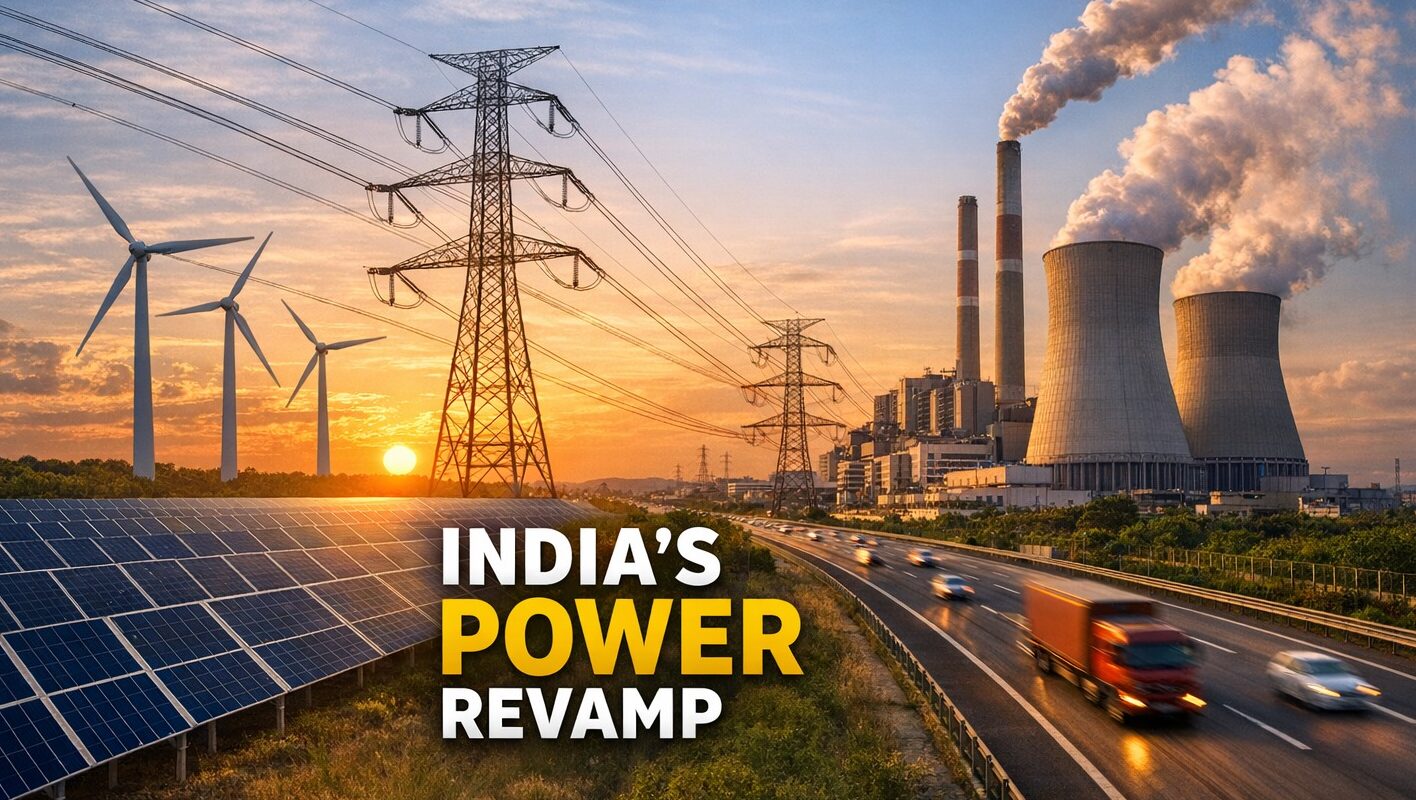
India’s power sector has crossed a historic threshold with installed electricity capacity surpassing 500 gigawatts, marking a decisive shift in the country’s energy trajectory. Non-fossil fuel sources now contribute more than half of total capacity, reflecting steady progress toward cleaner energy. Peak electricity demand touched 250 gigawatts in 2024, while total installed capacity rose beyond 510 gigawatts by late 2025. These milestones highlight India’s transition from power scarcity to surplus, supported by stronger grids and expanding renewable infrastructure.
This transformation is not only about adding capacity but also about ensuring long-term reliability. The government’s approach focuses on building excess generation to meet future demand, strengthening transmission networks, and integrating renewable energy at scale. Together, these steps aim to support economic growth while reducing dependence on fossil fuels.
A long-term investment blueprint for growth
The next phase of expansion is anchored in a Rs 4.5 trillion investment opportunity in the power sector by 2032, announced by Union Power Minister Manohar Lal Khattar. A substantial portion of this plan involves $346 billion earmarked for power generation. This includes renewable energy projects, nuclear power development, and upgrades to existing conventional plants to improve efficiency and reliability.
In parallel, transmission and distribution infrastructure will receive $68.2 billion in planned spending. This investment is intended to strengthen grid resilience and ensure the smooth evacuation of renewable power from resource-rich regions to demand centers. The combined focus on generation and networks reflects a strategy designed to balance clean energy goals with system stability.
Also Read: Neurophos Raises $110M to Build Photonic AI Chips for Faster
Building surplus power with cleaner foundations
India’s capacity expansion strategy emphasizes surplus power as a buffer against rising demand from industry, urbanization, and electrification. With renewable sources forming a growing share of capacity, the challenge lies in managing variability while maintaining consistent supply. Grid upgrades and diversified generation, including nuclear and modernized thermal plants, are central to addressing this issue.
By building a robust mix of energy sources, policymakers aim to ensure that clean energy integration does not compromise reliability. This approach also supports India’s broader objectives of reducing emissions while meeting the needs of a fast-growing economy.
Smart meters reshape power distribution
A key pillar pillar of the modernization drive is the nationwide rollout of smart meters. These devices are set to replace traditional analogue meters, enabling real-time consumption monitoring, more accurate billing, and a reduction in technical and commercial losses. Smart metering is expected to improve transparency for consumers while strengthening the financial health of distribution companies.
Capacity addition continues at a steady pace, with developers adding an estimated 4 to 5 gigawatts of new power capacity each month. Companies involved in grid technology and metering are seeing sustained opportunities as states implement large-scale smart meter programs. Firms such as Techno Electric are securing multi-year revenue visibility through these projects, underscoring the long-term nature of the modernization effort.
Transmission and distribution take center stage
While generation often draws the most attention, transmission and distribution upgrades are equally critical. Expanding renewable capacity requires the ability to transport power efficiently across long distances. Investments in high-capacity transmission lines and modern substations are therefore essential to prevent bottlenecks and power losses.
Distribution reforms, supported by smart meters and improved billing systems, are designed to reduce losses and improve cash flows for utilities. Together, these measures aim to create a financially sustainable power ecosystem capable of supporting continued expansion.
Major power companies positioned to benefit
India’s large power producers are expected to be key beneficiaries of the investment cycle. NTPC, with its extensive thermal portfolio and aggressive push into renewables, stands to gain from new generation projects and modernization efforts. Adani Power, Adani Green Energy, and Tata Power are also well placed to capitalize on opportunities across renewable and conventional generation, as well as transmission and distribution.
Their diversified portfolios provide exposure to multiple segments of the power value chain, allowing them to capture value as India’s energy landscape evolves. As investments accelerate, these companies are likely to play a central role in delivering the capacity and infrastructure needed to meet future demand.
Powering the next decade of development
India’s Rs 4.5 trillion power revamp represents more than an infrastructure upgrade. It signals a strategic shift toward cleaner, more reliable, and future-ready energy systems. By combining capacity expansion with grid modernization and smart technologies, the country is laying the foundation for sustained growth and energy security in the decade ahead.
Also Read: Nvidia-Backed British AI Startup Synthesia Hits Right Notes With $4B Valuation and Nasdaq Deal.