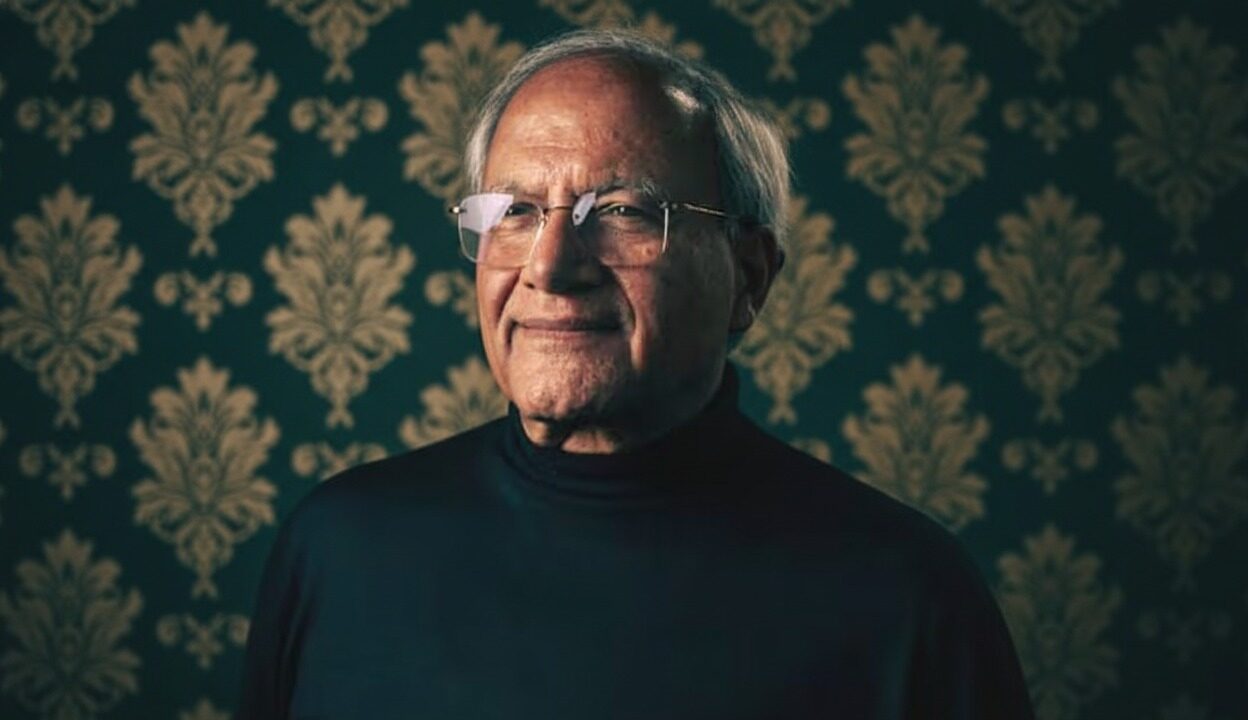
Veteran technologist and HCL co-founder Ajai Chowdhry has called for a decisive shift in India’s industrial playbook: move from scattered, small-ticket government procurement to a single, muscular “demand aggregation” model that deliberately backs a handful of Indian companies so they can scale at home and then compete abroad. The idea, he underlined, is not new, it is the same strategy China used with Huawei to turn a domestic vendor into a global force, but India, he argued, has never used its own demand that way.
Speaking about the current phase of Make in India to ANI, Chowdhry said India has spent a decade talking about manufacturing but has not matched it with a procurement strategy that creates national champions. “We should aggregate all the government demand and give it to Indian companies… If this demand aggregation gets done, three or four companies can be selected. Each of them is given government business. They can scale and become big in India,” he said, stressing that even allocating “50% or 75%” of that demand to local firms could be enough to trigger scale.
A China-style push, without copying China: Ajai Chowdhry’s Model
Chowdhry’s reference point was explicit. In China, the government first gave “all the domestic telecom business to Huawei,” ensuring the company had a guaranteed base before it stepped out to pitch in Africa, backed by Chinese credit lines that made Huawei equipment easier to buy, he said.
India, by contrast, has often split orders among multiple vendors, including foreign ones, which makes sense for routine procurement but does not create globally competitive hardware or networking firms. “Instead of splitting small contracts among multiple suppliers… the government should place large-scale orders by bundling its demand with capable Indian firms,” he said.
What he is proposing is industrial policy by procurement: use the size of the Indian state, one of the world’s biggest technology buyers, to create volume, predictability and balance sheets strong enough for exports. Once local firms “become big in India, they must go abroad,” he added. “That opportunity exists for us to become a product nation just the way China did.”
From services powerhouse to ‘product nation’
The HCL co-founder also issued a warning that will resonate in North Block: India’s over-reliance on services is “dangerous.” Nearly 60% of the economy is now services-driven, IT, outsourcing, finance and other white-collar businesses and such an economy, Chowdhry argued, is vulnerable to global cycles and to decisions made outside India. “We should now move towards being a product nation in everything that we do, whether it’s semiconductors, drones, EVs, whatever product you can think of, we must become a product nation. Manufacture on a war scale.”
This is a subtle but important critique of how Make in India has been interpreted. According to Chowdhry, “everybody assumed it was manufacturing only. That’s wrong. We must design and make in India.” India has world-class design talent but still depends on global manufacturing chains, he said. A procurement-led scale-up would create the volumes to justify manufacturing investments at home and close the design-to-factory loop.
His intervention comes at a time when New Delhi is trying to push deeper localisation in telecom, electronics, EVs and defence, but keeps running into the same hurdle: Indian firms do not have the order books to match Chinese or Korean rivals. Incentives, from PLI to tariff protection, have helped, but they don’t replace the power of a single, consolidated, multi-year government order.
Chowdhry is, in effect, telling the government: if you want Indian companies to build routers, radios, 5G hardware, defence-grade networking or secure electronics, don’t make them fight over thin, one-off tenders. Pick the best 3-4, ring-fence a large chunk of public demand for them, put quality and export obligations on top, and let them grow.
A calibrated, not protectionist, model
Notably, he did not call for shutting out foreign suppliers altogether. He said the government “may decide to give 50% or 75%” of the aggregated demand to Indian companies, leaving room for competition, technology infusion and price discovery. That makes the proposal compatible with WTO-linked obligations and with India’s own desire to stay plugged into global supply chains. The non-negotiable part, in his telling, is this: unless Indian firms get scale at home, they will not become credible suppliers abroad.
Chowdhry broadened the frame beyond telecom. If India wants to lead in semiconductors, drones, electric vehicles and “other electronics,” it cannot keep depending on services-sector surpluses to pay for imported hardware. A domestic product base, design + manufacture, supported by assured public demand would lower strategic risk and improve India’s terms of trade in tech. “We must become a product nation… manufacture on a war scale,” he said, underlining the urgency.
The policy gap he is pointing to
- Fragmented buying: Ministries, PSUs and state entities often procure separately, creating dozens of small orders instead of 4-5 transformative ones.
- Short-term contracts: One-year or project-wise tenders don’t let companies invest in plants, tooling or deep R&D.
- Undervalued design: “Make” has been read as “assemble”; core design work still sits abroad.
- Exports as afterthought: Without a fat domestic base, export finance and diplomatic backing are harder to mobilise.
Chowdhry’s model tries to solve all four in one move: aggregate, award to the best Indian players, make design in-country compulsory, and then push them outwards the way China did with credit support for Huawei’s overseas sales.
What would success look like?
Although Chowdhry did not spell out metrics, his benchmarks are clear from the examples he gave:
- A handful of Indian OEMs in telecom/networking with multi-year government order books;
- Domestic design centres treated as integral to Make in India, not add-ons;
- Government-backed export drives that leverage the scale built at home;
- A shrinking services-dependence ratio as manufacturing and product revenues rise.
Chowdhry is one of the six founders of HCL, a company that grew out of India’s first big personal-computer wave and saw, up close, how hard it is for Indian hardware firms to scale without patient, sovereign demand. His remarks therefore carry more weight than a generic industry pitch, they are coming from someone who has watched India repeatedly miss hardware buses even as it aced software.
This is not a protectionist rant; it is an industrial-policy-via-procurement argument rooted in a verified case study (Huawei) and in India’s current demand profile (large, fragmented, government-heavy). It aligns with New Delhi’s broader goal of moving from “low-value assembly” to “high-value design + scale manufacturing,” and it answers a real policy gap: India talks “Make,” but it rarely guarantees domestic offtake for the things it wants made.
Also Ready: Lenskart IPO Valuation Sparks Online Debate