A recent viral video by a prominent influencer claims that many sunscreens sold in India deliver far lower sun-protection than advertised, sparking what some are calling a “sunscreen gate”. According to the post, independent lab tests of ten popular SPF products found six of them offering significantly less protection than their labelled SPF value.
But the story isn’t as straightforward as it first appears. While there is genuine concern about SPF transparency globally, credible evidence that this campaign is just a PR battle between rival companies remains limited.
Evidence vs. influencer claims
- An article in the Indian Express explains that recent investigations do not mean all sunscreens are unreliable, but highlight key issues around formulation, testing standards (especially in-vitro vs in-vivo) and regulatory oversight.
- One influencer’s claim: six of ten tested brands in India delivered a mean SPF far below what was claimed.
- However, dermatologists and beauty-science commentators have raised red flags: the tests cited were in-vitro (lab plate tests), which aren’t equivalent to the standard in-vivo (on human skin) SPF measurement.
- On a global front, consumer-group tests (e.g., Australia) also found SPF claims were sometimes unmet but not necessarily due to a brand-vs-brand campaign, more due to testing complexities, batch variation and formulation issues.
Is it a PR war between brand groups?
While the influencer’s video hints at possible ties to rival companies (some netizens suggest the four “performing” brands may share common parentage) there is no independent public proof that this is purely orchestrated by two competing groups. Reddit threads raise suspicion:
“This is full-blown scam and shitty tactics to smear other brands.”
These remain speculative. Without access to contractual details, ad disclosures or brand-communications, we cannot conclusively label it a “PR war”.
Consumer Dilemma
- Don’t throw out all sunscreens: Experts overwhelmingly agree that sunscreen remains a vital protection tool against UV damage.
- Check transparency: Brands that publish independent test results, specify in-vivo methods (e.g., ISO 24444) and display PA ratings (for UVA protection) offer more confidence.
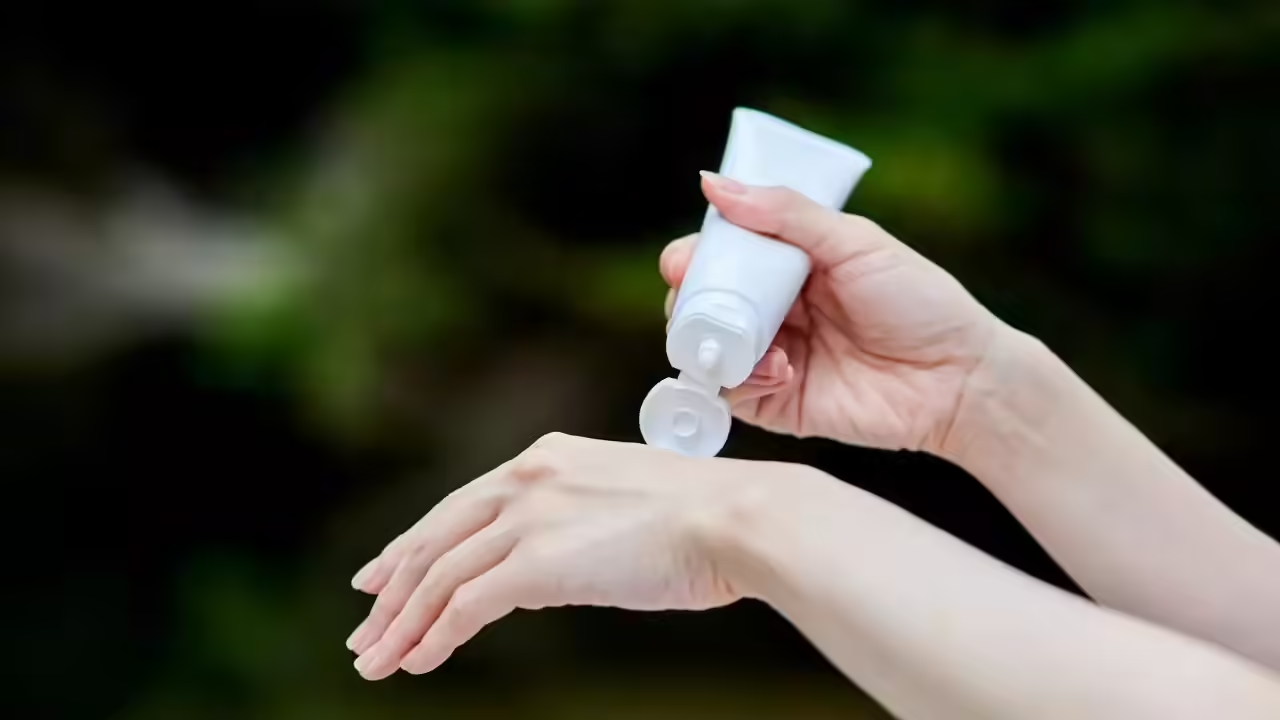
- Application matters: Even a perfect SPF50 fails if applied too thinly or rarely re-applied.
- Maintain healthy scepticism: Viral influencer claims may flag genuine concerns, but also may be influenced by marketing, incomplete standards or selective data.
Expert consensus on ‘Sunscreen-gate’
Yes, a credible concern has emerged in India’s sun-care market: some products may not fully deliver their stated SPF protection. But the narrative that this is purely a “brand-vs-brand PR war” lacks verified evidence. For now, the safest approach for consumers is to prioritise sunscreens backed by transparency, rigorous testing and reputable manufacturing and to view sensational claims with cautious curiosity rather than outright alarm.
Also Read: Olyv Raises $20 Million to Reshape India’s Personal Lending Landscape