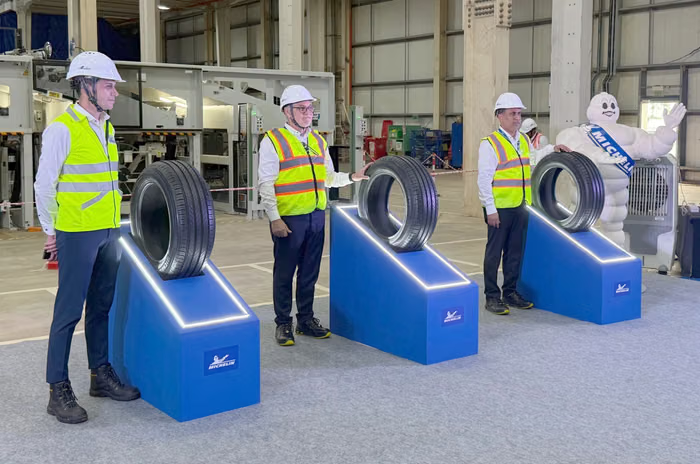
French tyre major Michelin has taken a decisive step in India: after years of making Truck & Bus Radial (TBR) tyres locally, the company has now produced its first made-in-India premium passenger car tyre at its Chennai facility.
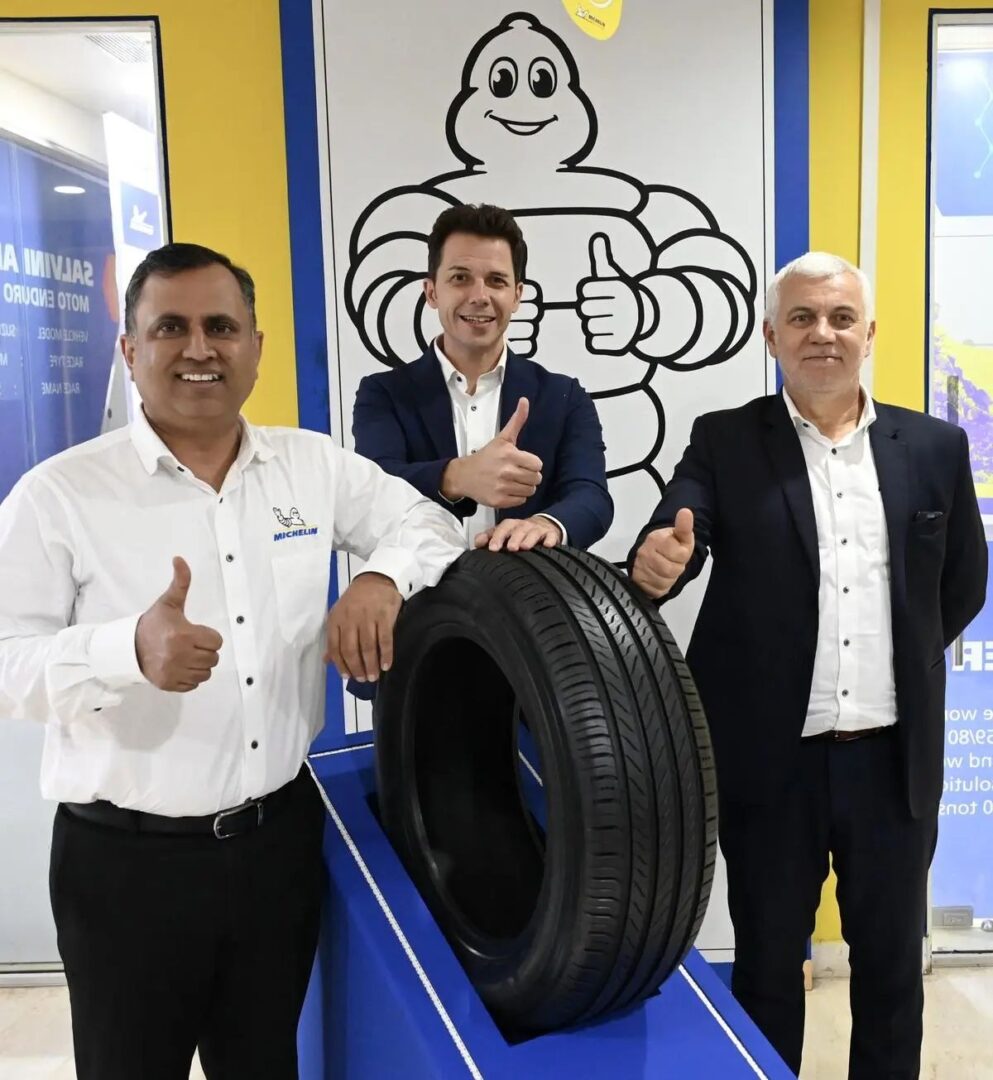
The initial rollout follows a policy push that, according to a note by Sanjiv Singh (Joint Secretary, Startups), formulated a new framework for manufacturing pneumatic tyres and extended conditional import authorisations to balance demand while domestic capacity scales up.
The move signals India’s steady climb up the auto-component value chain, from assembly to high-spec manufacturing. It also aligns with the premiumisation underway in the car market, where mid-to large-SUVs and feature-rich sedans are driving growth. Industry reports indicate Michelin’s locally produced range will target exactly these segments and go on sale in the first half of 2026.
What Michelin will make in India?
Early details point to a portfolio aimed at bigger, premium vehicles, with sizes from 16 to 22 inches and nameplates enthusiasts will recognise: Pilot Sport 5, Primacy 5, Pilot Sport 4 SUV, and LTX Trail ST/LTX series. The first model to reach customers is expected to be the Primacy 5 after testing and certification conclude.
Capacity, investment, and footprint?
Michelin’s Chennai plant has been making TBR tyres for over a decade and has now been expanded for passenger-vehicle tyres. The total investment earmarked for passenger car tyre capacity stands at ₹686 crore, with the site’s manufacturing capacity at 54,000 tonnes.
The operation also touts sustainability credentials: zero-carbon footprint at the facility level, zero liquid discharge, 100% recycling, ~80% water usage via rainwater harvesting, and ~45% renewable energy usage at the plant. Separately, the company has stated that the 22,000-sq-m facility uses 45% recycled materials in production today, with an aim to hit 50% by 2030 and move towards 100% sustainable tyres by 2050.
Market focus and timing
The brand is clearly positioning for India’s premium end: mid-size SUVs (think Hyundai Venue, Kia Sonet, Tata Nexon) typically run 16-inch fitments, while luxury SUVs go all the way to 22 inches, exactly the range Michelin says it will cover from Chennai. With retail targeted for H1 2026, the local line-up is being tuned for Indian driving conditions as speeds rise with improving highways.
Policy tailwinds
As Per Sanjiv Singh, Joint Secretary, Startups, the centre’s new policy for pneumatic tyre manufacturing alongside conditional import authorisations has nudged global makers to produce in India while ensuring there’s no near-term supply shock.

For a category where certification cycles and tooling are complex, this calibrated policy design helps bridge the “ramp-up gap” between unveiling and commercial availability, precisely what’s playing out in Michelin’s case.
Deepening Its India Stack
Michelin’s local passenger-car push comes as the company deepens its India stack beyond manufacturing, with R&D and digital/IT capability in Pune supporting regional needs. Company leadership has publicly flagged India as the only geography with “true potential for exponential growth” over the next decade, underscoring why premium tyres made closer to the customer are strategically important.
Also Read: Zippee turns 4: From an empty dark store to a 13-city network