A new idea from Delhi-based Karishma Chaudhary Founder and CEO of MaPani is asking India to flip the way we judge “green” products: not by where they come from, but by where they end up. Her proposal urges the Ministry of Environment, Forest & Climate Change (MoEFCC) to launch a national “Water & Soil-Safe” certification, a single, consumer-facing mark for products proven harmless to ecosystems after use.
The policy idea in one line
India should certify products for what happens after they go down the drain or back into the ground. The goal: stop chemical runoff at the household level and protect rivers and soil health, while creating a market pull for genuinely eco-benign formulations.
“True patriotism is not just a feeling; it is a series of small, conscious actions.” : Karishma Chaudhary, Founder & CEO, MaPani
Most existing labels (“organic,” “eco-friendly”) privilege origin stories, ingredients and sourcing, while overlooking end-of-life impact. Chaudhary argues the largest, most invisible pollution stream is the everyday chemical load from bathrooms, kitchens, and laundries that eventually reaches rivers and farm soils. A Water & Soil-Safe standard would set a bar that consumers can trust and innovators can build for.
The MaPani model
Chaudhary frames MaPani as a modern Swadeshi–Sarvodaya–Swachhata venture:
- Swadeshi: revive traditional Indian formulations and local ingredients;
- Sarvodaya: channel production into women-led micro-workshops, building incomes with flexible work;
- Swachhata: ensure products are formulated to be “water-safe,” keeping effluents benign.
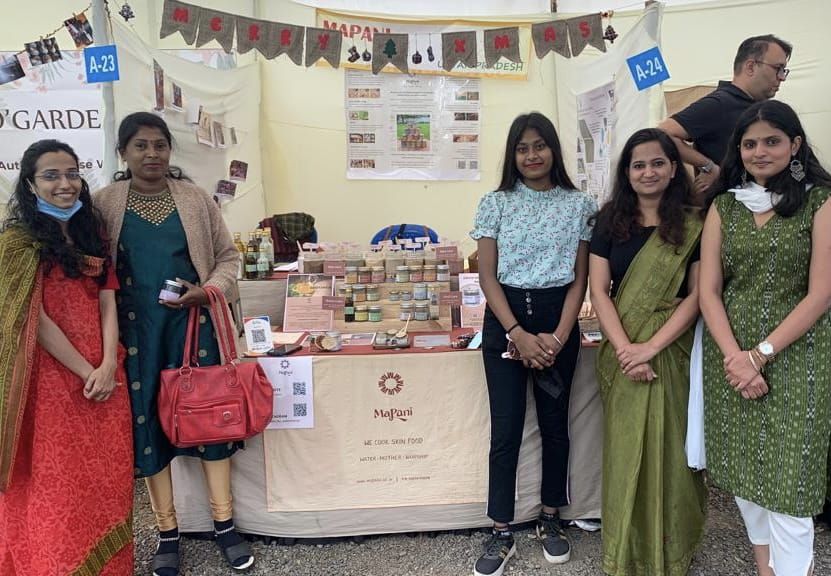
The startup’s portfolio includes traditional tooth powder and handcrafted soaps/shampoos, positioned as natural alternatives designed so that bath or laundry water can safely return to the earth, aligning with the proposed certification’s intent. A recent Hindi media profile notes the brand’s growth and underlines its “save-the-water” mission.
“When you choose MaPani, you help clean our ‘Mother Water’ and empower the women who craft it.”- Karishma Chaudhary
A national certification could unlock green entrepreneurship
Chaudhary’s pitch is as commercial as it is ecological. By making end-of-life safety legible on the shelf, a government-backed mark could:
- De-risk R&D: Clear criteria guide founders toward benign chemistry from day one;
- Create market clarity: A single, simple label helps consumers choose responsibly;
- Boost livelihoods: Demand for compliant products lifts skilled local manufacturing, especially women-led units;
- Catalyze export trust: A rigorous Indian standard, rooted in traditional know-how and modern labs, could travel.
What the government can do next
1) Define the bar, then phase it in.
Start with two high-impact categories (e.g., personal care and home care). Publish science-based thresholds for aquatic toxicity, biodegradability, and soil impact; align with BIS where relevant. Phase compliance so MSMEs can adapt.
2) Build the lab backbone.
Notify accredited test methods; expand a nationwide testing network (public labs + vetted private labs) with subsidized access for micro-entrepreneurs and women-led SHGs.
3) Make compliance worth it.
Offer GST rebates or limited-period refunds on testing fees for certified micro-units; open government procurement windows (schools, hostels, health facilities) to Water & Soil-Safe products.
4) Incubate at the last mile.
Integrate with NRLM/Deendayal Antyodaya Yojana skilling pipelines; fund district-level micro-workshops with small equipment grants, SOP toolkits, and QA checklists so women’s groups can manufacture safely and consistently.
5) Label for trust and literacy.
Mandate a front-of-pack mark plus a QR linking to a simple public page: test lab, batch number, and pass/fail against each criterion. Keep the logo easy to recognize in crowded kirana shelves.
6) Nudge awareness, not just audits.
Run Jan Andolan-style communication: “Har Ghar Jal, Har Ghar Jal-Surakshit.” Pair the mark with household habits (greywater reuse for gardens, safe detergents, mindful dosing).
7) Align with EPR, without overburdening micro-units.
Where packaging is involved, sync the certification with plastic EPR, but exempt or ease pathways for micro-enterprises using reusable/refill formats.
A Gandhi-era ethos, a 2025-ready market signal
Chaudhary anchors the mission in Gandhi’s triad, Swadeshi (self-reliance), Sarvodaya (welfare of all), Swachhata (cleanliness), with a modern, testable yardstick. The proposition is deliberately simple: products that work, don’t foul the commons, and pay women fairly to make them.
“Our products are so clean, the water from your bath or laundry can safely return to the earth.” – Karishma Chaudhary
The founder’s open proposal to MoEFCC
- Seat a joint working group (MoEFCC, BIS, CPCB, CSIR labs, MSME bodies, women-led SHG federations) to draft the Water & Soil-Safe standard;
- Pilot in 3-5 states with high river-basin sensitivity;
- Publish a public dashboard of certified products and testing labs to anchor transparency;
- Create a fast-track for startups that use time-tested traditional formulations with documented safety.
A Water & Soil-Safe certification would give India a world-class, proudly Indian answer to the everyday-chemicals problem, one that cleans our rivers while uplifting the very hands that make the products.
Also Read: Why 11,223 Start-ups Folded in 2025?