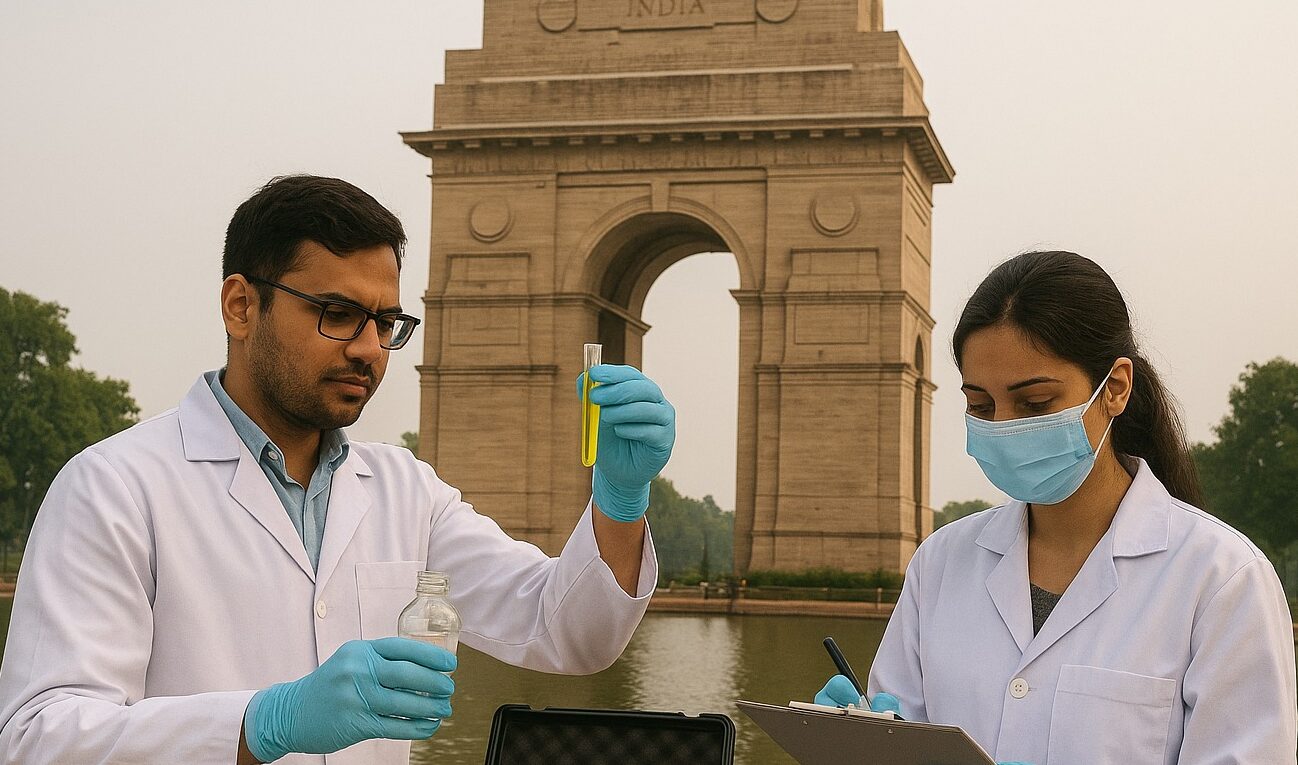
A new report from the Central Ground Water Board (CGWB) has sparked fresh concerns about the quality of Delhi’s drinking water. The Annual Ground Water Quality Report 2025 reveals that 13 to 15 percent of groundwater samples in the city contain uranium levels above the safe limit of 30 ppb. With this, Delhi now ranks third in India after Punjab and Haryana in the share of samples contaminated with uranium.
Given how heavily the capital depends on groundwater, the findings are troubling. The Delhi Jal Board (DJB) currently operates 5,500 tubewells, which together supply nearly 450 million litres of semi-treated or untreated water every day. This large-scale reliance means even a small rise in pollutants can pose major risks to public health.
Also Read: How San Francisco Inspired Gayatri Agrawal to Build India’s AI Future
A Problem Years in the Making
The report makes it clear that uranium contamination is not a sudden discovery. It has been steadily increasing over the years.
- In 2020, about 11.7 percent of samples had uranium levels above the permissible limit, with one tubewell in North West Delhi recording 89.4 ppb, nearly three times the safe limit.
- By 2024, six districts including North, North West, South, South East, South West, and West showed contamination beyond the acceptable level. Together, these contributed to 10.7 percent of all groundwater sources crossing safety thresholds.
This steady rise points to a long-term issue that requires continuous monitoring and urgent intervention.
The Hotspots: Areas with Alarming Readings
Several neighbourhoods stand out as groundwater contamination hotspots.
- Auchandi in Narela recorded 42 ppb
- Nizampur in Kanjhawala recorded 46.5 ppb
These areas are now flagged for immediate attention to prevent further deterioration and potential health hazards.
Nationally, the CGWB tested 3,754 groundwater samples during the 2024 pre and post monsoon seasons. Uranium levels exceeded the safe limit in 6.71 percent of pre monsoon samples and 7.91 percent of post monsoon samples, showing a small spike after rainfall. Punjab recorded the highest contamination levels, followed by Haryana and Delhi.
Environmental Groups Sound the Alarm
Environmental organisations have been quick to react. Activist group Earth Warrior has written to Delhi’s lieutenant governor and chief minister, urging them to make groundwater data public and clarify what treatment measures are in place.
The group also pointed out a more worrying combination of contaminants. High nitrate, fluoride, and salinity levels are already a problem, and the presence of uranium increases the overall health risk significantly. Since many residents depend on semi-treated or untreated tubewell water daily, the organisation called for immediate corrective steps.
Health Impacts: What Uranium Exposure Can Do
Uranium is both a heavy metal and a weakly radioactive element. When consumed for long periods, it can slowly accumulate in the body and cause serious harm. Doctors and researchers warn of multiple health risks.
- Kidney damage is the most common effect, increasing the risk of chronic kidney disease.
- Bone issues may arise because uranium tends to settle in the bones over time.
- Neurological effects can appear after prolonged exposure, such as problems with memory, concentration, and cognitive function.
- Cancer risk may increase slightly due to long-term intake of natural uranium.
- Developmental concerns for children include slower growth, bone development issues, and reduced cognitive performance.
- Digestive and general health problems such as nausea, stomach irritation, and changes in blood chemistry may occur at higher exposure levels.
Impact on Agriculture
The effects of contaminated groundwater extend to farming as well. Uranium accumulation in soil can enter crop systems, making produce unsafe for consumption. Delhi also struggles with high salinity. The sodium adsorption ratio is 179.8, one of the highest in the country. According to the report, 7.23 percent of areas show high salinity or electrical conductivity, which makes groundwater unsuitable for irrigation.
Government Response and the Road Ahead
The CGWB issues fortnightly alerts to state agencies, urging them to take preventive and corrective measures. Experts continue to warn that even low-level uranium exposure can cause long-term health damage if it is not addressed quickly.
Public health specialists stress the need for three immediate actions.
- Stricter and more frequent water-quality monitoring
- Better treatment of groundwater before supply
- Public awareness campaigns so that residents understand the risks and adopt safer water practices
As Delhi’s population grows and water demand increases, ensuring safe drinking water has become more urgent than ever.
Also Read: How IndiGo and Air India Avoided Airbus A320 Cancellations?