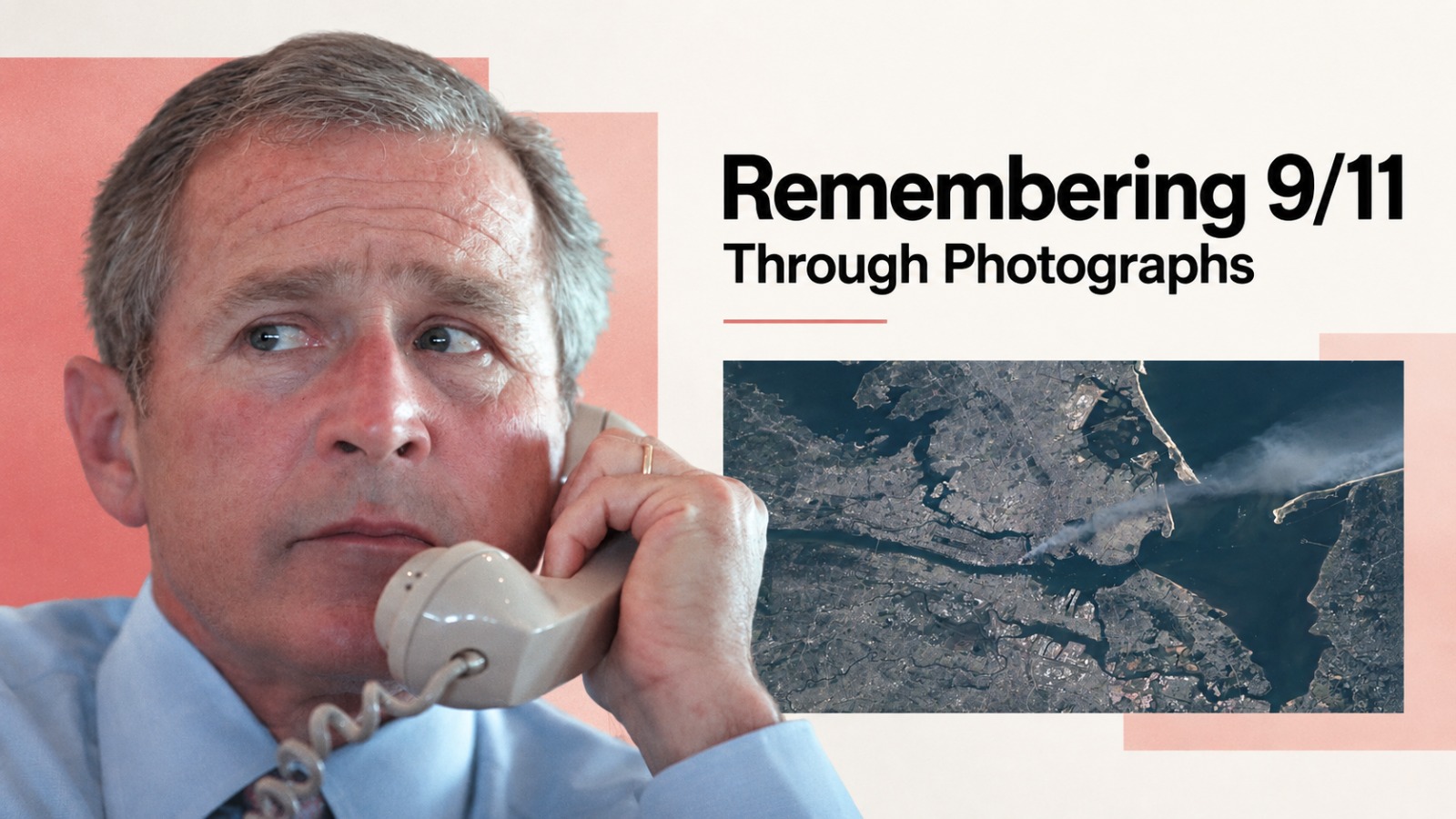
The events of September 11, 2001 are preserved not only in official records and eyewitness accounts, but also in photographs that captured the day as it unfolded and the difficult weeks that followed.
Images held by the National Archives record scenes ranging from smoke rising over Manhattan and road closures around New York to activity aboard Air Force One, rescue operations at Ground Zero and memorials created for those who died.
The collection also reflects the experiences of victims’ families, firefighters, rescue workers and others confronting the aftermath of the attacks.
September 11 unfolds over New York
Among the photographs are images taken on September 11, 2001 by John Celardo, a former archivist at the National Archives branch in New York City. His photographs captured the World Trade Center as events were unfolding that morning.
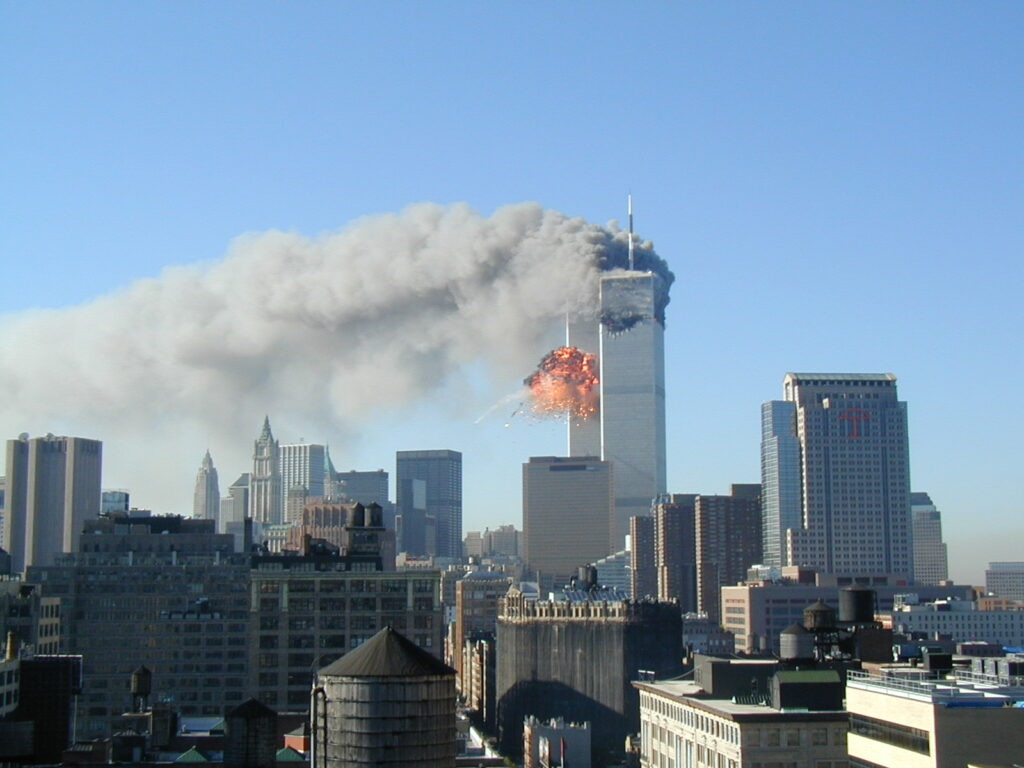
Caption: The World Trade Center in New York City on September 11, 2001.
The disruption extended far beyond lower Manhattan. One photograph shows a highway sign reading, “All Crossings to New York Closed.” Another captures smoke rising from the World Trade Center site on the same day.
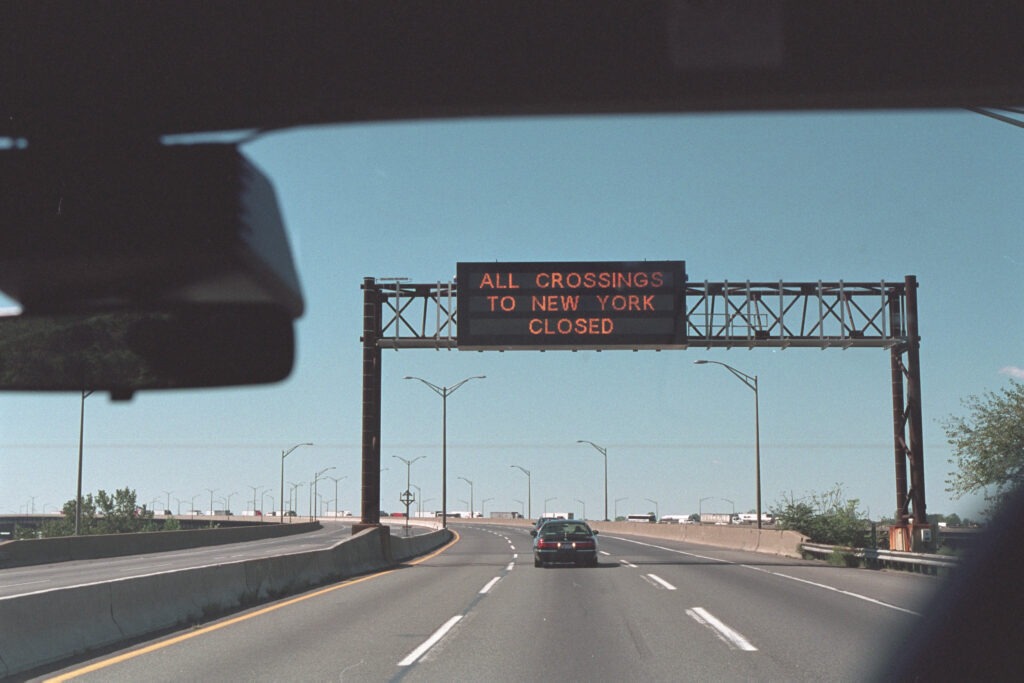
A highway sign announces the closure of crossings to New York on September 11, 2001.
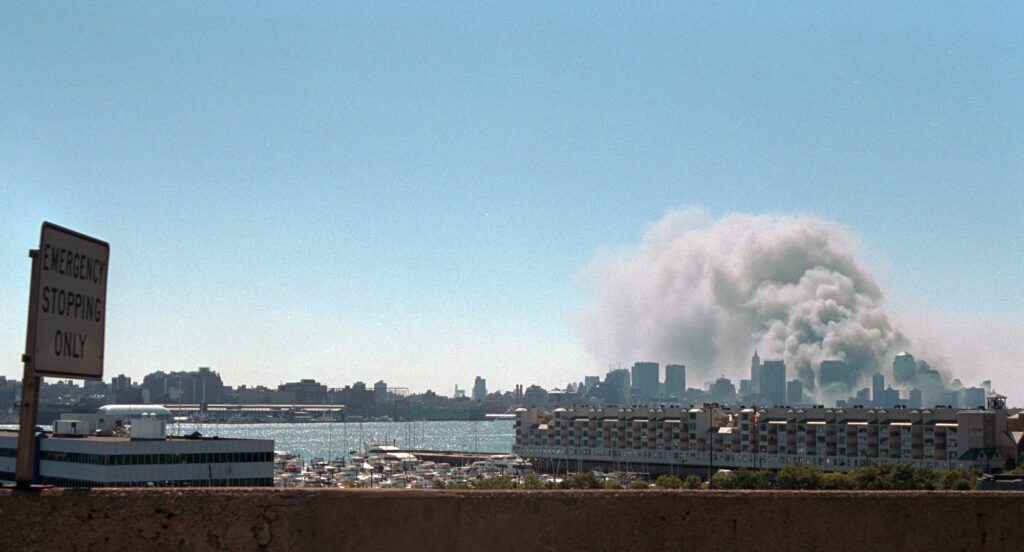
Smoke rises from the World Trade Center site on September 11, 2001.
A view from space
The scale of the disaster was also visible far above the city.
A NASA photograph taken on the morning of September 11 shows a smoke plume rising from Manhattan after two planes crashed into the World Trade Center towers. The image includes metropolitan New York and surrounding areas of New Jersey.
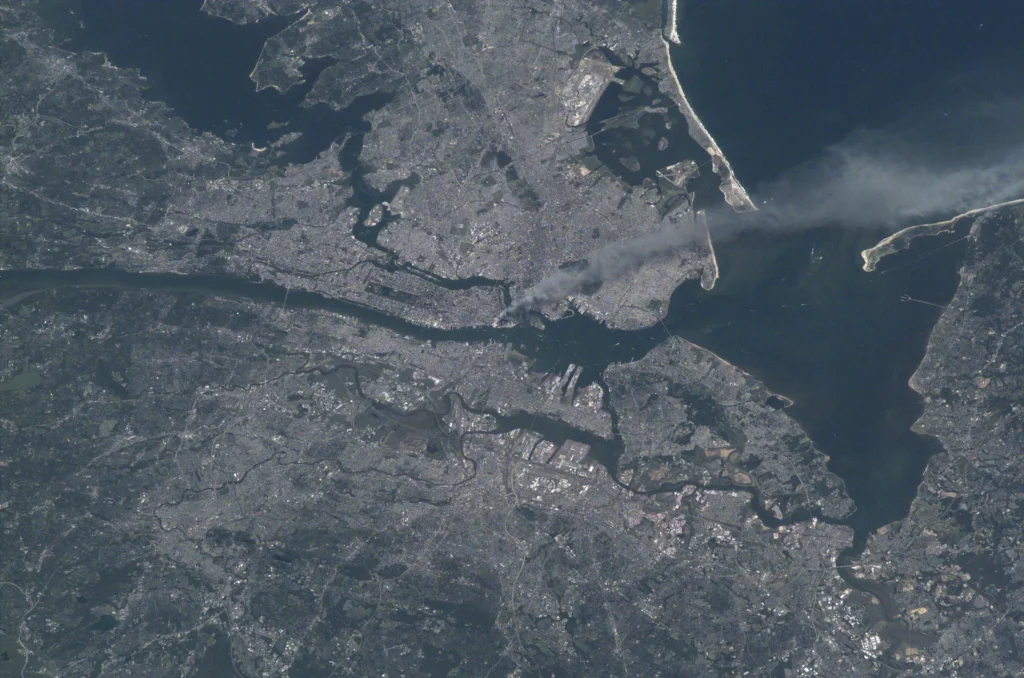
A NASA image shows smoke rising from Manhattan on September 11, 2001.
George W. Bush aboard Air Force One
The photographic record also documents the response of President George W. Bush and his administration.
One image shows Bush speaking with staff by telephone from his office aboard Air Force One during the flight from Sarasota to Barksdale Air Force Base.
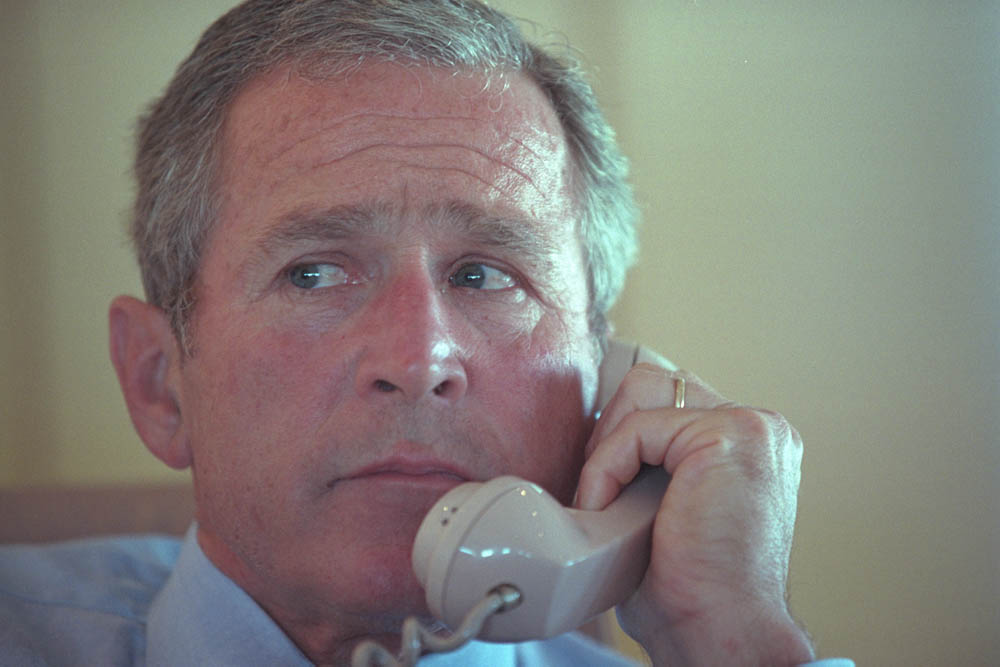
President George W. Bush speaks by telephone aboard Air Force One on September 11, 2001.
The archives also preserve handwritten notes prepared by Bush for his initial statement to the press following the attacks. The document is identified as the first page of a three-page set of notes.
[
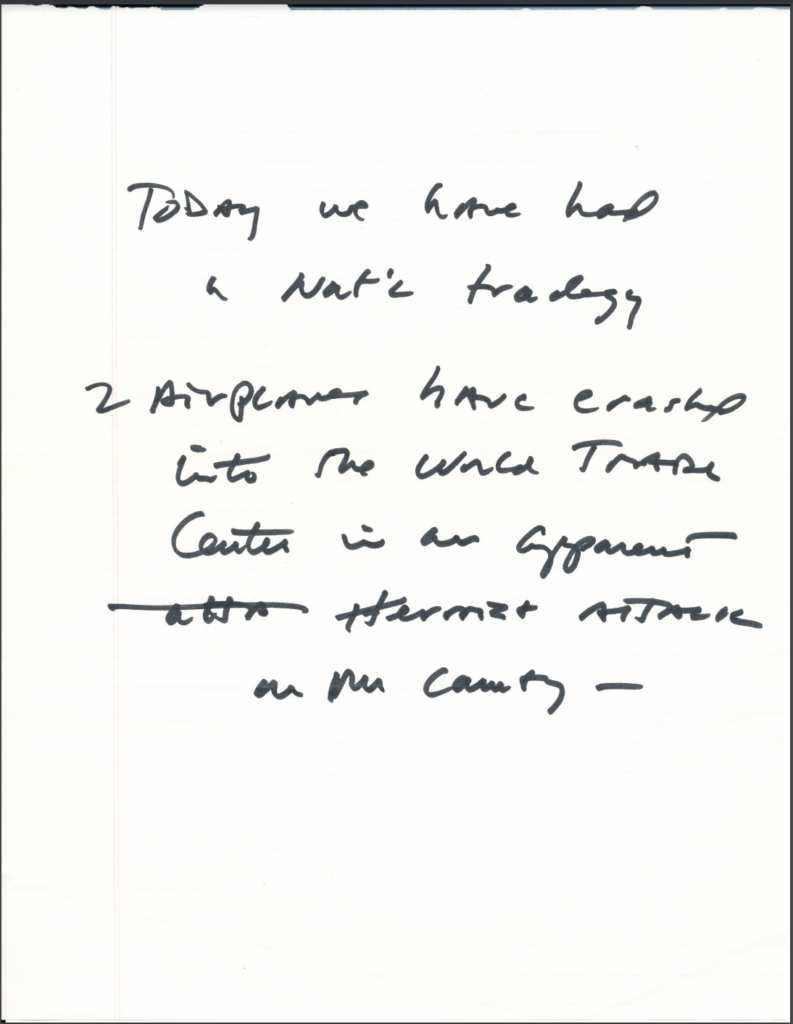
Handwritten notes prepared by President George W. Bush for his initial statement after the attacks.
Later that day, Bush was photographed reviewing notes with Karen Hughes before addressing the nation from the Oval Office.
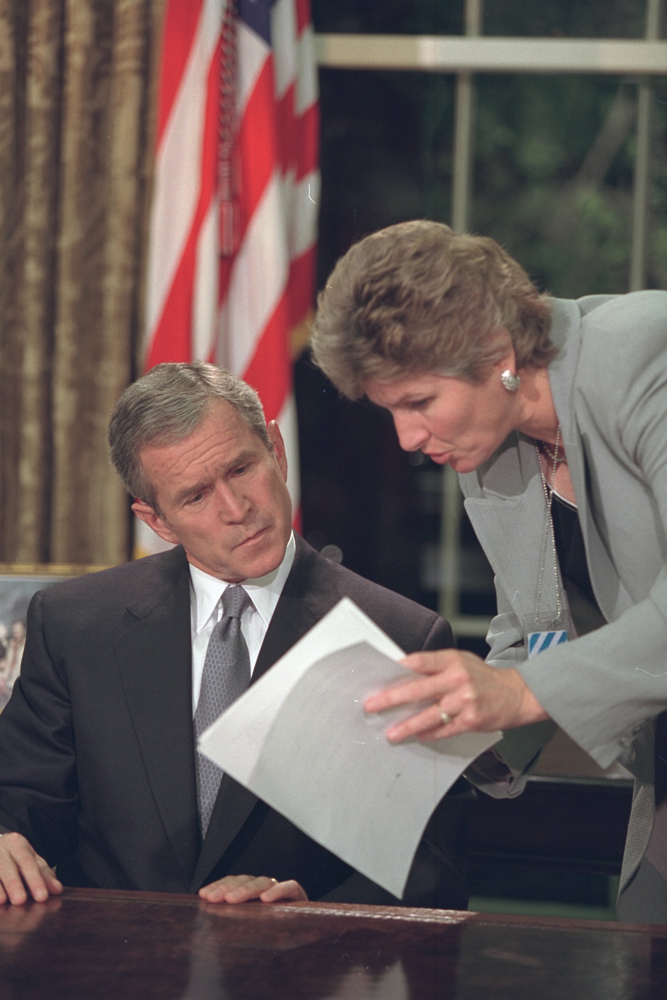
George W. Bush reviews notes with Karen Hughes before his Oval Office address.
Firefighters at the Pentagon
The attacks also struck the Pentagon in Arlington, Virginia.
On September 12, firefighters were photographed unfurling a large American flag over the damaged stone of the Pentagon.
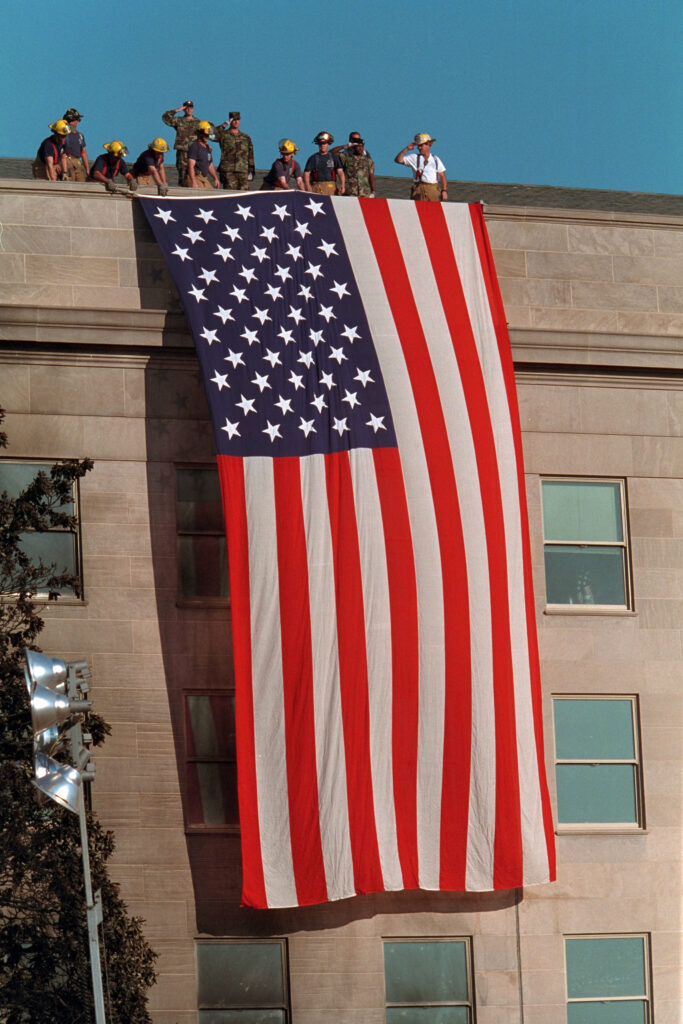
Firefighters unfurl an American flag at the Pentagon on September 12, 2001.
Ground Zero on September 14
Three days after the attacks, President Bush visited New York City.
One photograph shows firefighters looking on as Bush surveyed the destruction on September 14.
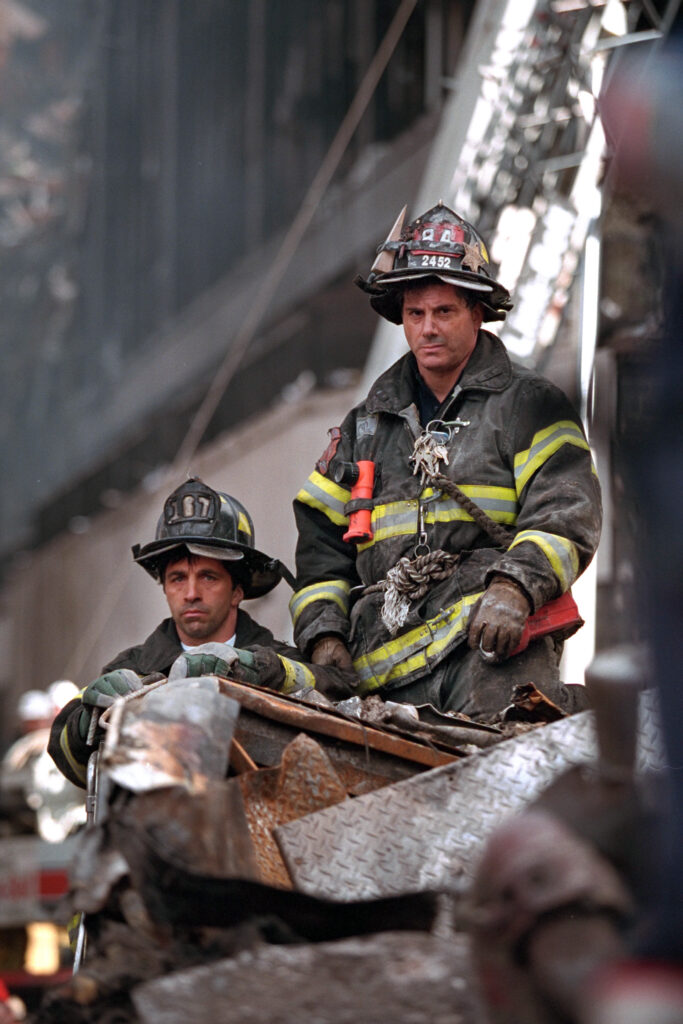
President George W. Bush surveys the destruction in New York City on September 14, 2001.
Another image from the visit shows Bush standing on rubble beside retired New York City firefighter Bob Beckwith. From that position, Bush addressed approximately 400 police officers, firefighters and rescue workers using a bullhorn.
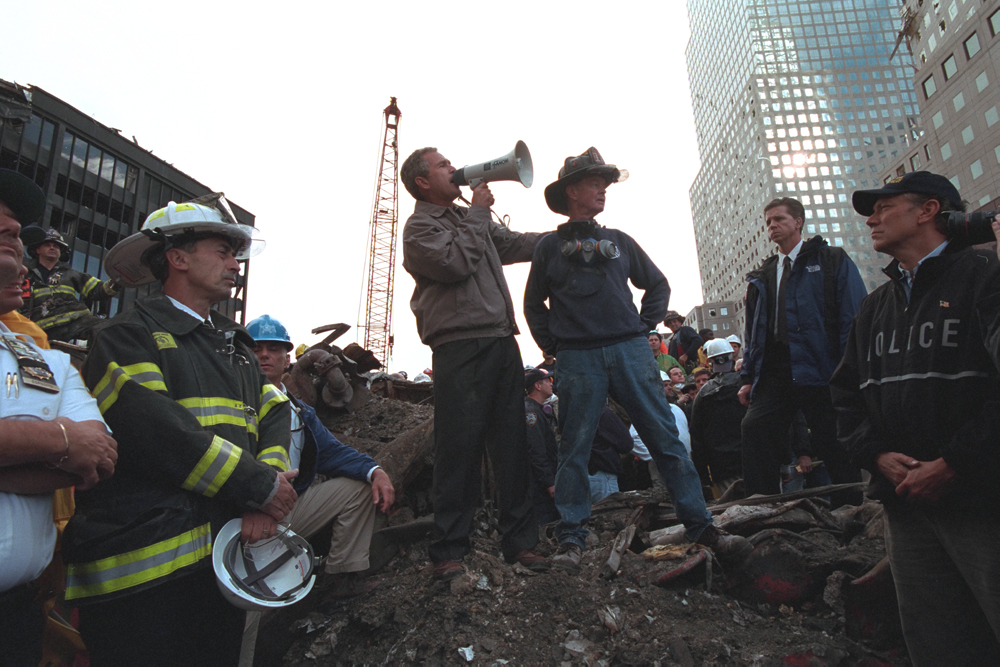
George W. Bush and retired firefighter Bob Beckwith at Ground Zero on September 14, 2001.
Families and the aftermath
The photographs also document meetings with families affected by the attacks.
During his September 14 visit to New York, Bush was photographed consoling families of victims. Another image taken that evening shows the World Trade Center rescue site from Marine One.
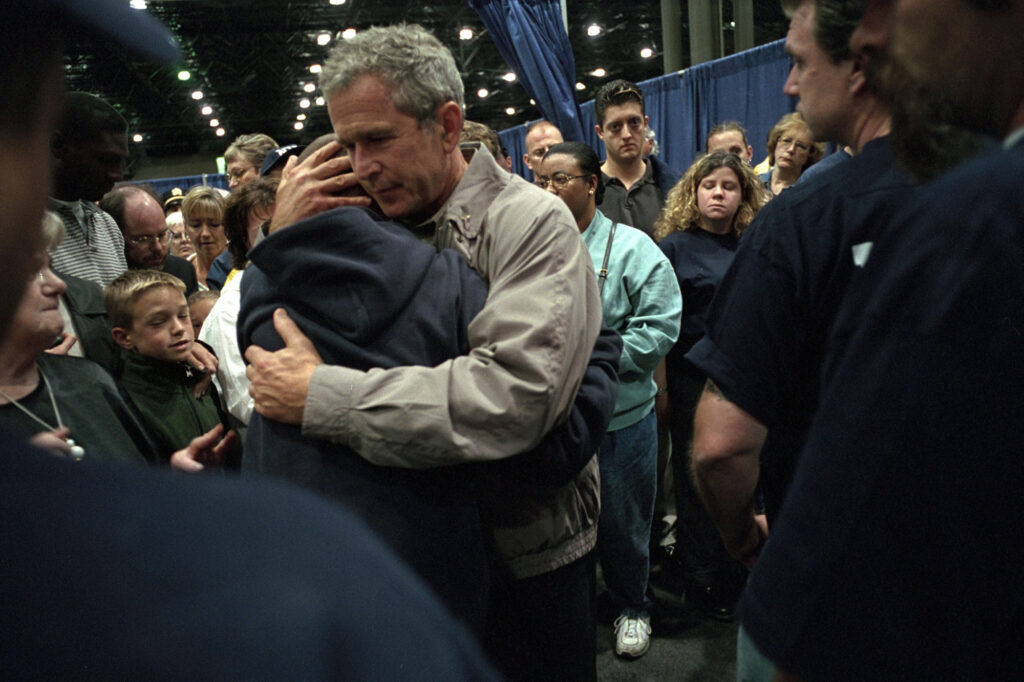
President George W. Bush meets families of victims in New York City.
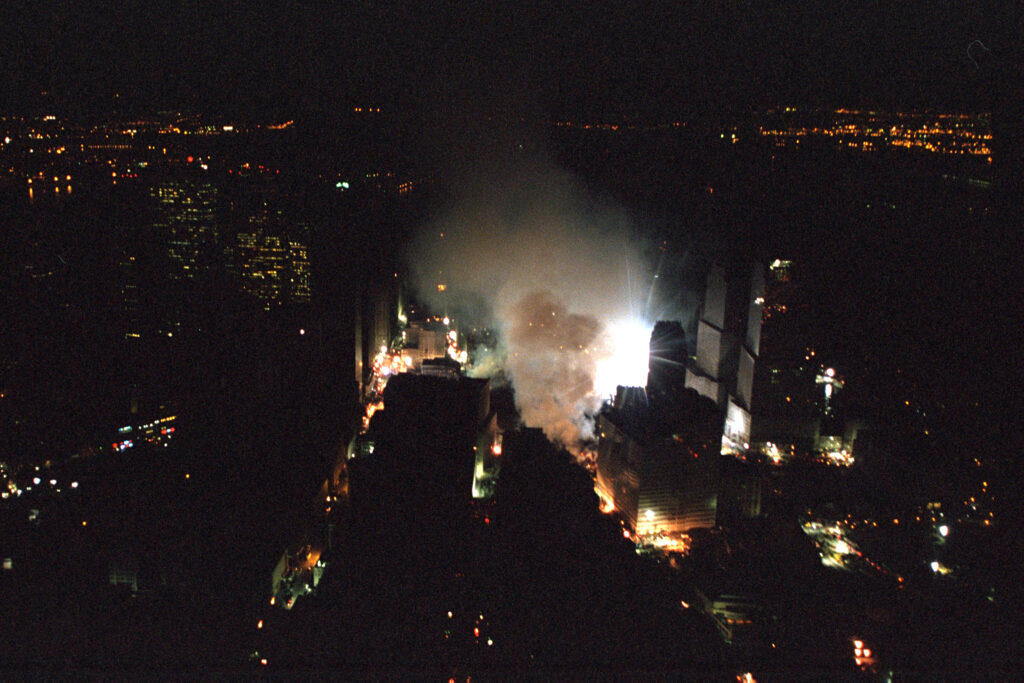
The World Trade Center rescue site seen from Marine One on September 14, 2001.
On September 24, Bush was photographed holding hands with family members of victims of United Flight 93 in the Blue Room of the White House.
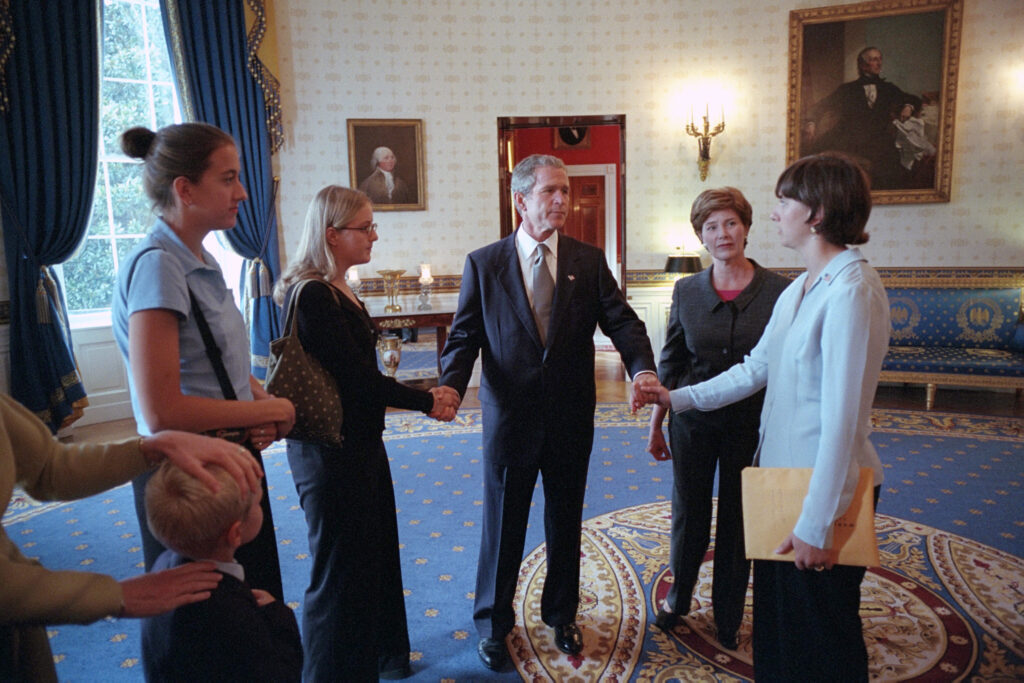
George W. Bush with family members of United Flight 93 victims on September 24, 2001.
Ground Zero in October
The recovery effort continued long after September 11.
A photograph dated October 3, 2001 shows a worker standing at Ground Zero in New York City.
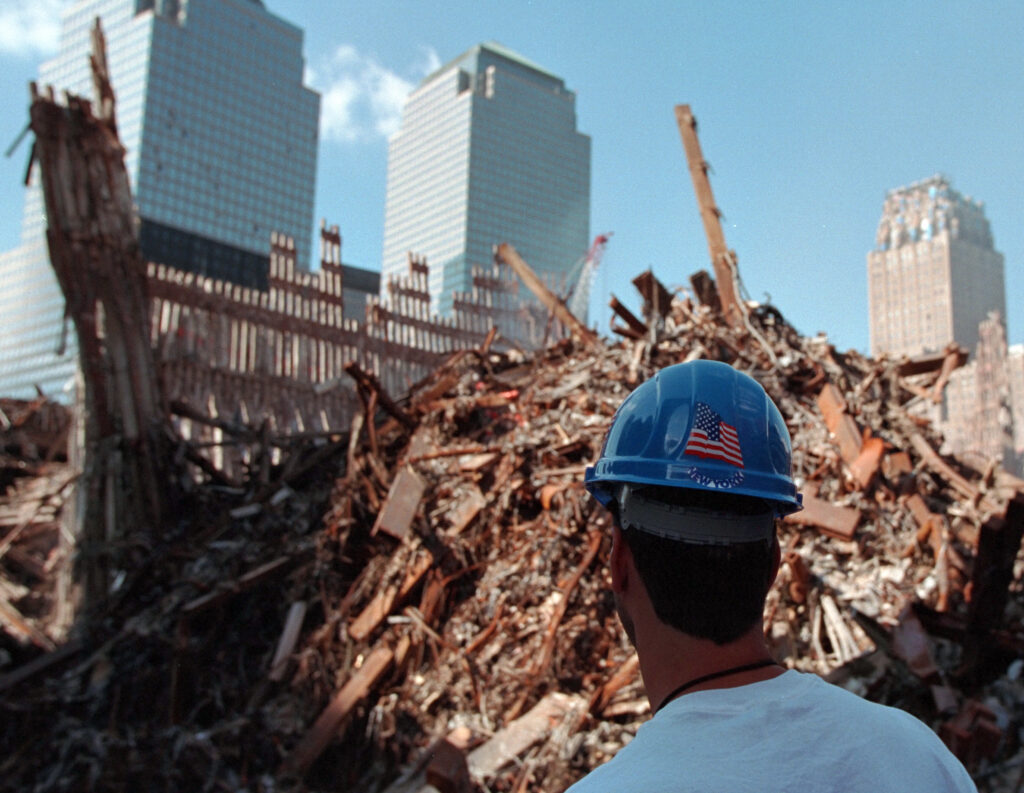
A worker at Ground Zero on October 3, 2001.
Other photographs record how the effects of the attacks reached people and industries across the country.
On September 27, airline employees gathered on the tarmac at Chicago’s O’Hare International Airport to meet President Bush and honor colleagues from their industry.
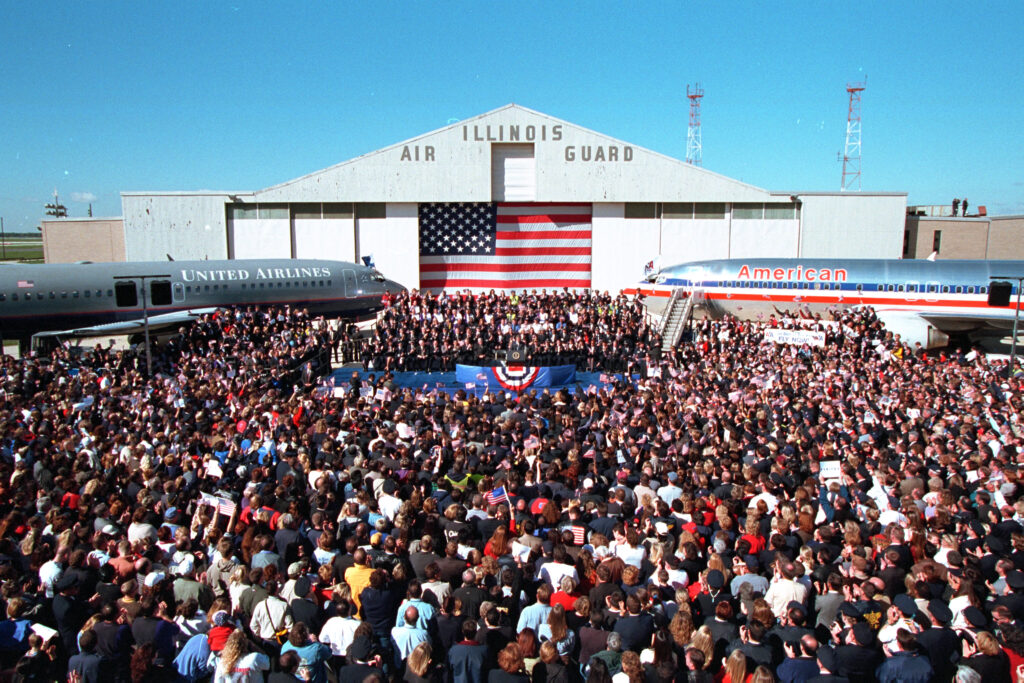
Airline employees gather at Chicago O’Hare International Airport on September 27, 2001.
Remembering Flight 93
The photographic record continued in the years after the attacks.
One image from September 11, 2003 shows a chain-link fence near Shanksville, Pennsylvania covered with flags, hats, rosaries and other objects. The temporary memorial honored the passengers and crew of Flight 93.
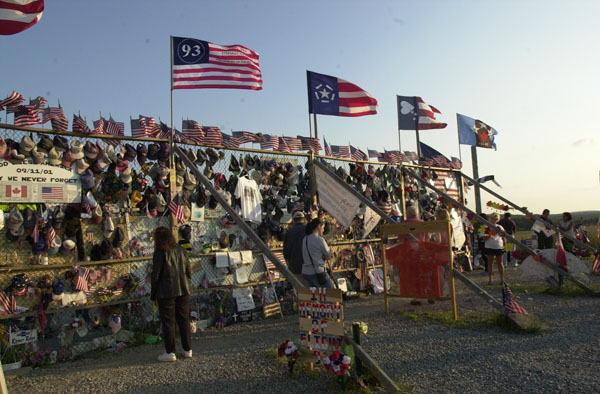
A temporary memorial near Shanksville, Pennsylvania for the passengers and crew of Flight 93.
Photographs that remain part of the historical record
More than two decades later, these photographs continue to preserve individual moments from September 11 and its aftermath.
Some show events as they happened. Others record the response in the days that followed: damaged buildings, rescue workers, presidential meetings, grieving families and memorials created for those who died.
Seen together, they form a visual record of a period that remains deeply significant in American history.
Source: National Archives Foundation, Photographs and archival material: U.S. National Archives, NASA and John Celardo.
Also Read: iPhone 18 Pro Is Here, but These iPhone 20 Rumors Could Give Buyers a Reason to Wait