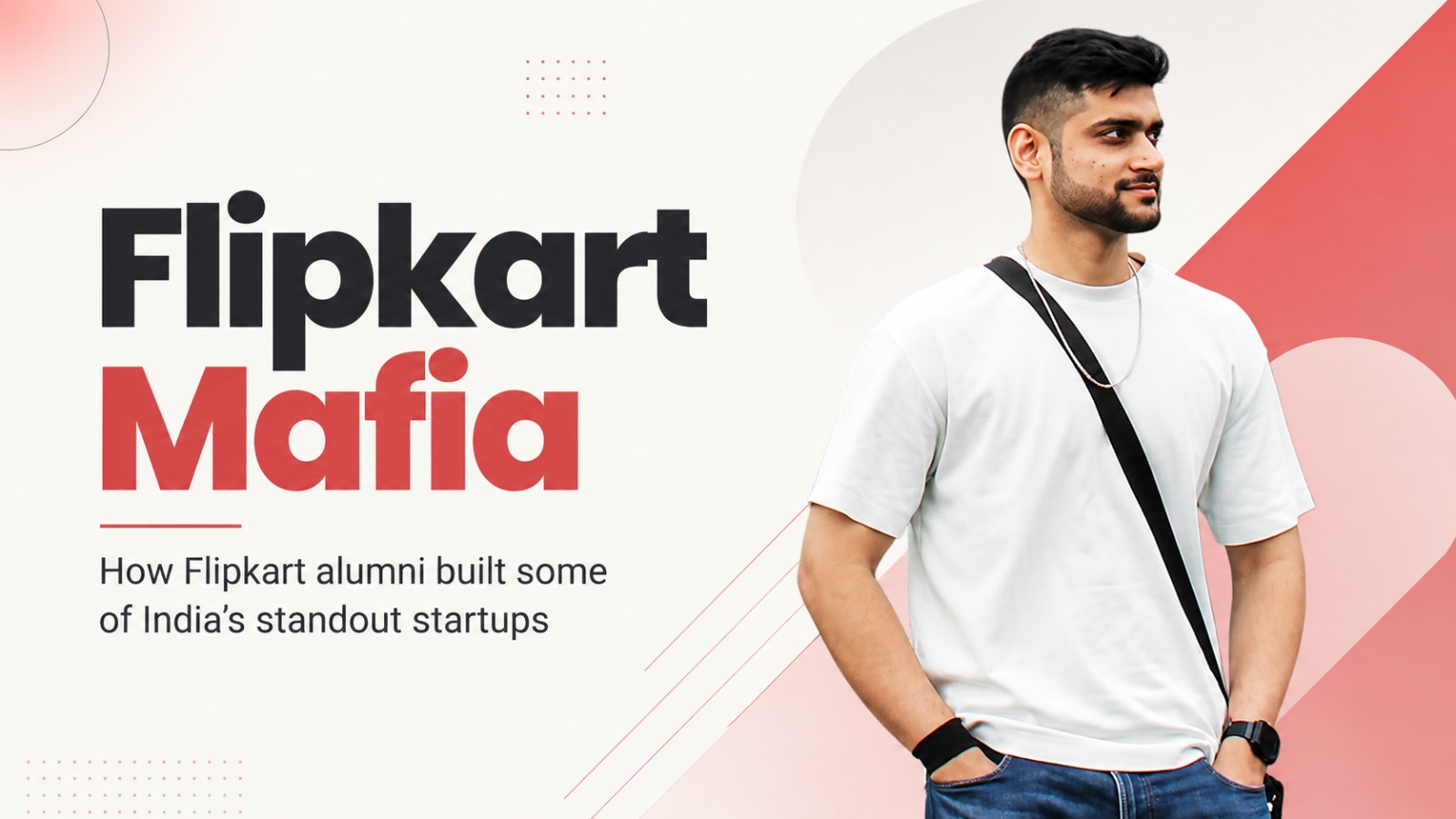
Flipkart’s influence on India’s startup ecosystem may extend far beyond the company it built. A post by Akash Sampurnanand Pandey has drawn attention to a striking network of former Flipkart executives and employees who later went on to build some of the country’s best-known new-age businesses.
Pandey described the group as the “Flipkart Mafia”, borrowing a phrase commonly used for alumni networks that continue shaping an industry long after leaving the company where they first worked together.
His list connects Flipkart alumni with companies including Navi, Udaan, Groww, CultFit, Rapido, PhonePe and Mensa Brands. Taken together, the examples present Flipkart not only as an e-commerce company, but also as a training ground for a generation of Indian entrepreneurs.
Sachin Bansal’s Journey From Flipkart to Navi
At the centre of the network is Sachin Bansal, an IIT Delhi alumnus and one of Flipkart’s best-known early leaders.
After serving as Flipkart’s chief executive, Bansal went on to establish Navi. His move represents one of the clearest examples of a senior Flipkart figure leaving the company and beginning a new entrepreneurial chapter.
The connection also sets the tone for the broader “Flipkart Mafia” argument. People who helped build the e-commerce business later applied their experience to new sectors, teams and business models.
Udaan Brought Together Three Former Flipkart Leaders
Udaan offers one of the strongest examples of former Flipkart colleagues coming together to build another company.
Pandey’s post identifies three Udaan founders with senior Flipkart experience.
Amod Malviya, an IIT Kharagpur alumnus, previously served as Flipkart’s chief technology officer. Sujeet Kumar, an IIT Delhi alumnus, worked in operations at Flipkart. Vaibhav Gupta, also from IIT Delhi, held a senior finance role at the company.
Their backgrounds covered technology, operations and finance, three functions that are central to building and scaling a business. The Udaan founding team therefore reflected not only a shared Flipkart connection, but also a combination of complementary professional experience.
Groww’s Founders Carried Product Experience From Flipkart
The Flipkart link also appears in the story of Groww.
Lalit Keshre, an IIT Bombay alumnus, worked as a product leader at Flipkart before becoming a Groww founder. Harsh Jain, an IIT Delhi alumnus, was previously a product manager at Flipkart.
Their inclusion in Pandey’s list highlights the importance of product talent within the wider alumni network. Product managers often work across technology, customer experience and business strategy, giving them exposure to several parts of a growing company.
In the case of Groww, two former members of Flipkart’s product organisation later became part of the team behind a separate consumer-facing business.
Mukesh Bansal’s Link to Myntra, Flipkart and CultFit
Mukesh Bansal represents another major branch of the network.
Pandey’s post identifies him as an IIT Kanpur alumnus who founded Myntra and later ran Flipkart’s commerce arm. He subsequently moved into the fitness sector with CultFit.
His career path connects fashion commerce, Flipkart’s broader retail operations and a later venture in fitness. It also shows that the alumni network was not limited to people who began their careers inside Flipkart. It included founders and senior operators who became part of the wider Flipkart organisation and later built again.
Rapido Founder Aravind Sanka’s Flipkart Connection
Rapido founder Aravind Sanka also appears in the post.
An IIT Bhubaneswar alumnus, Sanka worked in supply-chain finance at Flipkart, according to Pandey’s account.
That experience places him within another important part of Flipkart’s operating structure. Supply chains sit at the heart of large commerce businesses, requiring coordination across movement, costs, vendors and day-to-day execution.
His later role as a founder adds another sector to the growing list of businesses linked to former Flipkart professionals.
PhonePe’s Founders Emerged From Flipkart’s Leadership and Technology Ranks
PhonePe has one of the most direct associations with Flipkart alumni in Pandey’s list.
Sameer Nigam previously served as a vice-president at Flipkart. Rahul Chari worked on the technology behind eKart, Flipkart’s logistics arm.
The pairing again reflects the mix of leadership and technical experience visible across the alumni network. Nigam brought senior organisational experience, while Chari’s background was tied to the technology supporting logistics operations.
Their inclusion strengthens the idea that Flipkart produced founders from several parts of the business, rather than from a single department or professional track.
Ananth Narayanan’s Move From Myntra and Jabong to Mensa Brands
The final name highlighted in the post is Ananth Narayanan, the founder of Mensa Brands.
Pandey noted that Narayanan previously ran Myntra and Jabong for Flipkart. His experience placed him at the intersection of fashion, digital commerce and business leadership before he began building Mensa Brands.
Narayanan’s journey also broadens the definition of the Flipkart alumni network. It includes people from businesses that became closely integrated with Flipkart, particularly Myntra and Jabong.
Why the ‘Flipkart Mafia’ Label Stands Out
The significance of Pandey’s list lies in the range of roles represented.
The founders named in the post came from technology, finance, operations, product management, logistics and senior leadership. They did not all follow the same route, and they did not go on to build identical businesses.
What connects them is their experience within Flipkart or companies closely linked to its operations.
The list suggests that Flipkart’s wider impact may be measured not only through its own growth, but also through the people who carried their experience into new ventures. Some had managed major functions.
Others had built products, logistics systems or operating teams. Several later became founders themselves.
That is what makes the “Flipkart Mafia” description compelling. It captures the idea of a company becoming an entrepreneurial institution, where the knowledge, relationships and experience developed inside one organisation continue to influence businesses created beyond it.
Whether the term becomes a lasting label or remains a social-media shorthand, the pattern highlighted by Pandey is difficult to overlook. Flipkart’s alumni can now be found across a diverse group of prominent Indian companies, making its founder network a story almost as noteworthy as the company itself.
Also Read: Arpita Arya Returns to News18 India, Begins Second Stint With Network18