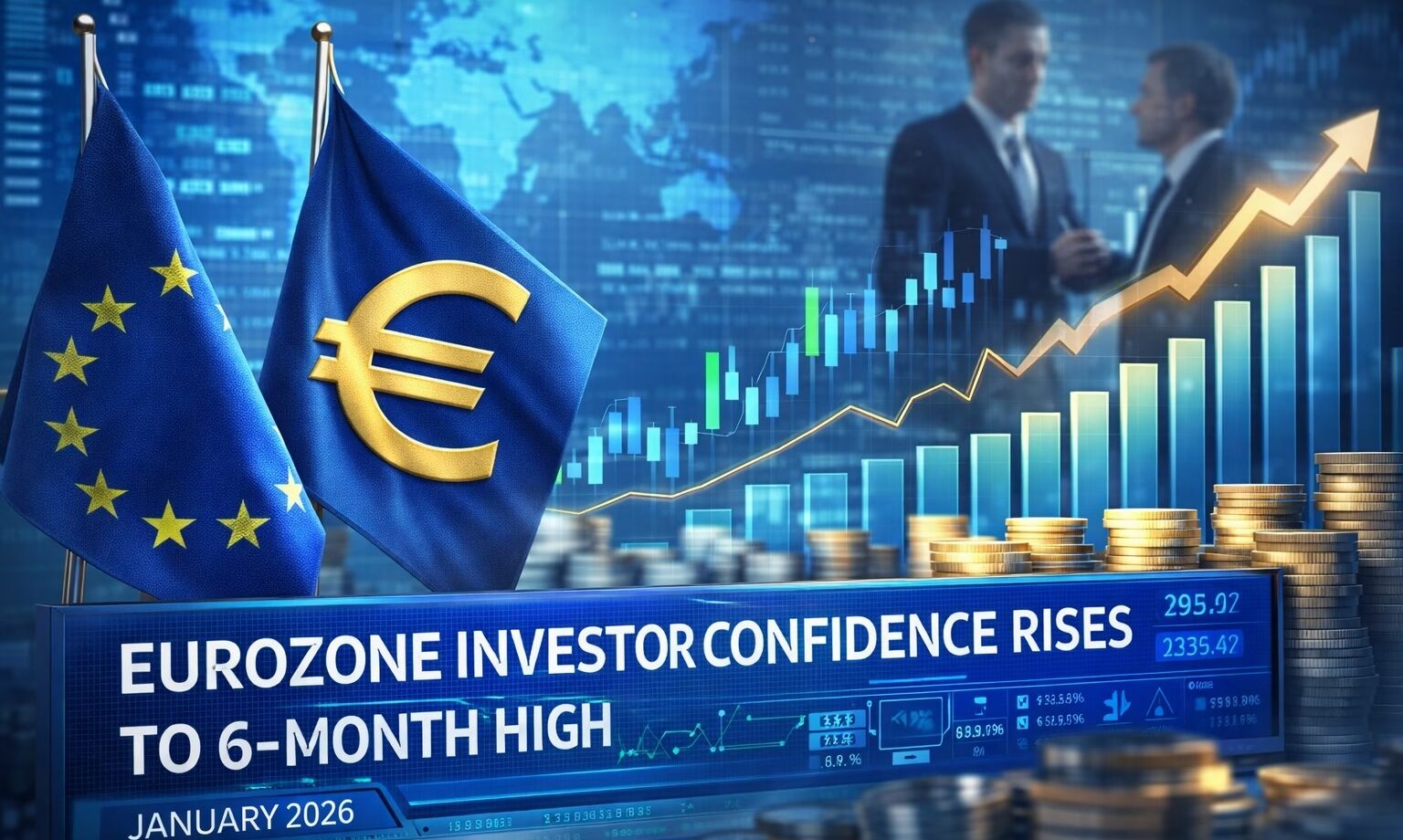
The latest economic surveys show that investor confidence in the Eurozone has increased drastically in January to a high level of six months. The increase is a strong indication that the economy of the region is coming out of its long phase of poor growth, inflation, and monetary tightening.
Analysts believe the matter of bettering anticipations in regard to inflation, interest rates, and industrial activity contributed to an uplift in mood. There is still a low level of confidence, although it is above the long-term averages, which represents a milestone of a significant shift as compared to the pessimism that prevailed most of last year.
Inflation Relaxes Markets’ Strain: Eurozone
Relaxing inflation within the euro zone is one of the primary forces that resulted in the enhancement of investor confidence. The newest information indicates that the consumer price pressures are still modifying and provide some relief to businesses and households with their years of high costs.
The reduced inflation has reinforced the anticipation that the European Central Bank might start taking the monetary policy easier at the end of this year. Investors are hoping that credit demand will be revived at a slow pace with the help of a declining interest rate to kick-start investment and stimulate the economy without triggering a fresh wave of inflation.
The market players are currently demanding that the ECB take a slow step to balance the need to grow and the unresolved price risks, especially in the services and the energy sector.
Growth perspective switches to an optimistic one
There were positive gains in the survey respondents on expectations of the next six months on economic growth. The manufacturing indicators, albeit still mixed, display signs of bottoming out, particularly in the two largest economies of the region, namely Germany and France.
Positive global demand has boosted export-oriented industries, whereas the recovery in real wages has led to stabilized domestic consumption. Government expenditures on infrastructure and green energy initiatives are also seen as an additional medium-term support by investors.
Nevertheless, economists warn that expansion will still be small and disproportionate in the bloc. The economies of Southeastern Europe are still performing well, whereas industrial-filled regions struggle structurally.
Threats of Global Trade and Geopolitics Continue
Although there is an improving feeling, investors are still hesitant because of external risks. The exporters in Europe are still threatened by the trade tensions, especially between the United States and China. Increases in tariffs will interfere with supply chains and the delicate confidence.
Geopolitical tensions also drag on perspectives, particularly because they affect energy costs and financial markets. Investors maintain that fresh volatility may soon turn the fortunes of the sentiment around should there be an escalation of risks.
Consequently, confidence indicators indicate that optimism is also present but stoic and not jubilant.
Monetary Markets: Cool Reaction
The European equity markets responded optimistically yet less to the sign of improved sentiment data. Banking and industrial shares showed modest growth, showing hope of the financial situation calming down and more significant investment being made.
The movement of the bond markets was less, and the yields stayed unchanged as the investors sought more apparent signals from the ECB. The euro was moving within too small a range versus major currencies, which is a sign of markets getting the better news already.
Analysts indicate that the reticent market response shows the unsure tone of the present optimism.
Structural reforms are encouraged by policymakers
The enhancement of investor confidence was celebrated by the European policymakers, who emphasized that structural changes were necessary to maintain the momentum. Authorities focused on the need to increase productivity and capital market strength and speed up digital and green transformations.
There is further fiscal coordination being demanded by several governments that will enhance investment and maintain discipline on debt. These initiatives are widely supported by investors who note that their effectiveness can be curtailed by slow implementation.
Prognosis: Cautious Optimism
The increase in the confidence of Eurozone investors is a good beginning of the year, projecting that the region is possibly rounding a corner following economic stagnation. Reduction in inflation, softening rate expectations, and enhancement in growth expectations have boosted the elevated sentiment.
Nevertheless, investors do not forget the risks in the global economic environment and structural vulnerabilities. In the meantime, the confidence is cautious optimism, but not a complete recovery, and the markets are closely following the subsequent anti-inflation data and decisions of central banks to verify it.
Also Read: World Economic Forum 2026 Begins in Davos as Trade and AI Dominate Talks