India’s startup employees saw a sharper cash-out year in FY26, but the bigger story is not just the rise in ESOP payouts. It is the way employee wealth is now being unlocked.
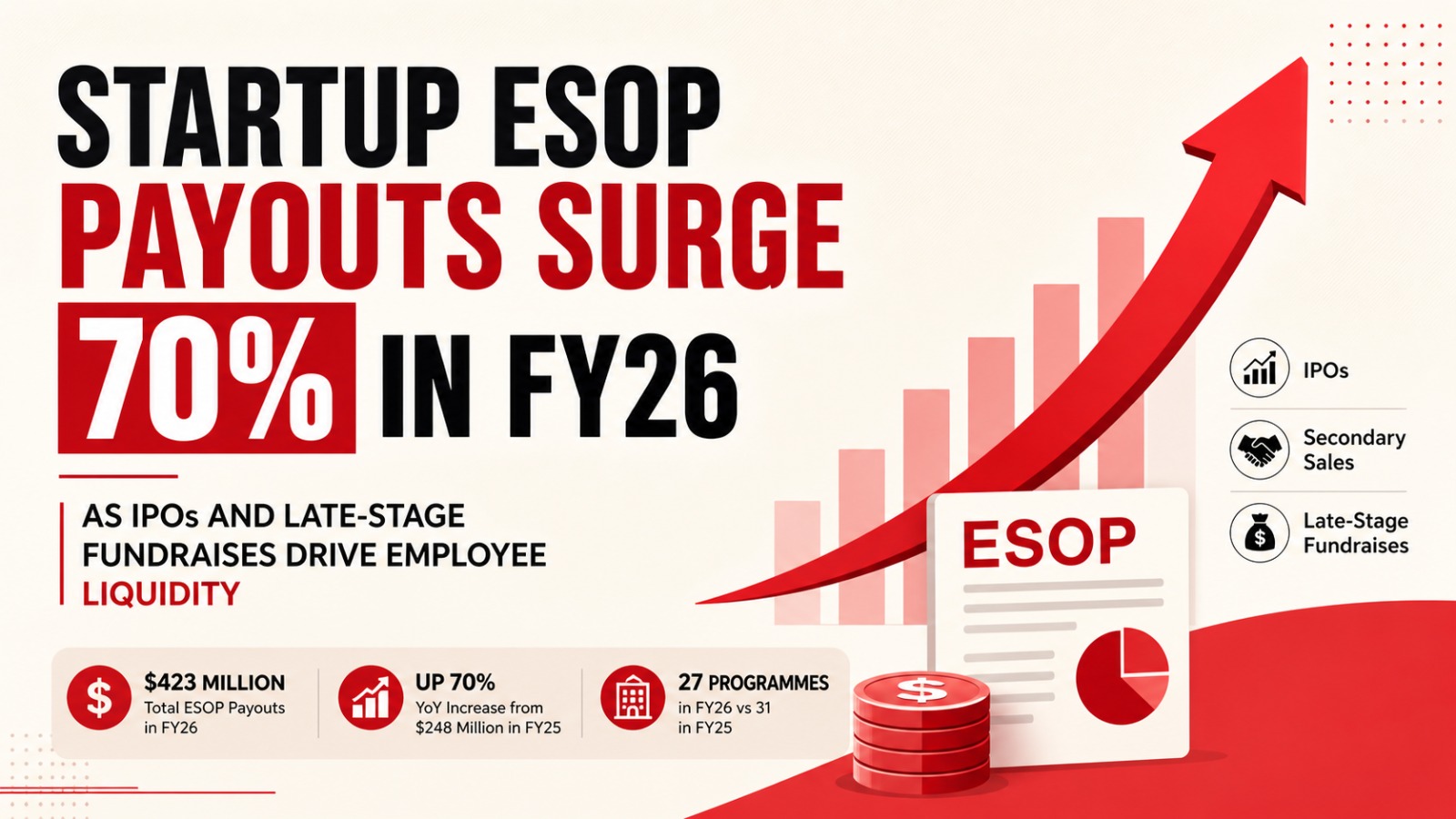
Employee stock ownership plan liquidity rose nearly 70% year-on-year to $423 million across 27 programmes in FY26, compared with $248 million across 31 programmes in FY25.
At first glance, the jump signals a healthier startup market. IPO activity, late-stage fundraises and investor-led secondary transactions have opened new liquidity windows for employees who spent years holding paper wealth. But the numbers also reveal a more selective market.
Fewer companies offered liquidity even as the total payout pool became larger.
That means ESOP wealth creation is rising, but access to it is not spreading evenly.
A handful of large, well-funded startups, including BrowserStack, PhonePe, Innovaccer and Flipkart, accounted for a major share of the payouts. This shows that ESOP exits are still largely concentrated in mature startups that have strong investor backing, active secondary markets or a clear path to public listing.
The structure of ESOP liquidity is also changing. What was once commonly described as a “buyback” is now often routed through secondary share sales. Employees sell shares to existing or incoming investors during funding rounds, pre-IPO transactions or structured liquidity windows. This allows companies to offer exits without using their own cash reserves.
The IPO market has played an important role in this shift. With more new-age companies moving towards public markets, employees are finding more formal routes to liquidity. However, IPOs have not replaced private liquidity events. For startups that are not yet listed, secondary sales and buybacks remain important tools.
The rise in payouts also comes with tougher questions. As startups enter public markets, ESOPs are facing closer scrutiny from institutional investors. Concerns around dilution, founder stock grants, transparency and governance are becoming more visible. Tax scrutiny around foreign stock grants and offshore startup structures has added another layer of compliance pressure.
For employees, FY26 marks a strong year for startup wealth creation. For founders and boards, it is a reminder that ESOPs can no longer be treated as a quiet internal incentive plan. They are now part of a larger governance, investor confidence and public market story.
The message from the data is clear: startup ESOP liquidity is becoming bigger, more structured and more institutional. But it is also becoming more selective.
Also Read: Adani Green’s ₹15,000 Crore Battery Bet Signals the Next Big Shift