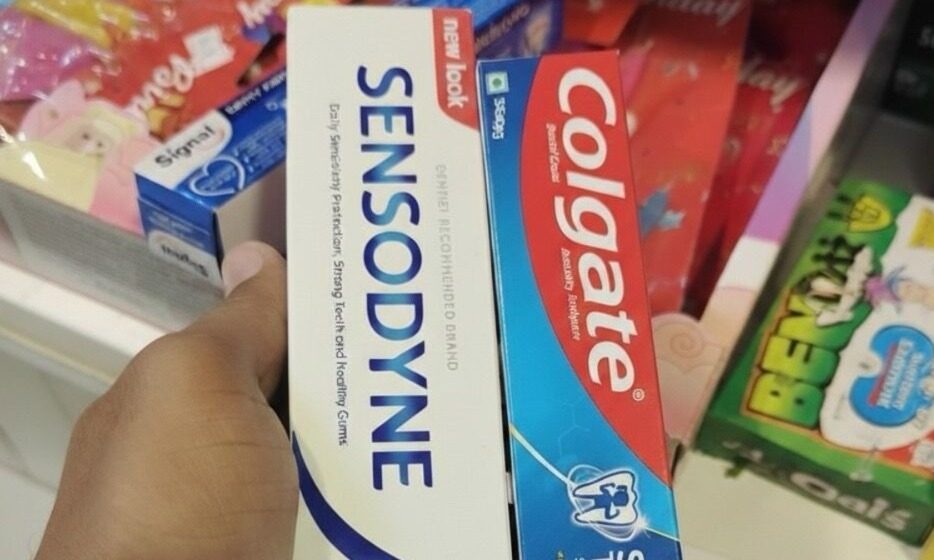
A small scene in a Dmart FMCG aisle last week tells a bigger story about how Indians are shopping in 2025. On one rack: Colgate at ₹80. On another: Sensodyne at ₹150, nearly twice the price. The cheaper option was stocked up; the pricier one was mostly gone.
Founder-turned-investor Arjun Vaidya (co-founder, V3 Ventures) argues this isn’t a pricing anomaly, it’s a playbook. His decade-long view of Indian consumers points to a simple truth: in everyday FMCG, perceived value beats sticker price. And brands that understand how the mind makes choices are walking away with the basket.
The Aisle-Level Signal: Price as a Mental Shortcut
We’re all time-poor. Most shoppers won’t dissect ingredients or parse claims in the toothpaste aisle. So the brain does what it’s designed to do: use price as a proxy for quality. In Vaidya’s framing, “expensive = safer, more effective, more premium.”
That’s why products like A2 ghee command a hefty premium, many buyers feel it’s “healthier” or “purer” largely because the price suggests so. The checkout decision is less about lab reports and more about reassurance at speed.
The “Safe Bet” Is Engineered, Not Discovered
Smart shelves are designed to guide you. Consider a ₹299 ‘basic’ shampoo placed next to a ₹1499 ‘super-premium’. Suddenly, the ₹899 bottle (the real hero SKU) looks like the sensible middle path, not cheap, not indulgent, just right.
This is classic price anchoring. The presence of a higher anchor legitimizes the mid-tier pick and spares the buyer two emotions that dominate Indian aisles: guilt (for being too frugal) and FOMO (for not choosing the best). The middle wins because it feels like prudence with pride.
When Price Tells a Story: Aspiration and Trust
A premium price doesn’t just buy product, it buys a narrative. The story says: this isn’t a commodity; it’s an investment in you. Vaidya points to Surf Excel sustaining a premium because the price telegraphs “superior cleaning you can trust.” Similarly, Dairy Milk Silk built a mini-ritual around personal indulgence, a moment, not just a bar.
In categories we replenish without angst, detergents, toothpaste, everyday indulgences, aspiration + trust carry the day. The price signals reliability and elevates a routine purchase into a small, feel-good upgrade.
The Boundary Condition: Discretion Changes the Math
Vaidya’s caveat matters. As categories grow more discretionary, buyers slow down. The same psychology that speeds up a toothpaste choice doesn’t apply when the spend feels optional or the ticket size climbs beyond comfort.
In those cases, pause and scrutiny return to the fore.
Translation: premium FMCG rides rising disposable incomes, but the spell weakens when a product migrates from “need with a nicer feel” to “want that can wait.”
The Playbook for Builders in India (From Vaidya’s Lens)
- Price is a signal. Use it deliberately; don’t let it happen to you.
- Design the ladder. Place a credible high anchor so your real target looks like the smartest pick.
- Sell the promise. In replenishment categories, a clear, aspirational story can turn a routine buy into a confident upgrade.
- Know your ceiling. As soon as the category feels discretionary, the consumer’s instinct to double-check kicks in. Adjust expectations, and your pitch.
The Bigger Lesson: Win on Perceived Value, Not Just on Price
Dmart’s near-empty Sensodyne shelf versus a stocked Colgate slot isn’t proof that one paste is objectively better. It is proof that pricing, positioning, and psychology decide real-world outcomes. In everyday FMCG, the fastest path to trust is often the price itself, supported by a brand story that makes buyers feel smart, safe, and slightly special.
That’s the India Vaidya describes: a market where premium wins when it feels earned, where the middle option feels wise, and where aspiration, carefully framed converts. The premium game is less about squeezing wallets and more about earning confidence at the point of choice.
This article reflects the observations and reasoning shared by Arjun Vaidya, co-founder, V3 Ventures, including the Dmart aisle example (Colgate ₹80 vs Sensodyne ₹150), premium cues in A2 ghee, anchor pricing patterns (₹299 vs ₹1499 with a ₹899 target), and brand illustrations (Surf Excel, Dairy Milk Silk).
Also Read: Can Infra.Market Disrupt India’s $200B Construction Market?