

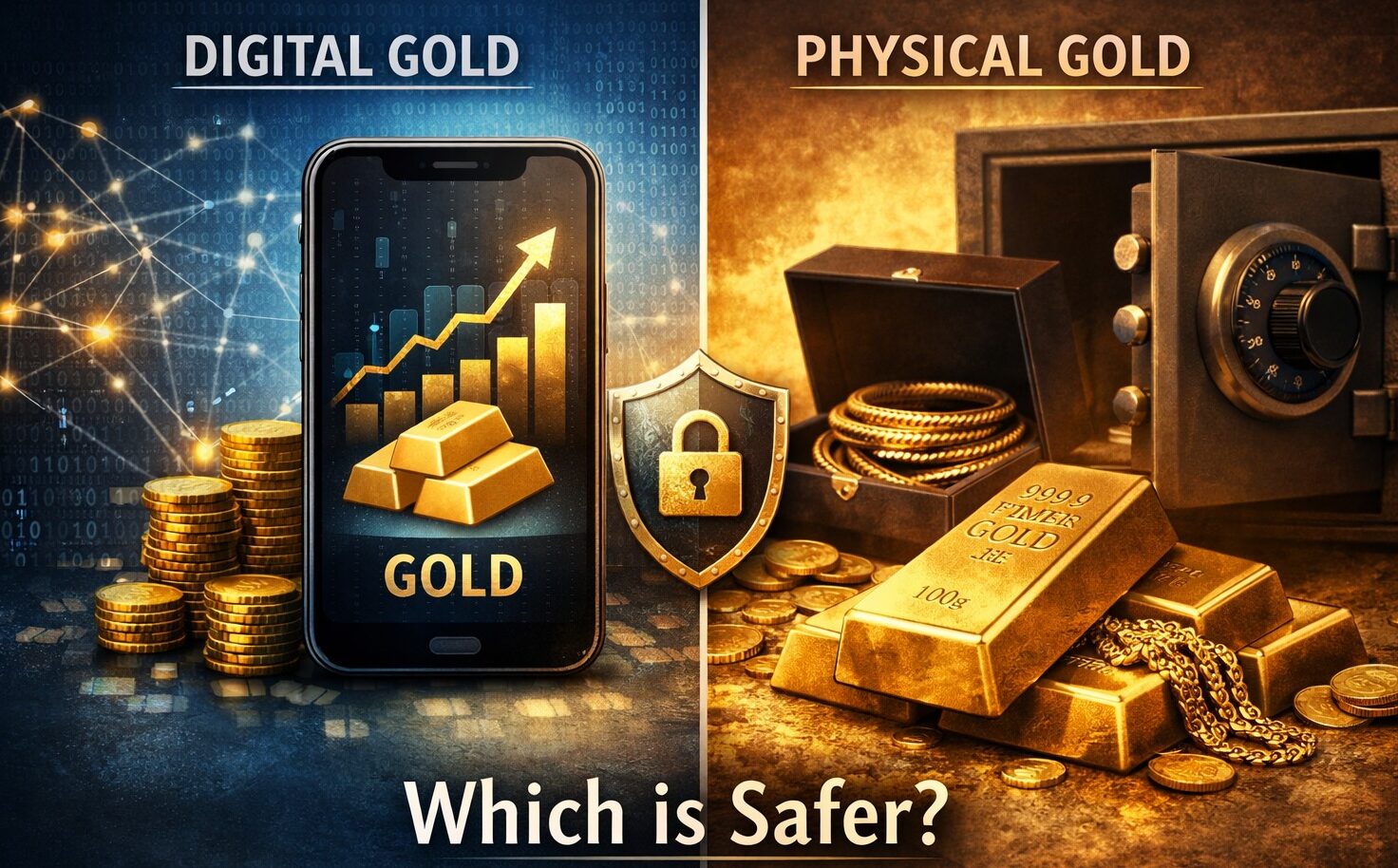
Gold has long been regarded as one of the most trusted assets during uncertain times. For generations, people have bought jewellery, coins, and bars as a way to preserve wealth. Today, that traditional approach is being challenged by a newer option: digital gold.
Through mobile apps and online platforms, investors can now buy gold in small amounts within seconds. The rise of digital ownership has made gold investing easier than ever, but it has also raised an important question: which is actually safer, digital gold or physical gold?
The answer is not straightforward. Both options carry risks, but the nature of those risks is very different.
Why Digital Gold Appeals to Modern Investors
One of the biggest reasons behind the popularity of digital gold is convenience. Buyers do not need to visit a store, compare products, or arrange secure storage. Investments can be made instantly from a smartphone, often with very small amounts, making gold more accessible to regular savers.
Digital gold also removes many of the everyday concerns linked with physical ownership. There is no need to worry about theft at home, damage over time, or the cost of renting a locker. Records of purchases remain available online, allowing users to monitor holdings easily.
For those who want to build gold exposure gradually through frequent small purchases, this simplicity can be highly attractive.
Also Read: Atlas Secures $6 Million Seed Funding to Expand AI Solutions for Accounting Firms
The Hidden Risk Behind Digital Ownership
Despite its ease of use, digital gold introduces a different kind of concern. Investors do not physically possess the gold themselves. Instead, they rely on a platform or provider that claims to store the equivalent amount on their behalf.
This creates what is commonly known as counterparty risk. In simple terms, your investment depends on the provider’s ability to operate smoothly and honour its commitments.
If a company faces operational issues, policy changes, service disruptions, or closure, accessing or redeeming that gold could become more complicated. While this does not automatically make digital gold unsafe, it means investors are placing trust in an intermediary rather than holding the asset directly.
Direct Ownership Gives Physical Gold a Different Advantage
Physical gold works differently. Once you buy coins, bars, or jewellery, the asset is in your hands. There is no third party standing between you and your ownership.
For many people, that direct control offers peace of mind. The value is tangible, visible, and immediately accessible whenever needed. It does not depend on app access, platform policies, or digital systems.
However, direct ownership also comes with responsibilities. Storage becomes an immediate issue. Keeping valuable gold at home may not always feel secure, while bank lockers involve added costs and may not be instantly accessible.
Practical Costs That Come With Physical Gold
Physical gold can also involve extra expenses that many first-time buyers overlook. Jewellery often includes making charges, which may not be fully recovered when resold. Purity can also be a concern unless the purchase is made from a trusted and reputable seller.
Selling physical gold may require visiting a jeweller, bullion dealer, or buyer. Prices can vary depending on the outlet, product type, and market conditions at the time of sale.
This means physical ownership offers control, but not always maximum efficiency.
Liquidity Looks Different in Both Formats
Both digital and physical gold are considered liquid assets, but the experience of selling them is not the same.
Digital gold is designed for quick transactions. Investors can usually buy or sell with a few taps, and some platforms also offer the option to convert holdings into physical gold.
Physical gold is also saleable, but it may involve travel, valuation checks, and price negotiation. The process is generally slower than a digital transaction, even if demand for gold remains strong.
So while both forms can be converted into money, convenience differs significantly.
Which One Feels Safer Depends on Your Priorities
Safety means different things to different investors. Someone worried about theft, storage, or convenience may find digital gold more reassuring because it removes several practical hassles.
On the other hand, someone who values complete ownership and wants to avoid reliance on a provider may prefer physical gold.
Neither option is universally safer. Each simply protects against different concerns while introducing its own trade-offs.
The Final Verdict
The real choice between digital gold and physical gold is not about declaring one superior to the other. It is about understanding what matters most to you.
Digital gold offers flexibility, accessibility, and ease of use. Physical gold offers direct ownership and independence from platforms.
For small, regular investments, digital gold can be a practical route. For those seeking a long-term store of value they can personally control, physical gold continues to hold strong appeal.
In the end, the smartest decision is not choosing what is popular, but choosing what matches your priorities.
Also Read: When India Was the ‘Golden Bird’: A Look at Its Dominant Global Economy















